
Semen is the fluid released during ejaculation, containing sperm cells that fertilize the egg. In a standard semen analysis, a sample is collected and assessed for various parameters that impact fertility. Here’s what a semen test measures:


Lifestyle matters for fertility. A BMC Public Health study found that women with 4–5 healthy habits had a 59% lower risk of infertility.
Fill out the questionnaire, and get a personalised, holistic and evidence-based programme tailored to you.
 takes 3 minutes to complete
This refers to the total amount of fluid ejaculated. Normal semen volume ranges between 2-5 milliliters (ml).
Sperm count measures how many million sperm cells are present per milliliter of semen.
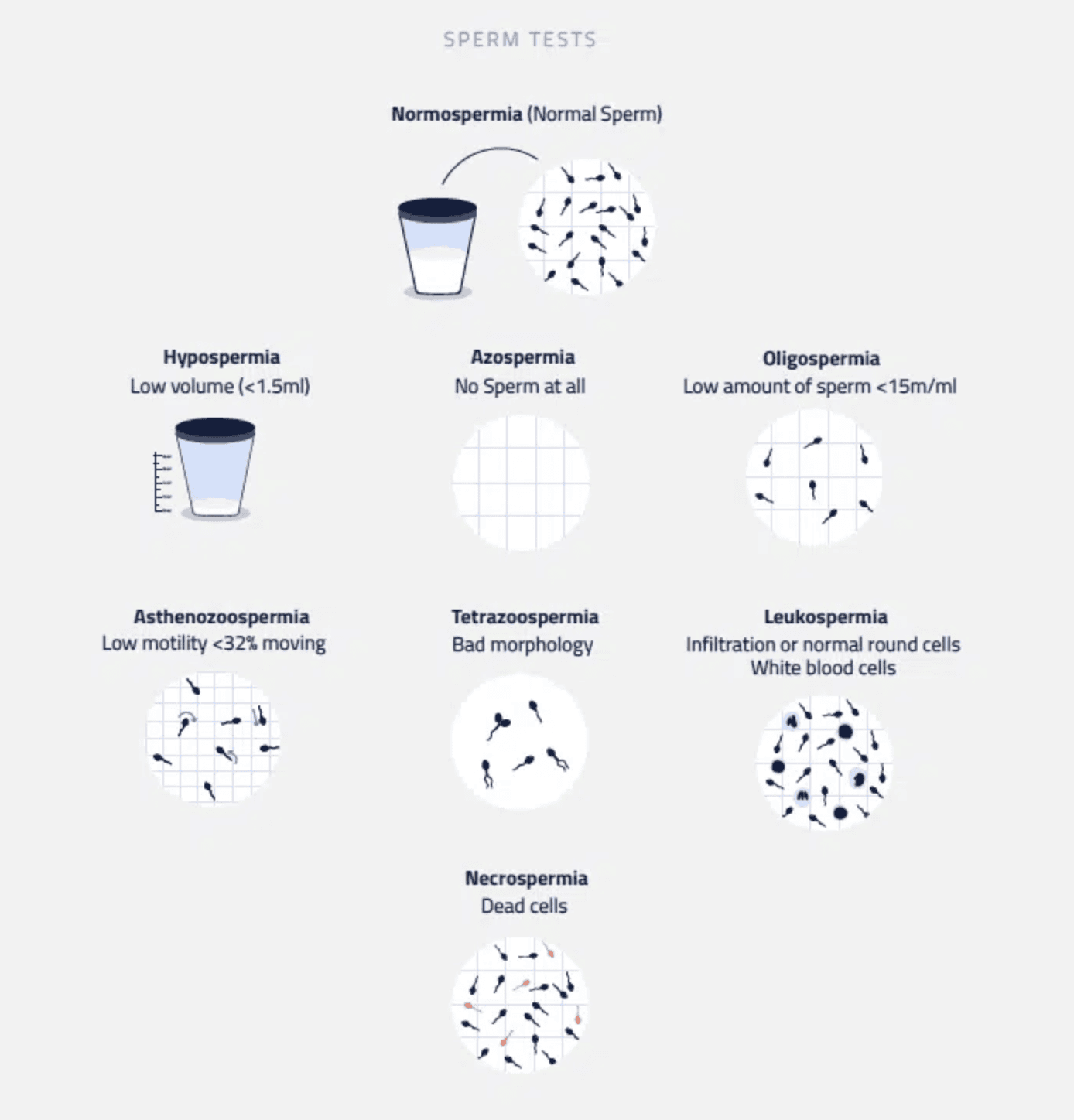
Sperm motility determines how well sperm swim towards the egg. It’s graded as:
A healthy sample should have at least 32% progressively motile sperm or 40% when including non-progressive motility. Poor motility, known as Asthenozoospermia, can reduce the likelihood of conception.
TMSC represents the total number of moving sperm in the ejaculate, calculated by multiplying: Semen volume (ml) × Sperm concentration (million/ml) × Motility (%) A healthy TMSC should be above 45 million sperm cells to optimize fertility chances.
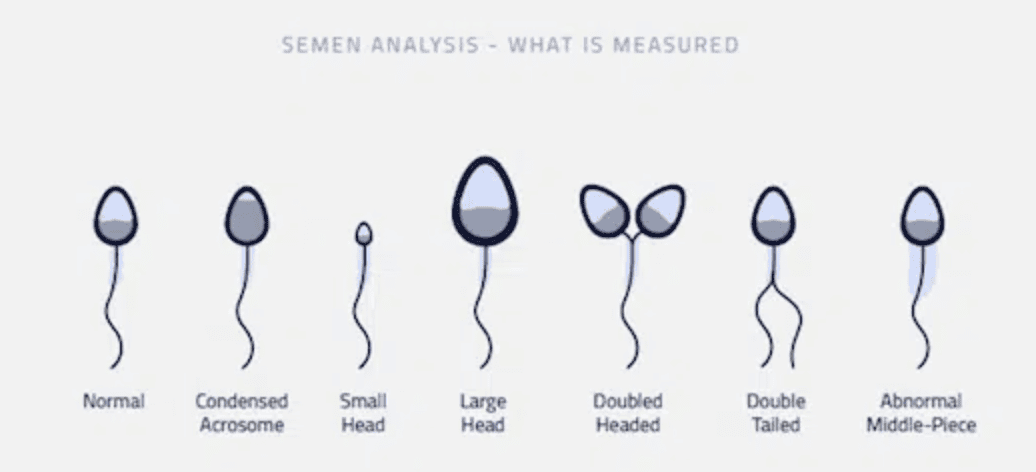
If abnormalities are detected, a more advanced semen analysis may be needed, evaluating:
Sperm morphology assesses how many sperm have a normal oval shape, as per Kruger’s strict criteria: Normal sample: At least 4% of sperm have a standard shape Teratozoospermia: Less than 4% normal-shaped sperm Misshapen sperm may struggle to move or penetrate the egg, impacting fertility.
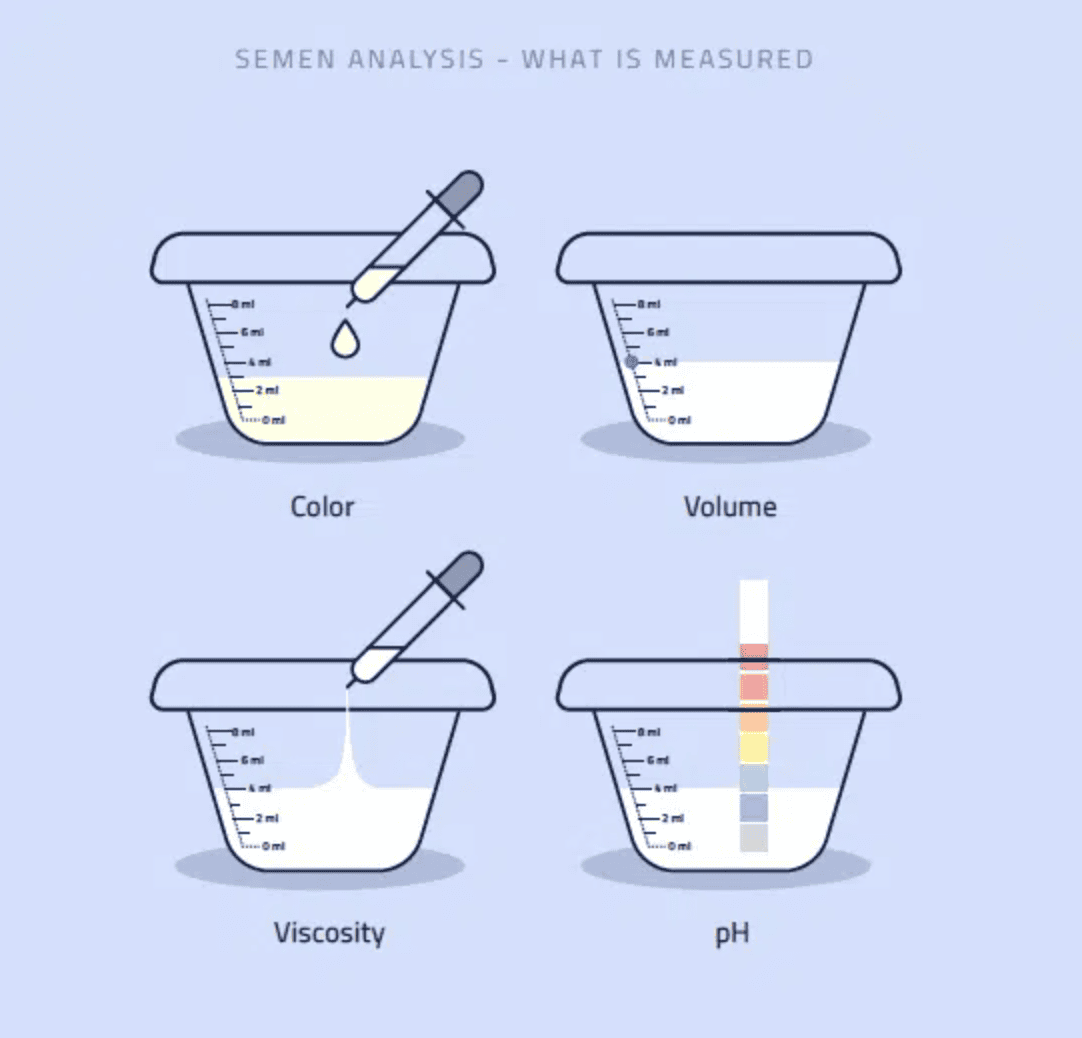
Semen is slightly alkaline (pH 7.2-8.0). Abnormal pH levels can:
✔️ Kill sperm ✔️ Reduce motility ✔️ Lower fertilization chances
Vitality measures the percentage of live sperm in a sample. A normal result is:
Elevated white blood cells (Leukospermia) can indicate infection or inflammation, which may reduce sperm quality.
Certain substances in semen are crucial for sperm function:
A semen analysis offers quick results that help pinpoint any fertility issues early.
If results are abnormal, lifestyle adjustments (diet, exercise, stress management) can boost sperm quality in just 72 days.
Instead of months (or years) of unsuccessful attempts, an early semen analysis helps couples make informed decisions sooner.
This content is for educational purposes only. It has been reviewed for scientific accuracy, but it does not constitute medical advice, diagnosis, or treatment. Always consult a qualified healthcare professional regarding medical questions or fertility treatment decisions.
Reviewed for scientific accuracy by: Dr. Mona Bungum
Last reviewed: February 2025
Lifestyle matters for fertility. A BMC Public Health study found that women with 4–5 healthy habits had a 59% lower risk of infertility.
Fill out the questionnaire, and get a personalised, holistic and evidence-based programme tailored to you.
takes 3 minutes to complete