
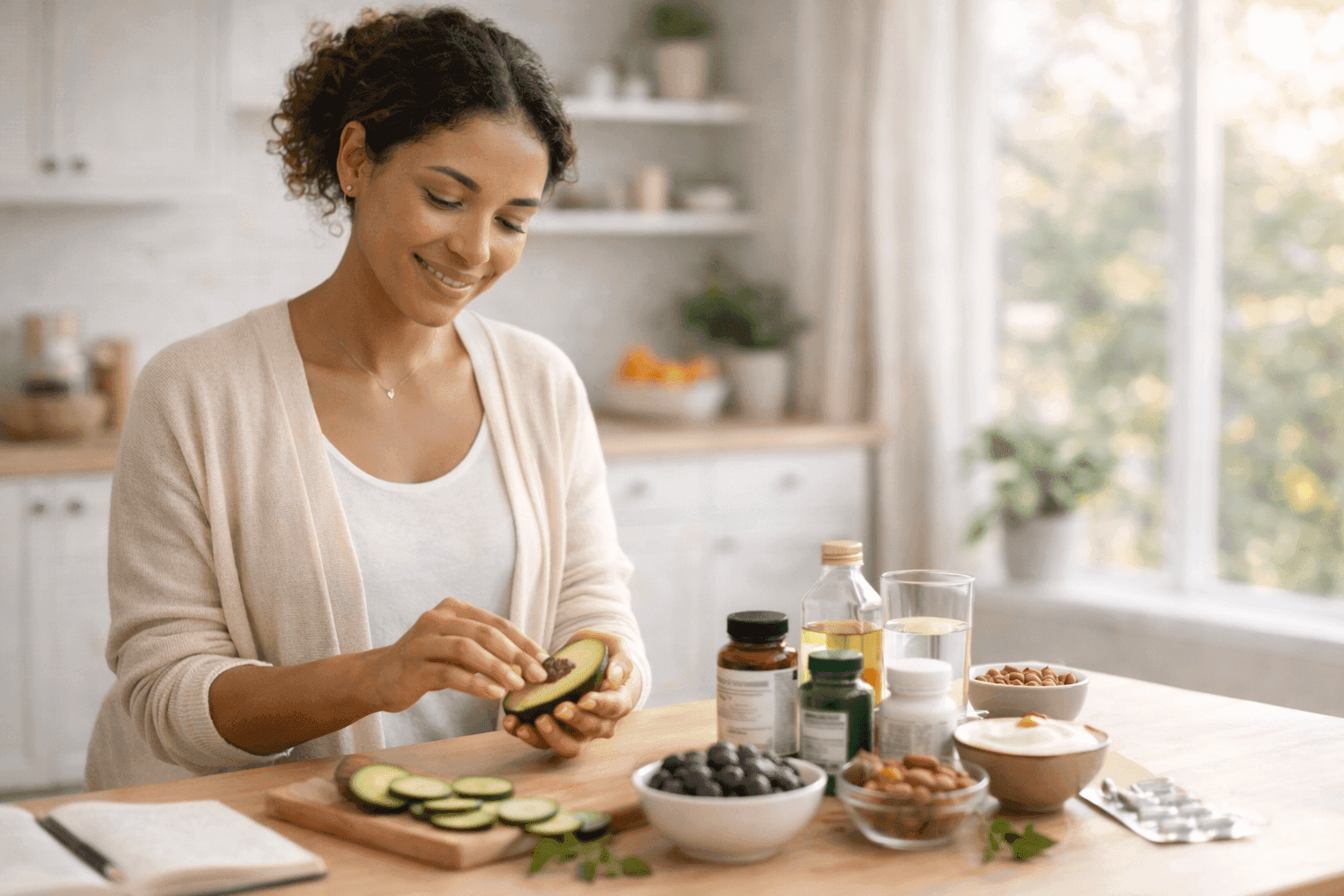
Premenstruellt syndrom, allmänt känt som PMS, avfärdas ofta som något som kvinnor helt enkelt måste stå ut med. Humörsvängningar, uppblåsthet, irritabilitet, ångest, ömhet i brösten och hjärndimma betraktas ofta som oundvikliga delar av menstruationscykeln. Eftersom dessa symtom uppträder regelbundet antar många att de bara är en del av att vara kvinna och att ingenting kan eller bör göras åt dem.
PMS är dock inte något man bara ska ”komma över”. Även om hormonernas upp- och nedgångar under menstruationscykeln är helt naturliga och nödvändiga, varierar symtomens svårighetsgrad från person till person. När PMS blir intensivt eller störande kan det vara ett tecken på en underliggande hormonell obalans, inflammation eller livsstilsfaktorer som behöver uppmärksammas. Att undertrycka hormoner är inte alltid den bästa lösningen, särskilt inte när just dessa hormoner bidrar till benhälsa, humörreglering, hudhälsa och allmänt välbefinnande.
Kort svar: PMS är en samling emotionella och fysiska symtom som uppträder under de 10 dagarna före mensen och som vanligtvis avtar när blödningen börjar, vilket beror på den naturliga ökningen och minskningen av östrogen och progesteron. För att hantera PMS effektivt handlar det om att främja en sund östrogenmetabolism, förbättra balansen mellan progesteron och östrogen, minska inflammation genom kosten, noggrant följa upp symtomen och stärka stresståligheten snarare än att undertrycka hormoner.

Livsstilen har betydelse för fertiliteten. En studie i BMC Public Health visade att kvinnor med 4–5 hälsosamma vanor hade 59 % lägre risk för infertilitet.
Fyll i frågeformuläret och få ett personligt, holistiskt och evidensbaserat program anpassat efter dig.
 tar 3 minuter att fylla i
För att förstå hur man hanterar PMS måste man först förstå vad det är och varför det uppstår. PMS-symtom är kopplade till de hormonella förändringarna som sker efter ägglossningen och före menstruationen.
PMS avser ett brett spektrum av emotionella och fysiska symtom som uppträder under de 10 dagarna före menstruationen och sedan försvinner under eller strax efter blödningen. Om symtomen förekommer under hela cykeln men förvärras före menstruationen kallas detta för premenstruell förstärkning snarare än klassisk PMS. Det är viktigt att hålla koll på tidpunkten eftersom det hjälper till att skilja mellan hormonella svängningar och andra pågående problem.
PMS-symtomen varierar avsevärt mellan olika personer. Känslomässiga symtom kan vara irritabilitet, nedstämdhet, ångest eller humörsvängningar. Fysiska symtom kan vara vätskeansamling i vristerna, uppblåsthet i buken, ömhet i brösten, finnar, huvudvärk och hjärndimma.
Alla upplever inte PMS på samma sätt. Vissa personer är genetiskt mer mottagliga, vilket innebär att familjehistoriken kan spela en roll. Om din mamma eller syster har upplevt PMS eller PMDD är det mer sannolikt att du också kommer att uppleva det.
PMS styrs av ägglossningens cykliska mönster. Östrogenet stiger under cykelns första hälft, når en topp och sjunker sedan efter ägglossningen. Progesteronet stiger under cykelns andra hälft för att balansera östrogenet.
Innehållet är enbart i utbildningssyfte. Det har granskats för vetenskaplig korrekthet, men utgör inte medicinsk rådgivning, diagnos eller behandling. Rådfråga alltid legitimerad vårdpersonal vid medicinska frågor eller beslut om fertilitetsbehandling.
Granskad för vetenskaplig korrekthet av: Dr. Mona Bungum
Senast granskad: mars 2026
Livsstilen har betydelse för fertiliteten. En studie i BMC Public Health visade att kvinnor med 4–5 hälsosamma vanor hade 59 % lägre risk för infertilitet.
Fyll i frågeformuläret och få ett personligt, holistiskt och evidensbaserat program anpassat efter dig.
tar 3 minuter att fylla iNär denna balans störs kan symtomen förvärras.
Om östrogenivåerna stiger för högt i förhållande till progesteron, vilket ofta beskrivs som östrogendominans, kan symtom som irritabilitet, ömhet i brösten och humörsvängningar förvärras. Senare i cykeln, när östrogenet sjunker kraftigt, kan denna nedgång också utlösa ångest eller nedstämdhet.
Östrogen i sig är inte problemet. Det är nödvändigt för benhälsa, hud, humörreglering och reproduktiv hälsa. Problemet uppstår när det inte är korrekt balanserat eller metaboliseras på rätt sätt.
Progesteron har en lugnande effekt i kroppen och stödjer produktionen av GABA, en lugnande signalsubstans. Om progesteronnivåerna är låga under cykelns andra hälft kan nedgången i östrogen upplevas som mer dramatisk eftersom det inte finns någon tillräcklig motvikt.
Tecken på att progesteronivån kan vara låg är bland annat blödning före mensen, kraftigare menstruationsblödning eller att livmoderhalsslem uppträder före mensen. Att stödja progesteron och stresstålighet blir en viktig del av hur man hanterar PMS effektivt.
Det finns inga belägg för att PMS i sig direkt påverkar fertiliteten. Svår PMS kan dock tyda på hormonella obalanser, såsom förhöjda nivåer av östrogen eller låga nivåer av progesteron, vilket potentiellt kan påverka reproduktiv hälsa.
Symtomen kan också överlappa med andra tillstånd, såsom endometrios eller polycystiskt ovariesyndrom. Att förstå dina cykelmönster kan hjälpa dig att avgöra när ytterligare utredning kan behövas. Om du är osäker på om dina symtom beror på PMS eller något annat kan det vara till hjälp att läsa vägledningen om hur du vet om du har PCOS för att få ytterligare klarhet.
Inflammation spelar en betydande roll i att förvärra PMS-symtom. Att minska faktorer som utlöser inflammation kan förbättra motståndskraften och minska symtomens intensitet.
Socker är inflammatoriskt, och den individuella toleransen varierar. Vissa människor klarar av små mängder, men ett överdrivet sockerintag kan öka den systemiska inflammationen och förvärra uppblåsthet, humörsvängningar och trötthet.
Även ett överdrivet intag av frukt, om det är oproportionerligt, kan bidra till den inflammatoriska belastningen. Måttfullhet och balans är nyckeln.
Ny forskning tyder på att även måttligt alkoholintag kan vara inflammationsfrämjande. Alkohol kan förvärra humörsvängningar, huvudvärk och vätskeansamling under den premenstruella fasen.
Att minska eller helt undvika alkohol under lutealfasen kan lindra symtomen.
Vegetabiliska oljor med hög halt av fleromättade fetter kan bli instabila vid upphettning. Denna instabilitet kan bidra till inflammatoriska processer i kroppen.
Att välja stabila matfetter och minimera intaget av starkt bearbetade oljor kan minska den inflammatoriska belastningen.
Matöverkänslighet kan utlösa inflammatoriska reaktioner som förvärrar PMS. Vanliga överkänsligheter gäller bland annat vete och mejeriprodukter, men individuella reaktioner varierar.
Att följa upp symtomen i samband med matintaget under minst en vecka kan avslöja mönster. Om vissa livsmedel konsekvent förvärrar uppblåsthet, huvudvärk, ångest eller hudproblem före menstruationen kan detta tyda på överkänslighet.
Vissa livsmedel, såsom rött vin, fermenterade livsmedel och ricotta, har ett högre histamininnehåll. För vissa personer kan ett högt histaminintag förvärra PMS-symtom som huvudvärk, ångest, hudutslag eller hjärndimma.
Att identifiera personliga utlösande faktorer och anpassa kosten därefter kan minska den inflammatoriska belastningen.
Östrogen måste metaboliseras och utsöndras på rätt sätt. Tarmmikrobiomet spelar en avgörande roll i denna process.
Hälsosamma tarmbakterier hjälper till att bryta ner och eliminera överskott av östrogen. Om tarmhälsan är nedsatt kan östrogenutsöndringen försämras, vilket potentiellt kan bidra till mönster av östrogendominans.
Att prioritera fiberrika växtbaserade livsmedel och upprätthålla en god matsmältningshälsa stödjer östrogenmetabolismen. Hormonbalansen är nära kopplad till bredare mönster inom reproduktiv hälsa, inklusive ägglossning och cykelreglering.
Progesteronstöd handlar om både hormonella faktorer och livsstilsfaktorer. Kronisk stress kan sänka progesteronnivåerna eftersom kroppen prioriterar produktionen av stresshormoner framför balansen mellan reproduktionshormonerna.
Det är viktigt att hantera stress genom mindfulness, tillräcklig sömn och balanserade rutiner i arbetslivet. Progesteron stöder produktionen av GABA, vilket främjar lugn. Om stressen är konstant kan progesteronnivåerna sjunka, vilket förvärrar PMS-symtomen.
Att prioritera åtta timmars sömn när det är möjligt och skapa lugnande rutiner på kvällen kan stödja den hormonella motståndskraften.
P-piller ordineras ofta för att stabilisera PMS-symtom, men de verkar genom att undertrycka naturliga hormonella svängningar. Även om de i vissa fall kan lindra symtomen, undertrycker de också östrogen och progesteron, vilka båda har viktiga funktioner utöver fortplantningen.
Östrogen främjar bentäthet, hudhälsa och humör. Progesteron bidrar till lugn och hormonbalans. Att dämpa hormonerna är inte fel i sig, men det är viktigt att förstå vad som händer fysiologiskt innan man väljer den vägen.
Att först utforska naturliga sätt att hantera PMS kan möjliggöra symptomlindring utan att hormoncyklerna dämpas helt.
Ett av de mest praktiska verktygen för att hantera PMS är att föra dagbok. Att dagligen notera emotionella och fysiska symtom under minst en cykel hjälper till att identifiera:
Att föra dagbok hjälper till att skilja PMS från premenstruell förstärkning eller andra hormonella tillstånd.
För att hantera PMS effektivt måste man ta itu med flera sammanlänkade system:
Ingen enskild mat eller strategi botar PMS över en natt. Att bygga upp motståndskraft genom konsekventa livsstilsvanor är betydligt effektivare än snabba lösningar.
PMS är inte något du bara måste stå ut med. Det återspeglar hormonernas naturliga upp- och nedgångar, men när symtomen är allvarliga kan det tyda på obalans i östrogenmetabolismen, progesteronstödet, inflammationsnivåerna eller stresståligheten.
Att lära sig vad PMS är och hur man hanterar PMS genom kost och hormonbalans ger dig möjlighet att arbeta med din cykel istället för att undertrycka den. Genom att minska faktorer som utlöser inflammation, främja tarmhälsan, hantera stress och noggrant följa upp symtomen kan du bygga upp motståndskraft och med tiden uppleva mer stabila cykler.
Hormonerna är inte fienden. När de får rätt stöd fungerar de som kraftfulla allierade för att upprätthålla allmän hälsa och välbefinnande.
00:00:01 Hej, jag heter Rochelle och idag ska vi prata om PMS. Jag tror att det är ett ämne som många inte riktigt tänker på. Det är något som de ser som helt normalt och som de bara ska ta sig igenom och hantera, men faktum är att det finns mycket som kan göras mot PMS, och det är just det vi ska ta upp idag. Så vad är PMS? PMS är en mycket bred samling av symtom som uppträder under de 10 dagarna före mensen och sedan försvinner bred samling av symtom som uppträder under de 10 dagarna före mensen och sedan försvinner under eller strax efter blödningen. Så om det här är symtom som du redan upplever vid andra tidpunkter i din cykel, men du märker att de förvärras i samband med mensen, då är det
00:00:47 något annat. Det kallas premenstruell förvärring. Det är viktigt att verkligen lägga märke till och notera när dessa symtom uppträder. Symtomen kan variera kraftigt och omfatta både känslomässiga och fysiska besvär. De känslomässiga symtomen kan vara allt från omfatta både känslomässiga och fysiska besvär. De känslomässiga symtomen kan vara allt från irritabilitet till nedstämdhet och ångest. Och de fysiska symtomen kan, återigen, variera väldigt mycket. Saker som vätskeansamling i vristerna, uppblåsthet i magen, hjärndimma och finnar på huden. Så alla kan reagera ganska olika. Men jag tror att det är viktigt att folk inser att PMS faktiskt är mycket fördelaktigt för kroppen. Upp- och nedgångarna i våra hormonnivåer är faktiskt
00:01:25 faktiskt är mycket fördelaktigt för kroppen. Upp- och nedgångarna i våra hormonnivåer är faktiskt helt nödvändiga. Och det är viktigt att komma ihåg att p-piller ofta bara hämmar dessa hormoner, som i själva verket är väldigt viktiga. Och även om PMS-symtomen kan vara ganska påfrestande för kroppen, finns det saker vi kan göra för att försöka hantera detta och förbättra det vi kallar din motståndskraft mot PMS. Så vad är det egentligen som orsakar PMS? Det är det cykliska mönstret. kring ägglossningen. Allteftersom cykeln fortskrider stiger östrogennivåerna, är det cykliska mönstret. kring ägglossningen. Allteftersom cykeln fortskrider stiger östrogennivåerna, och denna ökning är helt och hållet positiv och normal för kroppen, men om östrogenet ibland
00:02:13 kan bli för högt kan man uppleva att detta – det vi kallar östrogendominans – verkligen kan förvärra PMS-symtomen, såsom ömhet i brösten eller irritabilitet. Och när östrogennivån sedan sjunker senare under cykeln kan denna östrogennedgång också ha en negativ inverkan sedan sjunker senare under cykeln kan denna östrogennedgång också ha en negativ inverkan på saker som humöret, vilket leder till symtom på depression och ångest. Och vi behöver progesteronet för att balansera östrogenet. Så om vi inte har det där progesteronet senare i cykeln för att ta oss igenom den andra delen av cykeln, kan det hända att när vår östrogennivå sjunker kraftigt och vi saknar det progesteron som skulle kunna motverka detta, vilket också kan ha en negativ inverkan
00:02:59 och orsaka dessa PMS-symtom. Det finns alltså olika faktorer som kan påverka, liksom olika hormoner. och orsaka dessa PMS-symtom. Det finns alltså olika faktorer som kan påverka, liksom olika hormoner. Och vissa är kända för att vara känsligare. Studier har visat att det hos vissa faktiskt finns en genetisk komponent bakom PMS. Det kan alltså hända att du upptäcker att din mamma eller din syster har PMS eller PMDD. Vissa människor är alltså känsligare för det. Vad kan PMS alltså berätta om din kropp? Det finns inga belägg för att PMS påverkar fertiliteten. Det finns inga belägg för att PMS påverkar fertiliteten.
00:03:33 Men personer som har kraftigare PMS och kanske har mer smärta eller är mer irriterade än andra kan ha tecken på östrogendominans – det vill säga en högre östrogennivå än andra – eller så kan det bero på att de har en lägre nivå av progesteron än andra, och dessa två faktorer kan potentiellt påverka fertiliteten. av progesteron än andra, och dessa två faktorer kan potentiellt påverka fertiliteten. Samtidigt kan de också vara tecken på andra tillstånd. Till exempel endometrios, polycystiska äggstockar eller till och med samband till ångest. Det är därför viktigt att vara uppmärksam på hur svåra dina PMS-besvär är, eftersom de kan ge en indikation på andra saker som kan
00:04:19 pågå i kroppen. Så vad kan vi göra åt PMS? Det finns faktiskt mycket som kan göras. Ofta är det gängse svaret att skriva ut p-piller till personer som tror att det Ofta är det gängse svaret att skriva ut p-piller till personer som tror att det stabiliserar hormonerna, men i själva verket leder det till att dessa hormoner hämmas. Och som jag nämnde tidigare behöver vi hormonerna för att kroppen ska få många positiva effekter. Östrogen och progesteron har många andra positiva effekter som inte har något att göra med fertiliteten eller hormonsystemet. De är bra för skelettet, de är bra för huden och de har en positiv inverkan på humöret. Därför är det verkligen viktigt att vi inte hämmar dessa hormoner. Det betyder inte att preventivmedel är
00:04:56 verkligen viktigt att vi inte hämmar dessa hormoner. Det betyder inte att preventivmedel är något negativt, men ofta används de kanske i för stor utsträckning. Och det finns saker vi kan göra på ett naturligt sätt för att stödja våra hormonnivåer. Det finns alltså tre huvudsakliga saker vi behöver titta på. Vi behöver se till att stabilisera våra östrogennivåer och undersöka hur vi metaboliserar östrogenet, det vill säga hur vi bryter ner det och lätt blir av med det. Dessutom behöver vi undersöka hur vi kan stödja och förbättra vår progesteron och vårt GABA. Det här är alltså den lugnande signalsubstansen i kroppen. Vi ska prata lite progesteron och vårt GABA. Det här är alltså den lugnande signalsubstansen i kroppen. Vi ska prata lite mer om det här om en stund. Vi ska också titta på hur vi kan minska inflammation. Och inflammation är
00:05:38 verkligen avgörande när vi tittar på premenstruellt syndrom, eftersom det är just den inflammationen i kroppen som verkligen kan förvärra dessa symtom ännu mer. Så hur kan vi minska inflammationen? Det finns många sätt att hantera inflammation på, och det beror verkligen på dig, din kropp och hur du personligen reagerar på olika livsmedel, men det finns vissa saker som har visat sig ha ett samband personligen reagerar på olika livsmedel, men det finns vissa saker som har visat sig ha ett samband hos många människor – ett av dem är socker. Socker är inflammatoriskt, och alla har en olika reaktion på socker – en person kanske klarar av en liten mängd, medan en annan kanske klarar av betydligt mer. Men socker är inflammatoriskt, så det är viktigt att vara medveten om att sockerhaltiga
00:06:24 livsmedel – till och med för mycket frukt i kosten – om vi äter en överdriven mängd, kan allt detta ha en inflammatorisk effekt på kroppen, och detsamma gäller alkohol. Tidigare ansågs det att kanske detta ha en inflammatorisk effekt på kroppen, och detsamma gäller alkohol. Tidigare ansågs det att kanske måttlig alkoholkonsumtion skulle vara okej, men faktum är att många av de senaste studierna har visat att även måttlig alkoholkonsumtion kan ha en inflammatorisk effekt och förvärra PMS-symtomen. Och vegetabilisk olja – den är full av fleromättat fett, som, om man inte värmer upp det eller om man äter det i sin minst bearbetade form, är det helt okej. Problemet med vegetabilisk olja är dock att den kan orsaka det i sin minst bearbetade form, är det helt okej. Problemet med vegetabilisk olja är dock att den kan orsaka
00:07:06 inflammation när den värms upp, eftersom den inte tål värme särskilt bra. Det är därför viktigt att komma ihåg att det finns saker man kan ändra i kosten och saker som kan påverka våra PMS-symtom. Matöverkänslighet är en annan faktor. Om du upptäcker att du är överkänslig mot exempelvis vete eller mjölkprodukter, finns det även andra typer av överkänslighet. Man kan vara överkänslig mot vad som helst, men mjölkprodukter, finns det även andra typer av överkänslighet. Man kan vara överkänslig mot vad som helst, men dessa är vanliga exempel. Detta kan också orsaka en inflammatorisk reaktion i kroppen och kan förvärra PMS-symtomen. Därför brukar jag alltid råda folk att föra matdagbok. Om du märker att du har en överkänslighet mot något, börja med att föra matdagbok i en vecka och se om det dyker upp
00:07:50 igen. Det kan vara väldigt bra att undersöka om just det orsakar eller förvärrar dina symtom. Det finns en annan faktor som kallas histaminintolerans. Det finns alltså vissa Det finns en annan faktor som kallas histaminintolerans. Det finns alltså vissa livsmedel, till exempel rött vin, ricotta och fermenterade livsmedel, som har visat sig innehålla höga halter av histamin. För vissa människor kan dessa histaminrika livsmedel verkligen förvärra vissa PMS-symtom, såsom huvudvärk, ångest, hjärndimma eller utslag på kroppen. Så återigen, det är verkligen viktigt att titta på de symtom du upplever, eftersom de alla kan tyda på olika saker. Och det finns vissa livsmedel som är kända för att främja förmågan att dämpa
00:08:26 saker. Och det finns vissa livsmedel som är kända för att främja förmågan att dämpa inflammation. Till exempel fet fisk, som är mycket bra när det gäller att minska inflammation. Om du inte gillar fisk kan du ta kosttillskott, men mat är alltid bäst. Och saker som nötter och frön, och att verkligen försöka få med mycket växtbaserade livsmedel i kosten. Och återigen, om du verkligen inte gillar att äta grönsaker eller har svårt att få i dig en variation av olika färger. återigen, om du verkligen inte gillar att äta grönsaker eller har svårt att få i dig en variation av olika färger. Du kan ta kosttillskott för detta, men det är viktigt att välja produkter av riktigt god kvalitet. Så det är viktigt att prata med någon som verkligen kan det här innan du börjar ta något kosttillskott.
00:09:12 Om vi alltså tittar på hur man kan stabilisera och metabolisera östrogen, så har vi tidigare berört tecknen på att du eventuellt kan ha en östrogendominans och att kroppen inte bryter ner och utsöndrar östrogen som den borde. Så saker som irritabilitet inför bryter ner och utsöndrar östrogen som den borde. Så saker som irritabilitet inför mens, ömhet i brösten eller depression kan eventuellt vara tecken på att det finns mycket höga östrogennivåer som sedan eventuellt sjunker kraftigt. Det handlar alltså om saker som alkohol, vilket vi redan har nämnt, men också om det vi kallar hormonstörande kemikalier. Det vill säga ämnen som kan efterlikna östrogen i kroppen. De kan verkligen påverka oss. Och de finns till exempel i fluor och plast.
00:09:57 Det är alltså viktigt att tänka på att många livsmedel innehåller tillsatta konstgödsel. Därför måste Det är alltså viktigt att tänka på att många livsmedel innehåller tillsatta konstgödsel. Därför måste vi vara mycket noga med vad vi stoppar i oss. Och våra tarmbakterier spelar en avgörande roll när det gäller att bryta ner och eliminera östrogen. Våra tarmbakterier är alltså inte bara platsen där matsmältningen sker, utan också där neurotransmittorer produceras som påverkar vårt humör. Det är också där hormoner bryts ned och där vårt immunförsvar är koncentrerat, så vi måste humör. Det är också där hormoner bryts ned och där vårt immunförsvar är koncentrerat, så vi måste se till att tarmen fungerar så bra som möjligt. Om du upplever förstoppning eller andra besvär
00:10:38 med matsmältningen är det väldigt viktigt att ta itu med dessa problem och att prata med någon, eftersom detta kan påverka dina PMS-symtom, och detsamma gäller detox – vi behöver en lever som fungerar som den ska för att se till att vi gör oss av med dessa hormoner, så till och med något så enkelt som att dricka ett glas vatten på morgonen hormoner, så till och med något så enkelt som att dricka ett glas vatten på morgonen med lite citron kan verkligen hjälpa till att spola ut gifterna från kvällen innan och få alla hormoner att fungera som de ska. En hälsosam kroppsvikt är också väldigt viktig när det gäller östrogen. När vi går upp i vikt fungerar våra fettceller inte som de ska, och de börjar producera östrogen.
00:11:22 Därför är det verkligen viktigt att vi strävar efter en hälsosam vikt. Vi har redan nämnt livsmedel som kan orsaka inflammation, men det finns också specifika livsmedel som kallas fytoöstrogener. Och det här är livsmedel som kan fungera på båda sätten. De kan antingen stödja östrogennivåerna vid behov, men de kan också sänka dem. De hjälper alltså till att verkligen hitta den där balansen. Saker som soja och linfrön kan verkligen vara till nytta och användas för att stödja olika faser i cykeln. Och om vi tittar på progesteron och hur vi kan höja progesteronnivåerna samt GABA, den lugnande signalsubstansen, är det Och om vi tittar på progesteron och hur vi kan höja progesteronnivåerna samt GABA, den lugnande signalsubstansen, är det återigen viktigt att uppmärksamma de symtom du eventuellt upplever – om du har blödningar
00:12:10 eller fläckblödningar före mensen, när mensen närmar sig, kan detta vara ett tecken på att din progesteronnivå kan vara något låg, eller så kan du ha mycket kraftiga menstruationsblödningar, eller kanske har du livmoderhalsslem men det uppträder före menstruationen. Livmoderhalsslem kan nämligen förekomma vid olika kanske har du livmoderhalsslem men det uppträder före menstruationen. Livmoderhalsslem kan nämligen förekomma vid olika tidpunkter under cykeln, inte nödvändigtvis när du har ägglossning, men om det uppträder före menstruationen, detta kan vara ett tecken på att du eventuellt har lägre nivåer av progesteron. Så återigen, se till att du håller koll på de där inflammationsfrämjande livsmedlen. Som vi har nämnt tidigare, men även om du får i dig för mycket mättat fett, mejeriprodukter och rött kött med högt
00:12:52 innehåll av mättat fett – allt detta kan också bidra till inflammation. Vi har redan nämnt alkohol, men när det gäller just progesteron är stresshantering verkligen avgörande. men när det gäller just progesteron är stresshantering verkligen avgörande. Studier har visat att när vi är stressade förändras kroppens produktion av progesteron. Så försök verkligen att stanna upp och fundera: är jag stressad? Finns det något du kan göra för att bli bättre på att hantera din stress? Alltså saker som yoga och magandning. Men det finns många andra sätt att verkligen försöka arbeta med vår stresshantering.
00:13:28 Så även under dagen finns det saker som somatiska övningar – till och med att bara nynna lite försiktigt kan verkligen hjälpa till att lugna nervsystemet. Så även under dagen finns det saker som somatiska övningar – till och med att bara nynna lite försiktigt kan verkligen hjälpa till att lugna nervsystemet. Och fysisk aktivitet är verkligen avgörande. Vi måste se till att vi inte överdriver, men det har visat sig att fysisk aktivitet faktiskt ökar progesteronnivån och lindrar PMS-symtomen. Sammanfattningsvis omfattar PMS en rad olika symtom. och det finns saker man kan göra åt det, och det är viktigt att verkligen ha i åtanke – jag tror och det finns saker man kan göra åt det, och det är viktigt att verkligen ha i åtanke – jag tror att många tror att PMS bara är något som måste hända, eller att PMS bara är något man
00:14:07 måste leva med, men så är det faktiskt inte; det är en nödvändig del av det cykliska mönstret Men det finns saker man kan göra för att öka sin motståndskraft mot PMS. Kosten har vi redan berört, och kosttillskott är något som i hög grad beror på just dina symtom, men jag kommer att ta upp detta i en annan video, så håll utkik och tack så mycket för att du tittade in. kommer att ta upp detta i en annan video, så håll utkik och tack så mycket för att du tittade in. Jag ser fram emot att prata med dig snart.