
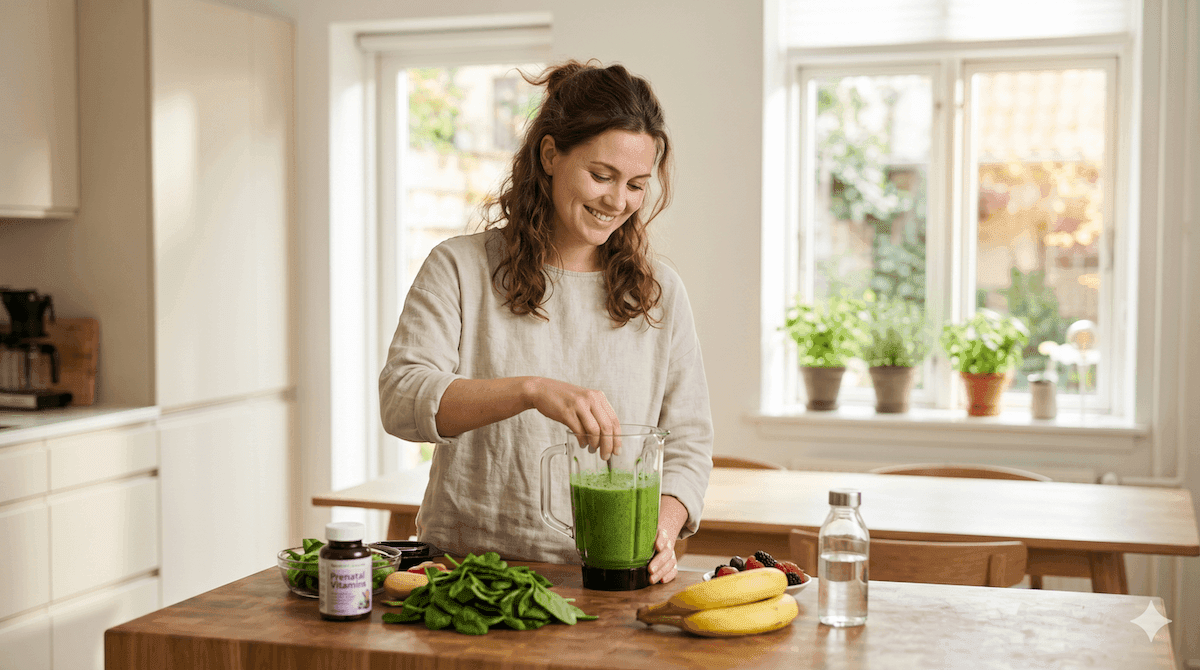
Thinking about pregnancy often comes with a quiet shift. You start paying more attention to your body, your habits, and your daily routines. What used to feel normal suddenly feels like something you should evaluate or improve.
At the same time, the amount of advice out there can be overwhelming. Nutrition, supplements, exercise, sleep, stress, toxins, timing. It can quickly feel like you need to change everything at once.
Quick answer: How to prepare your body for pregnancy does not require perfection. The most effective approach is gradual, sustainable lifestyle changes supported by evidence-based guidance. Small improvements in nutrition, sleep, stress and overall health can meaningfully support fertility and pregnancy outcomes.

Lifestyle matters for fertility. A BMC Public Health study found that women with 4–5 healthy habits had a 59% lower risk of infertility.
Fill out the questionnaire, and get a personalised, holistic and evidence-based programme tailored to you.
 takes 3 minutes to complete
Preconception health refers to your physical and mental health before pregnancy. It is not limited to a few weeks before trying to conceive. In many cases, it begins months or even years earlier.
This period matters because reproductive health does not operate in isolation. Hormones, metabolism, sleep, stress and overall health all influence how the body prepares for conception.
Research shows that both egg and sperm development are affected by lifestyle factors in the months leading up to conception. Early embryo development is also influenced by the internal environment created before pregnancy begins.
Understanding this shifts the focus away from quick fixes and toward long-term preparation.
Lifestyle factors play a meaningful role in fertility, but not in an all-or-nothing way.
Nutrition supports hormonal balance and reproductive function. Physical activity helps regulate metabolism and inflammation. Sleep influences hormone timing. Stress affects both behaviour and biological responses.
At the same time, these factors are interconnected. Improving one area often supports others.
For example, better sleep can improve energy levels, which makes it easier to maintain exercise routines. Balanced nutrition can stabilise blood sugar, which influences mood and stress.
This is why lifestyle changes before pregnancy are most effective when approached as a system rather than isolated actions.
Many people feel motivated to improve their health when thinking about pregnancy. The challenge is not intention. It is execution.
One of the most common barriers is information overload. Online advice is abundant, but often inconsistent or not based on strong evidence. This makes it difficult to know what actually matters.
Another common challenge is trying to change everything at once. Starting a new diet, exercise routine, supplement plan and sleep schedule simultaneously is rarely sustainable. It often leads to frustration rather than progress.
This content is for educational purposes only. It has been reviewed for scientific accuracy, but it does not constitute medical advice, diagnosis, or treatment. Always consult a qualified healthcare professional regarding medical questions or fertility treatment decisions.
Reviewed for scientific accuracy by: Dr. Mona Bungum
Last reviewed: April 2026
Lifestyle matters for fertility. A BMC Public Health study found that women with 4–5 healthy habits had a 59% lower risk of infertility.
Fill out the questionnaire, and get a personalised, holistic and evidence-based programme tailored to you.
takes 3 minutes to completeDaily life also plays a role. Work, family responsibilities and stress can make it difficult to maintain new habits, especially without structure or support.
Finally, there is the pressure to do everything perfectly. This mindset can create unnecessary stress and make small setbacks feel like failure.
In reality, preparation works best when it is flexible and realistic.
Not all lifestyle changes carry the same weight. Evidence consistently points to a few key areas that have the strongest impact on reproductive health.
Balanced nutrition, stable body weight, regular physical activity, good sleep quality and avoidance of smoking are among the most important factors.
If you are already addressing these areas, you are likely doing far more than you think.
For example, understanding how nutrition supports reproductive health can be helpful. Nutrition for managing uterine fibroids is one example of how targeted dietary approaches can influence reproductive conditions and overall health.
The goal is not to optimise everything, but to focus on what has meaningful impact.
One of the most important steps in preconception preparation is filtering out noise.
Evidence-based guidance helps you prioritise actions that are actually linked to improved outcomes. It reduces confusion and allows you to focus on realistic, achievable changes.
Medical organisations increasingly emphasise preconception care as part of fertility planning. This includes areas such as:
When you understand why a recommendation matters, it becomes easier to follow through consistently.
No two fertility journeys are the same.
Some people need to focus on nutrition. Others on stress, sleep or metabolic health. A general checklist can be helpful, but it is not always enough.
This is where personalised guidance becomes valuable. Instead of trying to follow every recommendation, you focus on the ones most relevant to your situation.
The Conceivio app is designed around this idea. It translates scientific evidence into personalised lifestyle plans and structured guidance, helping users take practical steps without feeling overwhelmed.
This type of support shifts the process from “trying to do everything” to “doing the right things consistently.”
Sustainable change rarely comes from dramatic shifts. It comes from small, repeatable actions.
Instead of overhauling your entire routine, focus on one or two manageable changes at a time. This could be improving sleep consistency, adding regular meals, or reducing caffeine intake.
As these habits become part of your routine, you can build on them gradually.
This approach reduces the risk of burnout and makes progress feel achievable.
Maintaining lifestyle changes requires more than knowledge. It requires reinforcement.
Behavioural science shows that small wins matter. Recognising progress helps strengthen habits and increases long-term consistency.
Tracking improvements, even simple ones, can create a sense of momentum. This is why structured tools and coaching can be helpful. They provide feedback and keep you engaged in the process.
Over time, these small changes become part of your baseline rather than something you have to actively manage.
It is easy to think of preparation as something that happens just before trying to conceive. In reality, it is a process that unfolds over time.
Each small improvement contributes to a more stable internal environment. Hormonal balance, metabolic health and overall wellbeing all develop gradually.
This perspective removes pressure and replaces it with direction.
Preparing your body for pregnancy is not about reaching an ideal state.
It is about moving in the right direction.
You do not need to follow a perfect plan. You do not need to change everything at once. And you do not need to eliminate every risk factor.
What matters is consistency, awareness and making informed choices over time.
Preparing for pregnancy often raises practical and emotional questions. Here are clear, evidence-based answers to help you focus on what actually matters and avoid unnecessary overwhelm.
Preparing your body for pregnancy naturally involves improving overall health through balanced nutrition, regular physical activity, good sleep and stress management. You do not need extreme changes. Consistent, moderate improvements in daily habits are enough to support fertility and create a healthy environment for conception.
Ideally, preparation should begin at least 3 months before trying to conceive. This timeframe aligns with the development cycle of both eggs and sperm, meaning lifestyle changes during this period can directly influence reproductive health and early embryo development.
The most impactful changes include maintaining a healthy weight, eating a balanced diet, improving sleep quality, managing stress and avoiding smoking. These factors have the strongest evidence for supporting fertility and healthy pregnancy outcomes.
No. Perfection is not required and can actually create unnecessary stress. What matters most is consistency. Small, sustainable improvements over time are far more effective than trying to follow a strict or unrealistic routine.
Yes, to some extent. Lifestyle changes can support hormonal balance, metabolic health and overall reproductive function. While they cannot overcome all medical fertility issues, they can improve the conditions needed for conception and may increase the chances of success.
It is recommended to avoid smoking, limit alcohol, reduce excessive caffeine intake and minimise exposure to environmental toxins where possible. These factors are known to negatively affect fertility and early pregnancy development.
Stress does not usually cause infertility directly, but it can influence hormone balance, behaviour and lifestyle patterns. High stress may reduce sleep quality, affect eating habits and lower sexual frequency, all of which can indirectly impact fertility.
Diet plays a key role in supporting reproductive health. A balanced diet helps regulate hormones, supports egg and sperm quality, and contributes to a stable metabolic environment. It does not need to be restrictive, but it should be consistent and nutrient-focused.
Yes. Fertility is shared between both partners. Male health, including sperm quality, is influenced by lifestyle factors such as nutrition, sleep, stress and substance use. Preparing together can improve overall chances of conception.
Moderate exercise is beneficial and supports fertility by improving metabolic and hormonal health. However, excessive or very intense exercise may negatively affect ovulation in some cases. Balance is key.
Some supplements, such as folic acid, are widely recommended before pregnancy. However, not all supplements are necessary for everyone. It is best to follow evidence-based guidance and consult a healthcare professional for personalised advice.
Feeling overwhelmed is very common. The best approach is to focus on a few key areas rather than trying to change everything at once. Structured, evidence-based guidance can help simplify the process and make it more manageable.
How to prepare your body for pregnancy is less about perfection and more about progress.
Evidence shows that gradual lifestyle improvements in nutrition, sleep, stress and overall health can support fertility and pregnancy outcomes.
With the right information and a structured approach, preparation becomes manageable rather than overwhelming.
You are not starting from zero.
Every positive change you make, no matter how small, contributes to your overall health and fertility.
Preparing for pregnancy is not about doing everything right. It is about doing enough of the right things, consistently.
References:
Stephenson J., Heslehurst N., Hall J., et al. (2018). Before the beginning: nutrition and lifestyle in the preconception period and its importance for future health. The Lancet, 391(10132), 1830–1841.
Fleming T. P., Watkins A. J., Velazquez M. A., et al. (2018). Origins of lifetime health around the time of conception: causes and consequences. The Lancet, 391(10132), 1842–1852.