
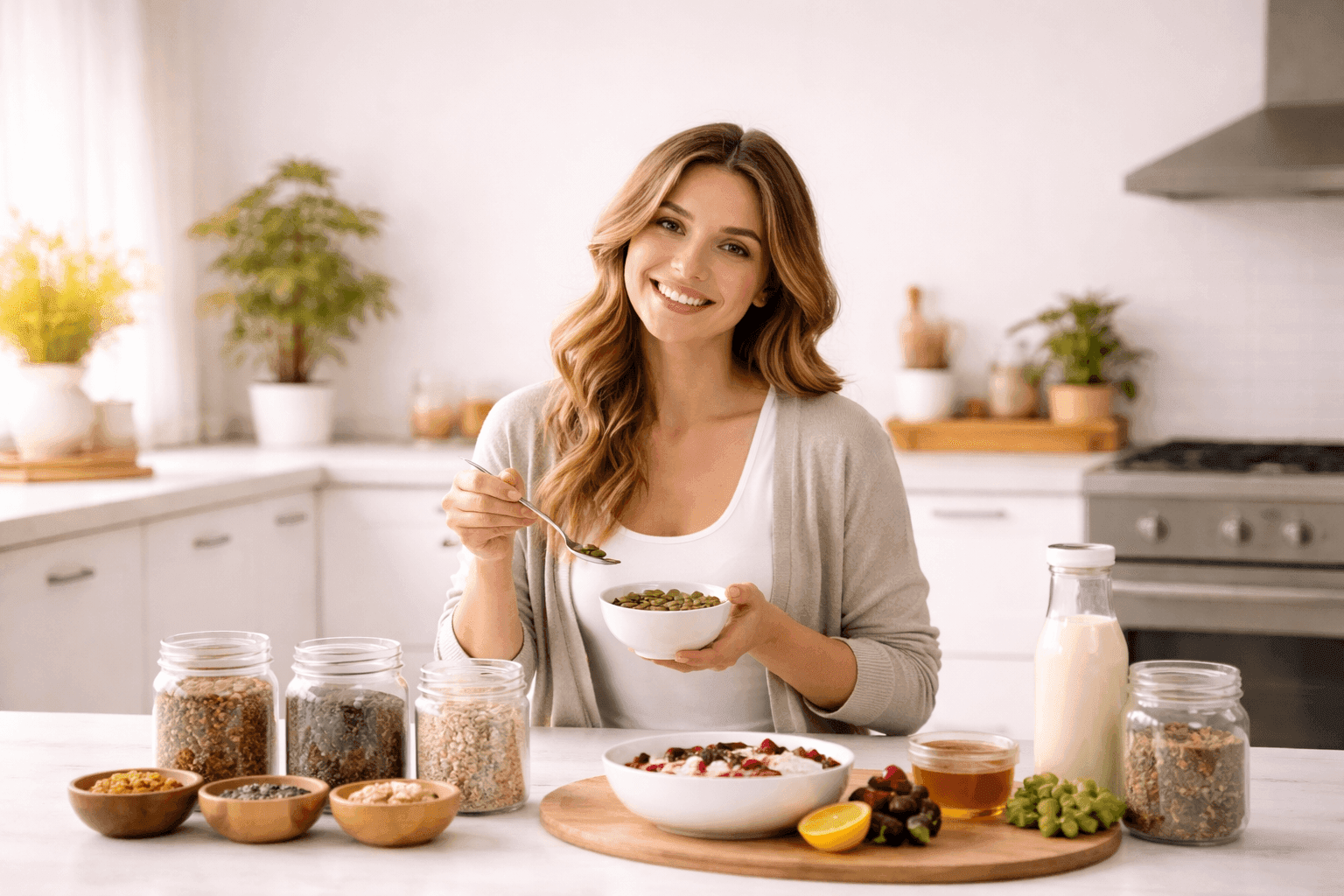
Hormonal imbalances can affect everything from energy and mood to menstrual regularity and fertility. One popular natural approach that has caught the attention of many women looking to balance their hormones is seed cycling for fertility. But how effective is it, really?
This article explores what seed cycling is, how it works, and whether it's truly a useful strategy for enhancing reproductive health.

Lifestyle matters for fertility. A BMC Public Health study found that women with 4–5 healthy habits had a 59% lower risk of infertility.
Fill out the questionnaire, and get a personalised, holistic and evidence-based programme tailored to you.
 takes 3 minutes to complete
Seed cycling is a nutritional strategy that involves eating specific seeds at different stages of your menstrual cycle to support hormonal balance, particularly oestrogen and progesterone production. The practice aligns with the two main phases of the menstrual cycle: the follicular phase and the luteal phase.
During the follicular phase - beginning on the first day of your period - your body’s oestrogen levels start to rise in preparation for ovulation. To support this process:
After ovulation, during the luteal phase, progesterone becomes the dominant hormone, playing a key role in preparing the uterus for possible implantation.
Seed cycling can be adjusted for women with irregular periods, PCOS, or those not menstruating, by following a general 28-day cycle and using the moon phases as a guide — new moon for follicular, full moon for luteal.
Many women use seed cycling for fertility and overall hormonal balance. While scientific evidence is still emerging, this practice is praised for its potential to support various aspects of reproductive health.
This content is for educational purposes only. It has been reviewed for scientific accuracy, but it does not constitute medical advice, diagnosis, or treatment. Always consult a qualified healthcare professional regarding medical questions or fertility treatment decisions.
Reviewed for scientific accuracy by: Dr. Mona Bungum
Last reviewed: April 2025
Lifestyle matters for fertility. A BMC Public Health study found that women with 4–5 healthy habits had a 59% lower risk of infertility.
Fill out the questionnaire, and get a personalised, holistic and evidence-based programme tailored to you.
takes 3 minutes to completeMany women turn to seed cycling fertility routines when trying to conceive, hoping to optimise their hormonal profile naturally. While research directly examining seed cycling and pregnancy outcomes is limited, we do have evidence showing how the nutrients found in these seeds play a vital role in reproductive health.
For example, flaxseeds have been shown to positively impact the menstrual cycle. One study found that daily flaxseed consumption led to more consistent ovulation and improved luteal phase length in women with irregular cycles.
Zinc - abundant in pumpkin seeds - is essential for follicle development and ovulation. Vitamin E and selenium, present in sunflower seeds, are linked with improved luteal phase function and endometrial thickness, both key for conception.
In essence, while seed cycling is not a guaranteed fertility treatment, it may offer gentle, non-invasive support by providing nutrients essential for hormone production and cycle regulation.
Seed cycling isn’t just for women trying to get pregnant—it may be beneficial across various life stages and hormonal conditions, including:
That said, seed cycling is not a replacement for medical treatment but can be a useful complement to other lifestyle and dietary interventions.
There is a growing interest in seed cycling for fertility, but scientific research specifically targeting the practice remains limited. However, what we do know is that the individual components of seed cycling—namely flax, pumpkin, sesame, and sunflower seeds—are nutrient-dense foods with scientifically established benefits for reproductive and hormonal health.
Let’s break down the key nutrients in each seed group and their evidence-based roles in fertility:
These findings support the idea that nutrient-dense seeds can contribute positively to hormonal and fertility health, even if research on seed cycling as a unified practice is still ongoing.
Seed cycling is generally considered safe and well-tolerated, especially because it involves whole foods. However, there are a few things to be mindful of:
Moderation is key, and starting slowly can help your body adjust to the added fibre and nutrients.
Before jumping into a seed cycling fertility routine, consider these practical tips:
You may also want to track your menstrual cycle using an app or journal to see how seed cycling aligns with your hormonal shifts and to monitor any changes.
The timeline for seeing results from seed cycling can vary from person to person. Some women report improvements in their menstrual cycle and PMS symptoms within 1 to 3 months, while for others, it may take longer.
Factors that influence the timeline include:
As with most natural approaches, seed cycling works best when viewed as part of a broader strategy that includes whole-food nutrition, stress reduction, and adequate sleep.
Seed cycling is a promising, food-based strategy to support hormonal balance and fertility. While more scientific research is needed to validate the practice as a whole, the individual benefits of flaxseeds, pumpkin seeds, sesame seeds, and sunflower seeds are well-documented. For women looking for a gentle, natural way to optimise their menstrual cycle and improve reproductive health, seed cycling for fertility offers a compelling starting point.