
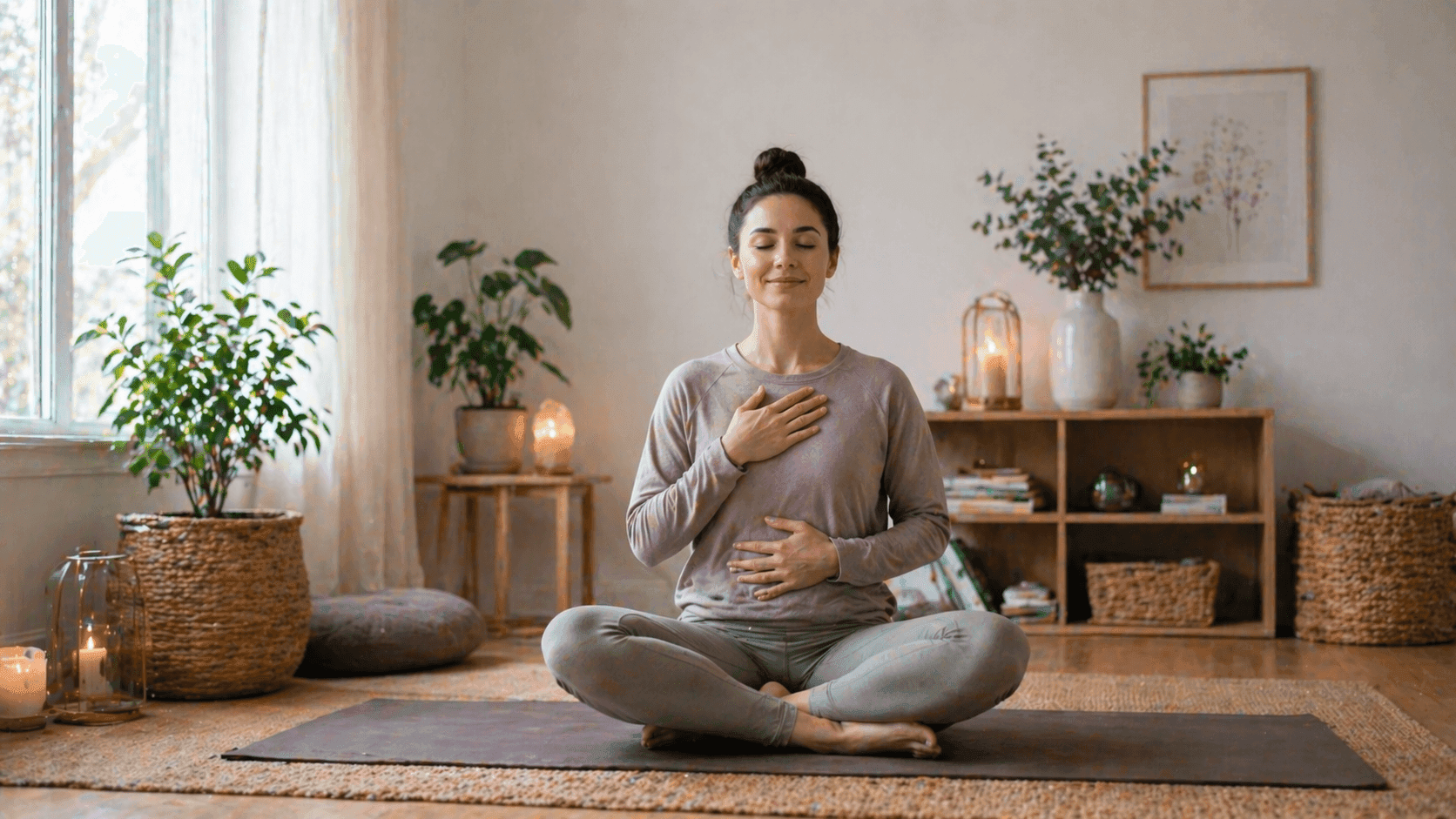
Pelvic pain has a way of taking over the body and the mind at the same time. For people living with endometriosis, painful periods, or persistent pelvic discomfort, even moderate flare-ups can feel overwhelming. Medical care remains the foundation of treatment, but it is rarely the whole picture. Many people find that gentle, repeatable practices can sit alongside medical care and help the body settle when pain is high.
Pain management visualisation is one such practice. It is a guided technique that combines breath awareness, body awareness, and mental imagery to ease the nervous system's response to pain. The aim is not to replace medical treatment, or to pretend the pain is not there. The aim is to give the body and mind a structured way to soften the experience and create a little more room to cope.
Quick answer: Pain management visualisation is a relaxation technique that uses breathing, body awareness, and calming mental imagery to reduce the body's response to pain. By guiding attention through healing imagery, such as warm light moving through the body and discomfort flowing outward on each exhale, the practice can help the nervous system settle and ease pelvic pain.

Lifestyle matters for fertility. A BMC Public Health study found that women with 4–5 healthy habits had a 59% lower risk of infertility.
Fill out the questionnaire, and get a personalised, holistic and evidence-based programme tailored to you.
 takes 3 minutes to complete
Visualisation, in this context, is the deliberate use of mental imagery to influence how the body feels. Pain management visualisation borrows from established mind-body practices such as guided imagery and progressive relaxation, applying them specifically to the experience of physical discomfort. It is gentle, requires no equipment, and can be practised in a few minutes at home.
It sits alongside other complementary practices used in fertility and women's health, including affirmations and visualisation for endometriosis, where guided imagery is paired with self-supportive language to support the wider experience of living with the condition.
When the body experiences pain, the nervous system tends to amplify the signal. Breathing becomes shallower, muscles tighten, and stress hormones rise. This response is protective in the short term but can intensify the experience of pain when it lingers.
Pain management visualisation works by gently interrupting that cycle. Slow breathing, soft body awareness, and calming mental imagery signal to the nervous system that the body is safe, allowing it to shift out of high alert. Over time, the practice can also help build a more flexible response to discomfort, which often makes future flare-ups feel more manageable.
This content is for educational purposes only. It has been reviewed for scientific accuracy, but it does not constitute medical advice, diagnosis, or treatment. Always consult a qualified healthcare professional regarding medical questions or fertility treatment decisions.
Reviewed for scientific accuracy by: Dr. Mona Bungum
Last reviewed: March 2025
Lifestyle matters for fertility. A BMC Public Health study found that women with 4–5 healthy habits had a 59% lower risk of infertility.
Fill out the questionnaire, and get a personalised, holistic and evidence-based programme tailored to you.
takes 3 minutes to completeOther guided practices follow similar principles. A happy place visualisation uses pleasant, restorative imagery to support calm, while meditation for emotional pain focuses more directly on the emotional layer that often sits alongside physical discomfort.
Before beginning the visualisation, take a few minutes to create a comfortable environment. The aim is to let the body relax enough that the mind can follow the imagery without distraction.
Find a quiet space where you can sit or lie down comfortably. Wrapping yourself in a blanket or settling somewhere warm often helps the body soften more easily. A few simple preparation steps make the practice easier to enter:
Only practise this visualisation when you can safely relax. Avoid listening to recorded versions while driving, operating machinery, or doing anything that needs your full attention.
The first step is becoming aware of where the pain lives in your body. The instinct with pain is often to push it away. The visualisation works in the opposite direction. Instead of trying to ignore the sensation, you observe it with calm attention, like a curious observer rather than a worried participant.
Bring your attention inward and ask yourself a few gentle questions: Where exactly is the pain? Is it in one area or several? Does it feel sharp, dull, or tight? Is it constant, or does it come and go in waves?
Some people find it helps to give the pain a colour, a size, or a shape. Others notice that emotions often sit alongside the physical sensation: tension, frustration, heaviness. Naming what is present is not the same as feeding it. It is a way of acknowledging the experience honestly so the rest of the practice has something concrete to work with.
Once you have acknowledged where the pain exists, begin imagining a bright, warm, healing light entering the body through the top of your head.
Picture this light gently flowing downward, bringing warmth, calm, and a sense of healing energy to every part of your body it touches. There is no need to force the imagery. Some people see vivid colours and clear shapes. Others sense the warmth more than visualise the light. Either is fine.
Let the light move slowly through:
As the light moves through each area, imagine it softening tension and filling the space with warmth, comfort, and a quiet sense of being looked after.
Continue breathing slowly and deeply. With each breath, imagine calm and healing energy moving through your body. A simple breathing pattern often helps the imagery deepen.
On the inhale, picture calm air moving down into your pelvis. On the exhale, imagine pain or tension flowing out of your body. The breath does not need to be deliberate or controlled. A natural, slightly slower rhythm is enough.
Hands resting gently on the pelvis or lower abdomen often help. Imagine warmth spreading from your hands into the area beneath them, supporting the breath and the imagery. If the breathing alone feels grounding, simple breathing exercises can be practised on their own between visualisation sessions to keep the nervous system steady.
Now bring your attention back to the area where you first noticed pain. Instead of resisting the sensation or trying to push it away, observe it again with the same calm attention you brought at the start.
You may notice that the pain begins to change. Picture it slowly becoming:
Imagine it shrinking little by little, perhaps fading until it is barely there. Take a moment to notice how your body feels as the pain reduces. Many people experience a spreading sense of relaxation, warmth, or quiet ease. Practices that work directly with this idea, such as the shift your energy meditation, build on the same underlying principle of letting the body release what it does not need to hold.
As the practice comes to an end, bring your awareness back to your breath. Take several slow, deep breaths and continue imagining calm air moving into your pelvis. Each exhale can carry away any remaining tension that wants to go.
Keep your hands resting gently over your pelvis. Imagine sending warmth and care to that part of your body. When you feel ready, slowly open your eyes and let yourself return to the room.
Practising the visualisation regularly, not only when pain is present, often makes it easier to access during difficult moments. The mind becomes familiar with the imagery, and the body learns the pattern of settling.
Visualisation techniques are most effective when practised regularly rather than reserved only for moments of acute pain. Listening to a recorded version a few times when the body is calm builds a kind of muscle memory. When pain arises later, the mind can fall into the familiar imagery more easily.
This type of practice can be particularly supportive during:
Visualisation also pairs naturally with other supportive habits. Practical self-care for period pain and endometriosis often includes heat, gentle movement, sleep prioritisation, and food choices that reduce inflammation. The visualisation sits alongside these as one of the calming tools available when discomfort flares.
Pain management visualisation tends to help most when it is layered into a wider self-care practice rather than used as an isolated technique. The benefits accumulate over weeks rather than appearing fully in the first session.
Many people find that the practice becomes part of a wider toolkit for managing stress, particularly during high-pain windows or stressful life chapters. The same nervous system that drives pain responses also drives stress responses, and quietening one often calms the other.
Underneath the techniques, the foundation is self-care and self-compassion. Visualisation is gentler and more effective when it is approached as an act of kindness toward the body rather than another task to perform. The body responds more readily to softness than to pressure.
Pain management visualisation is a complementary practice, not a substitute for medical assessment or treatment. Persistent, severe, or worsening pelvic pain deserves a proper clinical workup.
Pelvic pain can have many causes, and understanding what is happening in the body is part of taking it seriously. Resources such as a clear guide to understanding endometriosis can help frame the conversation with a clinician, particularly for people who suspect their pain is related to but not yet diagnosed as endometriosis.
Alongside medical care, broader anti-inflammatory strategies for endometriosis often include nutrition, gentle movement, and stress management, which complement both medical treatment and practices such as visualisation. The most effective approach is usually layered, not single-tool.
These are some of the most common questions people search for about pain management visualisation. The answers below reflect current understanding of mind-body practices and how they sit alongside medical care.
Visualisation activates the body's relaxation response, which can calm the nervous system and soften the perception of pain. Slow breathing, body awareness, and calming imagery together signal that the body is safe, which often allows muscles to release and pain to feel less intense.
No. Visualisation is a complementary practice. It can support comfort and reduce the perceived intensity of pain, but it does not replace medication, medical assessment, or treatment. Many people find that visualisation works best as part of a broader pain management plan that includes clinical care.
Daily or near-daily practice tends to produce the strongest effects, even if each session is short. Many people start with five to ten minutes a day and build from there. Regular practice helps the body learn the calming pattern so it is easier to access during flare-ups.
Many people with endometriosis find visualisation helpful as part of their pain management approach. It does not address the underlying condition, but it can soften the body's response during flare-ups and support emotional wellbeing across the longer journey.
Yes, as long as you are safely able to relax. Avoid practising while driving, operating machinery, or doing anything that needs full attention. Quiet, warm settings tend to work best, although with practice the body learns to settle in less ideal environments.
Visualisation does not require vivid mental imagery. Some people see clear pictures, others sense warmth or feel a quiet presence. Both work. Following the breath and the body sensations is enough, even if the mental images are blurry or abstract.
It is not designed to eliminate pain. The practice can reduce intensity and soften the body's response, which often makes pain feel more manageable. Some sessions produce noticeable relief, others mostly support calm. Both outcomes are valuable.
Yes, combining is often more effective than using any single tool alone. Breathing exercises, gentle movement, heat application, and mindful self-care can all sit alongside visualisation. Many people layer two or three approaches depending on the day.
Research on guided imagery and visualisation for chronic pain is encouraging, particularly when used as part of a broader pain management plan. Effects are typically moderate and accumulate with regular practice rather than appearing instantly.
Yes, many people find visualisation helpful during periods, particularly when paired with heat, rest, and other supportive habits. The calming effect on the nervous system can ease both physical discomfort and the emotional load that often accompanies painful menstruation.
Some people notice calming effects within a single session. Lasting improvements in how the body responds to pain typically build over weeks of regular practice. As with most mind-body techniques, consistency matters more than the length of any individual session.
Pain management visualisation is a gentle, repeatable practice that supports relaxation and body awareness during moments of discomfort. By weaving together breath, calming imagery, and focused attention, the technique invites the nervous system to slow down and the body to release the tension that often accumulates around pain.
It does not replace medical treatment. It does not need to. The point of the practice is to add a layer of support that travels with you, available whenever pain or tension arises. Many people who use visualisation regularly describe it as a way of feeling more in control during difficult moments, even when the underlying condition has not changed.
For people living with endometriosis, painful periods, or persistent pelvic discomfort, the value of the practice often comes from the steady, quiet message it sends to the body: that softening is allowed, that breath is available, that warmth can be brought in. Over time, that message tends to take.
The practice is short, the threshold is low, and the body responds to repetition. Even a few minutes a day, layered into the wider rhythms of care, can quietly shift the relationship between pain and the body that holds it.
00:00:01 Welcome to this pain reducing visualisation. Find somewhere comfortable to sit or lie, wrapped up warm. Do make sure you're not driving or operating any machinery whilst you're listening to this. Now pause the recording until you're ready to start. Now that you're comfortable, close your eyes, place both your hands over your pelvis and take a couple of deep breaths. close your eyes, place both your hands over your pelvis and take a couple of deep breaths. Now start to check in on your body. Where do you feel the pain? Is it in one spot or is it in Now start to check in on your body. Where do you feel the pain? Is it in one spot or is it in various places? Is it sharp or dull? Is it constant or comes and goes? What colour is it? How big is it?
00:01:24 Is it moving? Is it still? Is it angry, sad or has it any other emotion? Now imagine a bright, Is it moving? Is it still? Is it angry, sad or has it any other emotion? Now imagine a bright, white light coming in through the top of your head bringing healing, soothing, calm energy white light coming in through the top of your head bringing healing, soothing, calm energy to bathe your body in. It runs from the top of your head, through your face, down your neck, into your chest, down your arms to your hands, down your stomach and back and into your pelvis. It then moves down your legs, through your knees and into your feet. It then moves down your legs, through your knees and into your feet.
00:02:38 You feel strong warmth and see healing light coming through your hands. You are glowing everywhere, but particularly your pelvis, your lower back and your upper legs. Continue to take nice, deep breaths. breaths. Each time you breathe in you imagine healing, calm breaths coming into your chest and down to your pelvis and each time you breathe out you imagine pain leaving your body. Now check and down to your pelvis and each time you breathe out you imagine pain leaving your body. Now check in on the pain. You notice that it is slowly getting smaller and it feels less angry and in on the pain. You notice that it is slowly getting smaller and it feels less angry and
00:04:11 and it's starting to feel calmer. Slowly watch it as it gets smaller and smaller until it completely disappears. How does your body feel now? Calm and relaxed. Take your time to send some healing love to your pelvis and feel the warmth coming from your hands. Take a couple of deep breaths.
00:04:52 Take a couple of deep breaths. So again, you feel the calm air you breathe in reach your pelvis So again, you feel the calm air you breathe in reach your pelvis and imagine you expel the pain out of your mouth each time. Gently open your eyes.