4.7 rating on App Stores
00:00:00 Welcome to Mind Your Fativity. A podcast where we discuss science-based tools for fertility and health. I'm Sebastian, your host from Consevio. Consevio delivers a educational app designed to support you on your fertility journey. We harness science-based insights based on your data, delivered by top experts to support you on your fertility journey, and give you the tools to optimize your fertility.
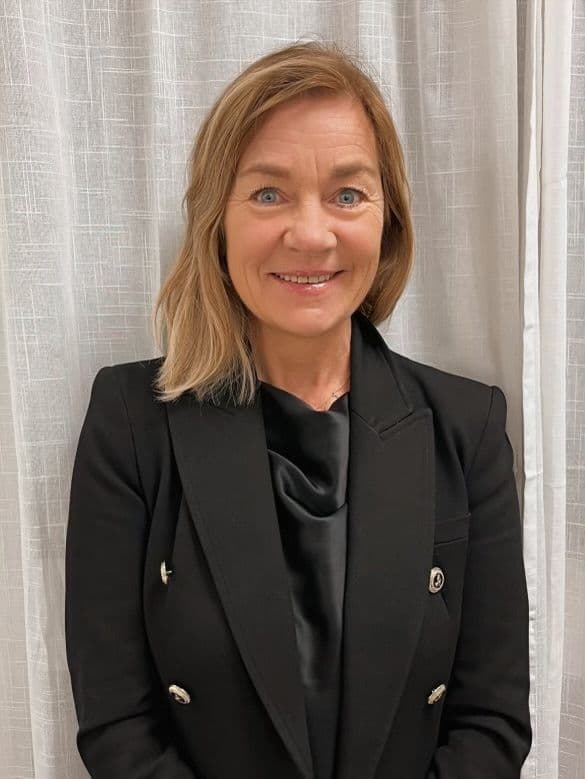
00:00:26 and give you the tools to optimize your fertility. Today, we are honored to have Natasha Evans with us. Natasha is a registered nutritionist and health coach, specialising in fertility. In her private practice, she works with couples who are wanting to conceive naturally, all individuals are couples going through assisted reproductive technology. Natasha is also the founder of the fertility 360 method.
00:00:58 Nine steps to nine months, if holistic full 360-degree approach to fertility, Nine steps to nine months, if holistic full 360-degree approach to fertility, with optimization across diet, lifestyle, environment and supplementation. Natasha is also a member of the fertility nutrition centre and sees clients through her private practice, as well as seeing clients through the Cotton Edge Longevity Clinic, human located in Mayfair in the UK. With more than nine years of experience in tech,
00:01:28 she continues to share her experience with tech companies, including Stride, she continues to share her experience with tech companies, including Stride, where she's the head of nutrition, and also in the FEMTEC company Day, where she advises clients on how to optimize the vaginal microbiome and tackle period pain. And with that, Natasha, thank you so much for joining us today. Thank you for having me. I think there's a lot of our listeners that are interested in how ageing
00:01:52 actually affects fertility. And giving your expertise in longevity and fertility, I think there would be a great starting point to talk about the science I think there would be a great starting point to talk about the science and also the misconceptions around ageing and fertility. Yeah, sure. So I think there's a lot of media attention, but it always has been a lot of attention on women's age and fertility.
00:02:16 And the reality is that women and men are waiting later and later in life to have children. And whilst this is very possible, and actually the average age of people are conceiving is increasing year on year, of people are conceiving is increasing year on year, in fact the fastest growing age category for women to conceive is the over 40s. So despite all that, there are some challenges that come with conceiving later in life.
00:02:46 So firstly, everyone will be very aware of the fact that your ovarian reserve starts to decrease as you get older. So you're born with all the eggs you're ever going to have. And each month you lose a few eggs. So it's not just the one you ovulate, but also it really depends on the woman, So it's not just the one you ovulate, but also it really depends on the woman, that it can be thousands of eggs might just die every month as well as part of
00:03:05 the monthly cycle. So you're a ovarian reserve is decreasing year on year, and there's nothing you can do about that. But another thing that happens is that our eggs do age as we get older as well. So your egg quality decreases as you get older. But the cool thing is that we can actually do something about that. And unfortunately, most women aren't told this. So they go into the IVF experience and they might ask the question,
00:03:26 So they go into the IVF experience and they might ask the question, is there anything I can do to improve my chances, anything I can do to improve my egg quality. And so often what I hear from my clients is that they're told, no, there's nothing you can do. You just have to try another round or whatever it is. You know, maybe they'll have a conversation around smoking or alcohol or losing weight.
00:03:49 But that's all it is really. And it really doesn't give them very much to work with. But actually there are so many things to do to support egg quality. And so I work with a lot of women who are in their 40s and you know, And so I work with a lot of women who are in their 40s and you know, we try everything we can to really support that equality, to enhance their chances of conceiving naturally or comparing five years. Maybe a bit of a detour on the topics.
00:04:11 But things really interesting that you say about aging and also getting, trying to conceive later in life. And we do see that because of a lot of cultural reasons as well. But even in younger males, there's been a big study showing that the spreading quality has decreased by about 50% in developing countries. the spreading quality has decreased by about 50% in developing countries. And you also see the same tendency in countries that are starting to be more developed and industrialized.
00:04:36 So it's not only the aging, but actually the environment as well. And I know that's also something that you talk a lot about. How do the environment impacts fertility? Do you see any tendencies or clients in your clinic being exposed to environment that you can kind of help them with, avoid toxins and etc. Yeah. Oh my gosh, totally.
00:04:59 So firstly, one thing I wanted to address there was that sperm quality also