
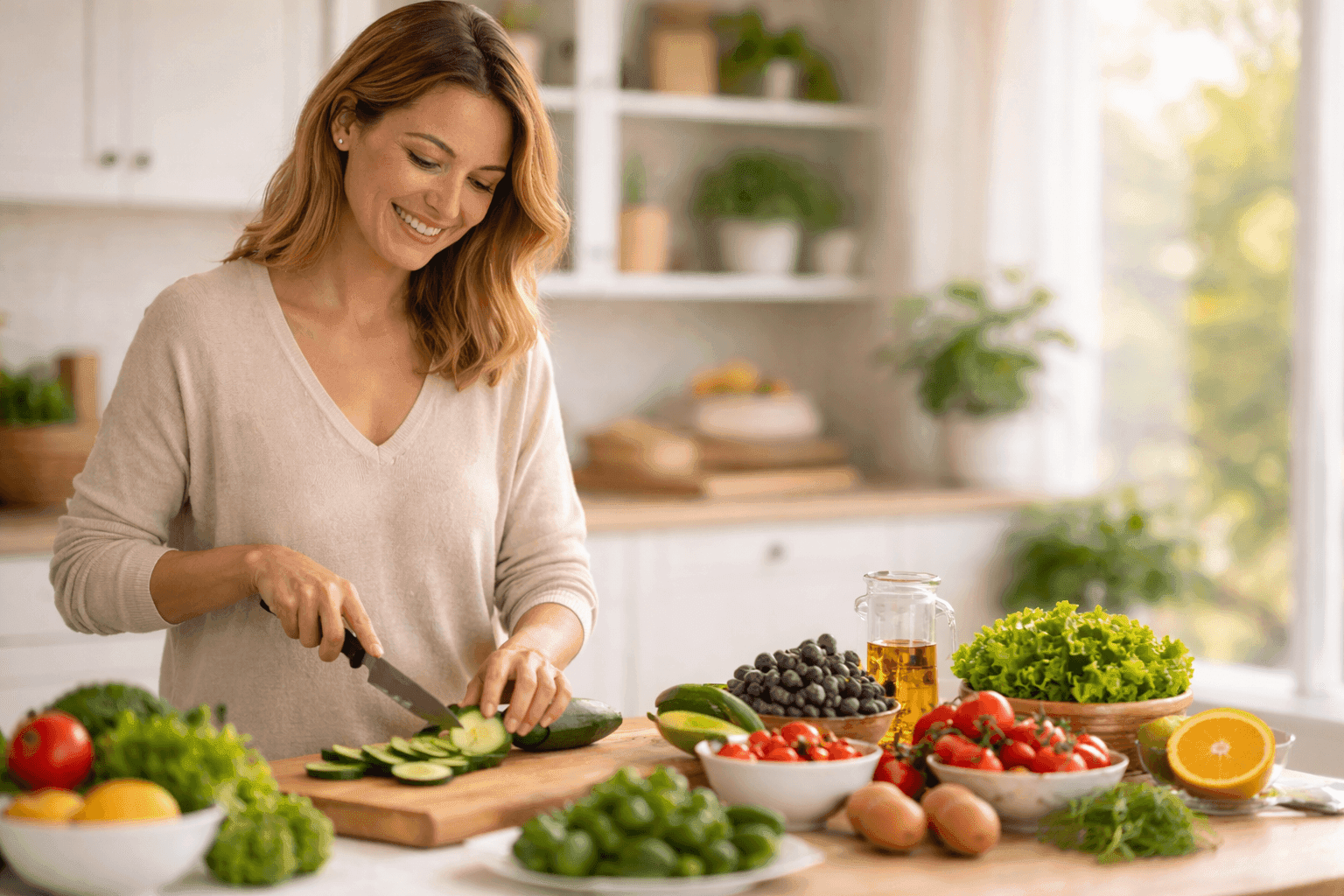
Trying to conceive can feel exciting, hopeful, and at times overwhelming. Many people focus on timing, tracking cycles, and medical appointments, but often overlook one of the most powerful tools available to them every single day: nutrition. The foods you eat directly influence inflammation, hormone balance, nutrient status, and overall reproductive health.
When conception does not happen as quickly as expected, it is natural to start looking for ways to improve your chances. While this guidance does not replace medical care and is not designed for those with specific hormonal disorders or diagnosed health conditions, improving your diet can be a meaningful and proactive step. Small changes in daily food choices can support the body’s natural processes and create a healthier internal environment for conception.
Quick Answer: The most effective fertility boosting foods are:

Lifestyle matters for fertility. A BMC Public Health study found that women with 4–5 healthy habits had a 59% lower risk of infertility.
Fill out the questionnaire, and get a personalised, holistic and evidence-based programme tailored to you.
 takes 3 minutes to complete
At the same time, limiting processed foods, trans fats, excessive sugar, and alcohol can significantly support reproductive health. Balanced meals, proper hydration, and mindful eating habits further optimize fertility.
Healthy fats are one of the most important categories of fertility boosting foods. They play a central role in inflammation control and hormone regulation, both of which are critical when trying to conceive.
Not all fats are created equal. Prioritizing unsaturated fats, especially essential fatty acids, can positively influence reproductive function.
Omega 3 and omega 6 fatty acids are both important, but many modern diets contain far more omega 6 than omega 3. While omega 6 fats are found in foods like nuts, seeds, and olive oil, omega 3 fats are especially valuable for their anti inflammatory properties.
Omega 3 fatty acids are commonly found in:
Balancing these fats matters because omega 6 and omega 3 compete for absorption in the body. If omega 6 intake is very high, it can reduce the beneficial effects of omega 3. Ensuring sufficient omega 3 intake supports inflammation regulation, which is essential for reproductive health.
This content is for educational purposes only. It has been reviewed for scientific accuracy, but it does not constitute medical advice, diagnosis, or treatment. Always consult a qualified healthcare professional regarding medical questions or fertility treatment decisions.
Reviewed for scientific accuracy by: Dr. Mona Bungum
Last reviewed: March 2026
Lifestyle matters for fertility. A BMC Public Health study found that women with 4–5 healthy habits had a 59% lower risk of infertility.
Fill out the questionnaire, and get a personalised, holistic and evidence-based programme tailored to you.
takes 3 minutes to completeAlthough healthy fats are beneficial, they are calorie dense. If lowering body weight has been recommended to improve fertility, portion control is important. Eating large amounts of even healthy foods like salmon or nuts can increase overall calorie intake significantly.
Fertility boosting foods should support overall health goals. Including healthy fats regularly is encouraged, but moderation remains key, especially when managing body weight.
For individuals who follow vegetarian or vegan diets and do not consume fish, omega 3 intake may be lower. In these cases, a vegan omega 3 supplement that provides EPA and DHA can be considered.
Taking such supplements away from meals, such as before breakfast or between meals, may help optimize absorption. The goal is to ensure adequate intake of essential fatty acids even when dietary restrictions are present.
Carbohydrates are often misunderstood, but they are an essential part of fertility boosting foods when chosen wisely. The quality of carbohydrates plays a significant role in hormone balance and metabolic stability.
Refined white carbohydrates can spike blood sugar and insulin levels. In contrast, whole grains and fiber rich options help maintain steady glucose levels.
High fiber carbohydrate sources include:
These foods support gut health and help regulate blood sugar levels. Stable insulin and glucose levels are important because frequent spikes can increase inflammation and negatively impact reproductive function.
While gluten itself is not inherently harmful, stress can sometimes affect digestion. For individuals under significant stress while trying to conceive, limiting gluten rather than completely eliminating it may be beneficial.
Naturally gluten free carbohydrates such as rice, potatoes, quinoa, nuts, and seeds provide fiber and nutrients without excessive processing. The focus should remain on whole, close to source foods rather than strict elimination unless medically required.
Protein is one of the most important macronutrients for overall health and fertility. It supports muscle maintenance, blood sugar regulation, and essential bodily functions.
Including adequate protein daily helps stabilize insulin and glucose levels, both of which are important for reproductive health.
Animal based proteins such as meat, fish, and eggs generally contain higher protein concentrations compared to plant sources. They also provide heme iron, which is particularly important for women preparing for pregnancy.
Plant proteins such as legumes, nuts, and seeds are valuable but typically contain lower protein density and do not provide heme iron. Individuals following plant based diets may need to be more intentional about meeting daily protein requirements.
If protein intake feels insufficient, plant based protein powders can be incorporated into smoothies, especially in the morning, to ensure a strong nutritional start to the day.
Exercise influences protein requirements. Strength based training increases the body’s need for protein to support muscle repair and prevent muscle breakdown.
Matching protein intake with activity levels ensures that the body remains strong and resilient. This balance contributes to overall health, which is foundational when trying to conceive.
Macronutrients provide calories and structure, but micronutrients such as vitamins and minerals are equally critical. These nutrients do not provide energy, yet they are essential for hormonal balance and reproductive processes.
One of the simplest strategies for ensuring adequate micronutrient intake is to eat the rainbow.
Colorful fruits and vegetables are rich in vitamins and minerals. The more variety included in the diet, the greater the likelihood of meeting nutrient needs.
Key principles include:
Fruit is often misunderstood because of its natural sugar content. However, whole fruit provides fiber and essential nutrients that support health. Vegetables should generally make up a larger portion of intake due to their lower sugar content and high nutrient density.
Herbs and spices are frequently overlooked sources of micronutrients. They contribute beneficial compounds that support bodily function and overall wellness.
Adding herbs and spices to meals enhances both flavor and nutrient density without increasing calories significantly.
Fertility boosting foods are only part of the picture. Avoiding certain dietary patterns is equally important.
Reducing inflammation and supporting nutrient absorption requires minimizing harmful inputs.
Highly processed foods often contain trans fats listed as hydrogenated or partially hydrogenated oils. These fats can interfere with ovulation and increase inflammation.
Common examples include:
Reading ingredient lists is essential. If a product contains a long list of unrecognizable ingredients or appears far removed from its natural source, it is likely highly processed. Choosing foods with fewer ingredients and closer to their original form is preferable.
High sugar intake can spike insulin and glucose levels. Repeated spikes contribute to inflammation and metabolic stress, which are not supportive of conception.
Balancing carbohydrates with protein and fiber can help maintain steady blood sugar levels.
Alcohol affects inflammation, liver function, and nutrient absorption. It can reduce zinc absorption, a mineral that is important for fertility in both men and women.
It may also reduce glutathione levels, an antioxidant that supports overall health. Limiting or avoiding alcohol while trying to conceive is strongly recommended.
For more insight into male reproductive health and lifestyle factors, Conceivio covers causes of male infertility.
How you eat matters as much as what you eat. High stress environments and distracted eating can impair digestion.
Mindless eating, such as working while eating or rushing meals, reduces the body’s ability to properly digest and absorb nutrients. Sitting down, relaxing, and focusing on the meal enhances nutrient utilization, which supports fertility.
Beyond specific fertility boosting foods, additional lifestyle considerations play a meaningful role in reproductive health.
These factors help ensure that nutrients are effectively utilized by the body.
Multivitamin and multimineral supplements designed for individuals trying to conceive can be beneficial. Options are available for both men and women.
Choosing high quality supplements and conducting research before purchasing is advisable. Supplements should support, not replace, a nutrient dense diet.
Drinking approximately two liters of fluid per day supports overall health. Water is ideal, but herbal teas and water rich fruits and vegetables also contribute to hydration.
Limiting sugary fizzy drinks and excessive fruit juice helps maintain metabolic balance. Proper hydration supports circulation, digestion, and cellular function.
Lifestyle factors are closely connected to fertility.
Important habits include:
Chronic stress and sleep deprivation can negatively affect reproductive health. Creating a consistent sleep routine and managing stress supports hormonal balance and overall wellbeing.
Adopting fertility boosting foods does not require perfection. Attempting to change everything at once often leads to burnout.
A gradual approach is more sustainable:
Nutrition is not simply about calories or energy intake. It is about nourishing the body with essential macronutrients and micronutrients that allow all systems to function optimally.
Identifying areas where support is needed, whether nutrition, exercise, or stress management, and seeking guidance can significantly improve long term success.
Fertility boosting foods are not about extreme diets or rigid rules. They are about choosing whole, close to source foods that support inflammation balance, hormonal health, nutrient status, and overall wellbeing.
Prioritizing omega 3 rich foods, whole grains, high quality protein, colorful fruits and vegetables, and adequate hydration creates a strong nutritional foundation. At the same time, limiting processed foods, excess sugar, alcohol, and distracted eating habits helps remove barriers to optimal health.
Small, consistent changes build momentum. By viewing nutrition as nourishment rather than restriction, you empower your body to function at its best during your fertility journey.
00:00:00 Hello everyone, thank you so much for taking the time to watch this video. So today I'm going to be talking about how to boost your fertility using some very simple nutrition recommendations which will hopefully increase your chances of conception. So just a brief introduction, this video will be discussing general recommendations on how to boost your nutrition to improve fertility and it's for those who are
00:00:26 thinking about having a baby either now or in the near future or hope have been trying for a having a baby either now or in the near future or hope have been trying for a while to conceive but having quite got there and want to look at other ways that they can improve their health and their chances of conception. It's not necessarily dealing with those with hormonal disorders or health
00:00:44 conditions that might be affecting fertility so just wanted to point that out. So we'll be discussing the main considerations, what macronutrients to have, how to get your macronutrients in also and how you can use good healthy nutrition strategies macronutrients in also and how you can use good healthy nutrition strategies and good lifestyle factors to help improve your fertility and how they are linked to
00:01:07 fertility. So my first recommendation is to include lots of healthy fats in your nutrition . Now when I say healthy fats I mean the unsaturated fats, a little saturated fat is okay here or there but you want to prioritize the essential fatty acids or your omega fatty acids. The main ones we want to consider are omega 3 and omega 6.
00:01:25 The main ones we want to consider are omega 3 and omega 6. They're both important, they're really good at regulating inflammation in the body but we do often find especially in western diets that omega 6 tends to be much higher in our nutrition in comparison to omega 3 and omega 3 is very important for the anti- inflammatory and their properties it contains.
00:01:49 So therefore look at your foods, so things like nuts, seeds, olive oil which are very popular and very healthy will be much higher in omega 6. Your omega 3s are very important and you'll generally get them from fish, where Your omega 3s are very important and you'll generally get them from fish, where the oily fish sardines, salmon, mackerel but any type of fish will contain omega 3s. Omega 3 is also in things like 1, nuts and kea seeds but there's a higher ratio
00:02:12 of omega 6 so you want to make sure you're getting enough omega 3 as well and try and keep it away from all the omega 6s because they try to be absorbed at the same point in the body and omega 6 tends to take priority so please do always consider all of your am igas but try and get that omega 3 in if you can.
00:02:29 try and get that omega 3 in if you can. Now with healthy fats although they're very good for you they are essentially fat and very high in calories so if you are thinking about losing weight in order to increase your fertility you might just want to monitor how much you're having. They are very good for you but you don't want to be having lots and lots of salmon or mackerel
00:02:50 because it's high in omega 3 but overdoing it and then meaning that your calorie intake is very high and then you're not able to lose weight especially if you've been recommended recommended to lower your BMI to increase your chances of conception. So just do consider that the fats are good but they are high in calories as well if you're
00:03:10 on a weight loss journey include them but don't have too much. And then the third consideration with healthy fats is dietary restrictions. If you're a vegan, if you're a vegetarian as I said before you won't be eating fish so your omega 3 could be quite low and if you're hoping to maybe reduce inflammation in the body I would certainly consider taking a vegan omega 3 supplement that in the body I would certainly consider taking a vegan omega 3 supplement that
00:03:32 is purely omega 3 EPA and DHA only and taking this in quite high doses but maybe away from food in before breakfast, give it half an hour or during the day. So in between meals including your omega 3 if you have dietary restrictions that don't allow you to eat fish. So next on the list to include is whole grains.
00:03:55 So you want to choose the high fiber carbohydrates so the brain grainier So you want to choose the high fiber carbohydrates so the brain grainier varieties of breads or pastas, brown rice etc and rather than having the white refined processed carbohydrates. These are really beneficial for the gut and other physiological mechanisms in the body just to keep everything working really well and hormonal balance and hormonal
00:04:20 metabolism they can also be beneficial for as well as keeping insulin and blood glucose within a good range rather than being high which the sort of high sugar white refined good range rather than being high which the sort of high sugar white refined carbs can do. Second point I have is naturally gluten free.
00:04:38 I have nothing against gluten and it can be a wonderful protein in many areas however if you are feeling a bit stressed because of you know trying to have a baby which many are nowadays, gluten can sometimes worsen the effect on the gut that stress can sometimes cause so you want to not take it out entirely but maybe limit gluten. cause so you want to not take it out entirely but maybe limit gluten.
00:05:03 So go for rice, potatoes, quinoa, buckwheat, nuts and seeds these are all really good carbohydrates that are high fiber as well and some contain essential fatty acids that are really good for you and naturally gluten free. You don't have to eliminate gluten but again if you are having pasta bread go for the whole brain varieties if you can just to boost your nutrition and your fertility as
00:05:27 well. And last on the list I have eat the rainbow now I know fruits and vegetables And last on the list I have eat the rainbow now I know fruits and vegetables aren't grains as such but they are carbohydrates and they are really important to factor in here. The more colorful your nutrition is the greater chance that you are getting all of your essential
00:05:43 micronutrients, your vitamins and minerals which I will discuss later in the video but these are really important eat the rainbow keep it colorful, keep your cards healthy and wholesome and high in fiber naturally gluten free if you can. So next on the list is the very popular macronutrient protein which I can't So next on the list is the very popular macronutrient protein which I can't recommend enough.
00:06:05 It is really good for managing insulin and glucose levels, keeping the body strong, keeping the mechanisms working well so I do recommend that you include quite a high amount of protein in your diet daily if you can. Plant versus animal either or whichever suits your dietary restrictions is fine but just remember that animal proteins will contain higher amounts of protein in
00:06:26 remember that animal proteins will contain higher amounts of protein in comparison to the other macronutrients contained within them and in general those who do eat meat and eggs and fish will have a higher protein intake in comparison to those who don't. You can get protein from nuts, seeds, legumes but in general they will not be anywhere near
00:06:53 as high as the animal proteins but also below in iron which if you're a woman and you're wanting to get pregnant you do have to consider your iron intake or your heme wanting to get pregnant you do have to consider your iron intake or your heme iron intake, heme iron blood iron animal products will contain this plant will not. Therefore moving on to the next part if you are vegan or vegetarian and don't feel you're
00:07:15 really getting enough protein daily I would recommend taking a supplement. So there are lots of vegan proteins available powder or vegan protein powders available that you can mix into a smoothie in the morning and just ensure that you're that you can mix into a smoothie in the morning and just ensure that you're getting good dose early in the morning and then incorporate other sources of protein where you can throw out
00:07:35 the day. And if this happens to be through supplements that's fine but just ensure that you're meeting your daily requirements as often as you can. And then exercise considerations. So if you are exercising a lot especially if you're doing strength based exercises these will utilize the protein in the body and help the muscles to grow so make sure
00:07:57 if you are exercising quite a lot and really really killing it at the gym that you get exercising quite a lot and really really killing it at the gym that you get enough proteins that you don't get any kind of muscle breakdown that ends up leading to muscle loss. It's always a good consideration to factor in when we talk about protein how much exercise
00:08:15 you're doing and ensuring that your protein intake matches the exercise. So next on the list that is very important to boost your fertility is ensuring you get enough micronutrients in your nutrition. Your micronutrients are your vitamins and minerals these do not contain Your micronutrients are your vitamins and minerals these do not contain calories unlike your macronutrients or your big nutrients which are protein fats carbohydrates.
00:08:40 Another micronutrient is alcohol but we'll discuss that in the next slide. So as I said before the best way to get your vitamins and minerals in is color. Eat the rainbow color is key. I've said this already but it's worth repeating. The more varied the color is in your nutrition so lots of different colors every day. every day. You will be safe in the knowledge that you are getting enough vitamins and
00:09:05 minerals. Your fruit and veg ratio so again fruit and veg are made the main places where you'll get really high amounts of different vitamins and minerals. Fruit is wonderful. Sometimes gets a bad rep because it's high in sugar but they are rich in essential vitamins and minerals so please do not neglect fruit.
00:09:25 What you need to prioritize with fruit is having it whole and raw if you can. What you need to prioritize with fruit is having it whole and raw if you can. Fruit juices are not the same and constantly blending them into smoothies breaks them down as well. It's better to have it as it comes off the tree and straight in. There's no point in constantly blitzing them up to try and get lots and lots and lots of
00:09:46 different ones in one sitting. It's fine to pick a fruit throughout the day if you want to to ensure you're getting your vitamins and minerals in. However when it comes to fruit and vegetables it's better to have a higher ratio of vegetables in comparison to fruit and this is also based again on sugar intake. in comparison to fruit and this is also based again on sugar intake.
00:10:05 You do want to have your green veg, your salad, your root veg as well which are also very in color. These are better to have in higher amounts in comparison to fruit. Don't stress if you're someone who really likes fruit but really can't you know taste its palate vegetables then it's okay to have a little bit more fruit if that's the only
00:10:29 way you're going to get your vitamins and minerals in. way you're going to get your vitamins and minerals in. Another thing I want to discuss are herbs and spices again really high in essential vitamins and minerals really good at helping the body function well and boosting fertility so don't forget your herbs and spices as well when it comes to micro nutrients. So I've told you what foods to include to improve your fertility.
00:10:55 Here's what you should avoid processed foods. I can't say this enough. I can't say this enough. Those foods that have been overly processed contain high amounts of trans fat that are often referred to as hydrogenated oils or partially hydrogenated vegetable oils are really really dangerous when it comes to ovulation they can actually interfere
00:11:17 with ovulation. They also can cause inflammation in the body and can stop the absorption of essential fatty acids like omega 3 and omega 6. So please check your ingredients list. Things like biscuits, cakes, all those crisps and nasty things we shouldn't be Things like biscuits, cakes, all those crisps and nasty things we shouldn't be
00:11:35 having lots of maybe a little but not a lot and will contain trans fats and these are not good for your fertility at all. You also want to look out for high amounts of sugar and to help manage insulin and glucose levels if it's high in sugar insulin and glucose will spike and again it's going to
00:11:54 lead to inflammation and is really not good when you are trying to conceive. So please avoid processed foods as much as you can. So please avoid processed foods as much as you can. Best way to do this is look at the ingredients list on the back of the packet. If it's a long long list and doesn't seem that close to source or looks in a natural color then it is highly processed especially if the ingredients you cannot even pronounce
00:12:19 and look very chemical or you know things you should avoid then avoid it. If you're uncertain you can always check and online what certain ingredients are but in general the fewer ingredients the closer the source it is the better it is for general the fewer ingredients the closer the source it is the better it is for you and the less processed it is. So processed food one avoid.
00:12:41 Number two is alcohol. Now I know it's nice to sometimes relax, un unwind with possibly a glass of wine or a beer or a spirit whichever you prefer but when you are thinking about your fertility and you're wanting to start trying to get pregnant you should really be limiting your alcohol at least.
00:12:59 alcohol at least. Alcohol again can have an effect on inflammation. It also takes its toll on the liver and can actually stop the absorption of zinc which is highly important for fertility. Both men and women really need their zinc to be optimum when it comes to a conception. So alcohol can prevent that absorption and it also can decrease the amount of
00:13:27 glutathione in the body which is a really powerful antioxidant and really important for in the body which is a really powerful antioxidant and really important for keeping you healthy and improving your fertility. So please avoid alcohol or at least limit it as much as possible and we'll try to conceive. And another thing to avoid is not necessarily a micronutrient or micronutrient
00:13:47 but mindless eating. I deal a lot with people who have maybe high stress jobs and are wondering why they can't get pregnant. If you are eating all these wonderful amazing foods everything I've listed in If you are eating all these wonderful amazing foods everything I've listed in the previous
00:14:02 slides. So you have to think how am I eating. Sit down, relax, be able to concentrate and focus on food and let eating be the thing that you are doing in that moment rather than typing up and sending emails whilst having a bite or having a drink. That's mindless eating and you must avoid that because you will not be able to
00:14:24 digest your food properly and if you don't digest your food properly you are not getting all your essential macronutrients absorbed into the body so that you can optimize your essential macronutrients absorbed into the body so that you can optimize your health and promote your fertility. So just a few other considerations to factor in to help boost your nutrition to
00:14:43 improve fertility. Supplements, a lot of people now will take multivitamins and multimineral that are designed for those who are trying to get pregnant. So they make father to be multivitamins and multimineral and mother to be mult So they make father to be multivitamins and multimineral and mother to be mult ivitamins
00:15:01 and multimineral supplements. Feel free to take these that can be really beneficial when it comes to boosting your fertility. So just make sure you are paying a decent amount and do some research as well online for the best supplements to take and again keeping it organic, close to source is always best.
00:15:22 Pre-precancy supplement is always beneficial for both men and women to consider . Another factor is hydration. Another factor is hydration. So it's great that you are eating all the right foods but remember to drink minimum out around 2 litres of water per day. Now your fluid intake all months up so if you are someone who drinks a lot of
00:15:40 coffee a lot of tea that will add to your fluid but try not to have caffeine too late in the day and don't forget that your fruits, vegetables and watery type foods will also add to your fluid intake. So if you feel it difficult to drink water just as it is you can have other drinks or
00:15:59 drinks or other high water containing foods but just try and avoid the processed sugary f izzy drinks too many fruit juices. Try and have things like herbal teas or sparkling water with maybe a little flavoring in it if you don't like having water on its own and keeping your veg and fruit high will ensure
00:16:18 that you get adequate hydration each day. And finally lifestyle factors. So good exercise, mindfulness, meditation, mindful eating these are all really beneficial beneficial when it comes to fertility. Remaining calm and relaxed and healthy and energetic where necessary at different points
00:16:37 during the day are essential and also prioritise sleep. Make sure you are getting enough sleep each night you should be aiming for 8 hours a night if you can. I appreciate lifestyle work children can all come into that but truly benefiting your sleep pattern and improving your sleep routine is essential for helping sleep pattern and improving your sleep routine is essential for helping
00:17:00 fertility for both men and women. So to conclude your final thoughts for the day I know I've spoken about a lot of different things and maybe to take on everything all at once may seem overwhelming. So the best thing you can do now is make small, gradual changes whether it's daily trying to add something in or take something out or weekly saying okay this week I'm
00:17:25 really going to prioritise my omega 3 intake. Then the following week I'm going to try and eat as much gluten free food, Then the following week I'm going to try and eat as much gluten free food, naturally gluten free food as I can and then the following week I'm going to up my exercise a bit. That's a better way to do it.
00:17:41 Trying to do everything taking all the information all at once and do everything usually will fail. Prepare yourself have a strategy have a timeline moving forward of how you're going to make changes is important. So don't think you have to do it all at once make small, gradual changes where you can.
00:17:58 you can. And remember that nutrition is not just fuel it's not just to supply you with energy to get through the day think of the wonderful nourishing components of your food, the good macronutrients, the good micronutrients all those healthy beneficial essential ingredients in close to source whole foods are benefiting your body and making sure
00:18:22 everything is functioning well. It's not just fuel and energy or calories in calories out it's about making It's not just fuel and energy or calories in calories out it's about making sure the body is at its optimum in order to conceive a child. And then number three please find support and get help for your difficult areas .
00:18:41 Some people will find it easy to exercise all day long every day their lovers they can't get enough but then might not have the best nutrition or maybe their eating habits might not be great. However you've got the other side people might enjoy eating loads of healthy foods but find it difficult to get to the gym or go exercise or they just can't be bothered.
00:18:59 it difficult to get to the gym or go exercise or they just can't be bothered. And then there are those who will never exercise and don't have very good nutrition either. Figure out where you need the help and find somebody to help you because good advice and support is always a good way to make changes and change behaviors in your lifestyle patterns so that you can improve your fertility and overall health.
00:19:26 So thank you so much for listening I hope this has been helpful take care bye. So thank you so much for listening I hope this has been helpful take care bye.