
Download the Conceivio App

Download the Conceivio App

Download
logo
HomeResourcesClinicsAbout Us

Fermentation and Probiotics

Pilar Manzanaro
Pilar Manzanaro

Video
6 min
Fermentation and Probiotics

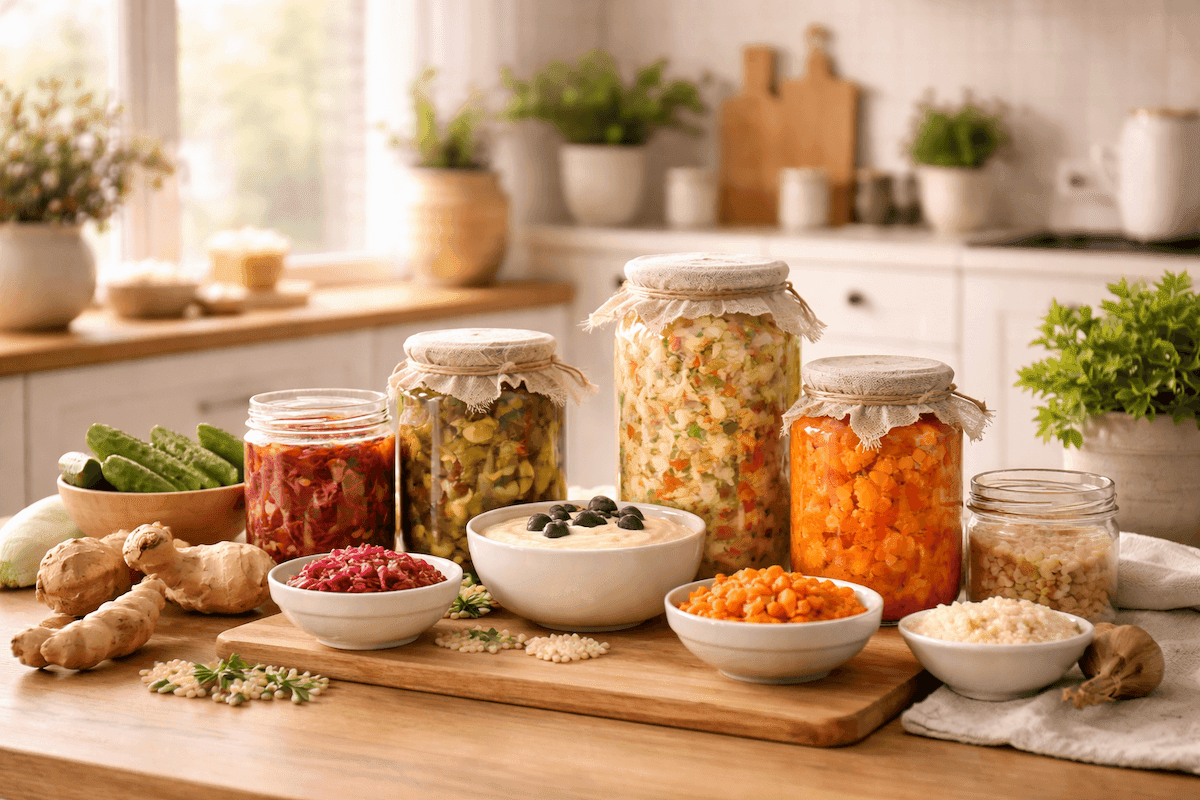
In Fermentation and Probiotics, explore how fermented foods promote gut health and support digestion. Learn the powerful connection between probiotics and your microbiome for improved immunity and overall wellness!


More on this topic

Uterine Fibroids Diet: Foods That May Help Manage Symptoms

Trying to Conceive

Uterine Fibroids Diet: Foods That May Help Manage Symptoms

This video discusses how a uterine fibroids diet can help manage symptoms by supporting estrogen balance, reducing inflammation, and improving liver health. It covers foods to include, foods to limit, and practical nutrition habits to support overall reproductive health.

Diet and Supplements

Diet

Inflammation

Uterine Fibroids

Conditions

Jane Aherne
Video
12 min
Endometriosis Diet: Foods That Help Reduce Inflammation

Trying to Conceive

Endometriosis Diet: Foods That Help Reduce Inflammation

This video explores how an endometriosis diet can help reduce inflammation and support estrogen metabolism. It highlights anti-inflammatory foods to include, foods to limit, and practical tips for making gradual, sustainable nutrition changes to help manage endometriosis symptoms.

Endometriosis

Diet

Diet and Supplements

Inflammation

Conditions

Jane Aherne
Video
10 min
Can Endometriosis Cause Infertility? What You Need to Know

Trying to Conceive

Can Endometriosis Cause Infertility? What You Need to Know

This video explains how endometriosis can affect fertility, including the role of inflammation, adhesions, and disease severity. It also explores common endometriosis fertility issues and outlines medical, surgical, and assisted reproductive options for those trying to conceive.

Endometriosis

Diet and Supplements

Diet

Inflammation

Supplements

Conditions

Jane Aherne
Video
8 min
Irritable Bowel Syndrome Symptoms and the Different Types of IBS

Trying to Conceive

Irritable Bowel Syndrome Symptoms and the Different Types of IBS

In this video, we explain common irritable bowel syndrome symptoms and how IBS affects the digestive system. It covers the different types of IBS, including IBS with constipation, diarrhoea and mixed symptoms. The video also explains how diet, lifestyle and stress can influence digestion and fertility.

Diet

Digestion

Inflammation

Microbiome

Conditions

Katrine Nørgaard
Katrine Nørgaard
Video
11 min
Why Are Personalised Nutrition Plans Preferred?

Breastfeeding

Pregnancy

Parenthood

Trying to Conceive

Why Are Personalised Nutrition Plans Preferred?

Let’s explore the powerful benefits of personalized nutrition plans and why they could be the key to unlocking your healthiest self.

Diet

Diet and Supplements

Digestion

Inflammation

Microbiome

Richelle Isaacs
Richelle Isaacs
Article
8 min
How to Use Nutrition to Improve Egg Quality and Support Conception

Trying to Conceive

Pregnancy

Breastfeeding

How to Use Nutrition to Improve Egg Quality and Support Conception

A deliciously nutritious alternative to traditional burgers, packed with hormonal balance promoting foods, fibre and veggie protein to boost egg and sperm quality.

Inflammation

Digestion

Diet and Supplements

Diet

Egg Quality

Endometriosis

Breastfeeding

PCOS

Microbiome

Pilar Manzanaro
Pilar Manzanaro
Article
6 min

Download the Conceivio App

Scan the QR code to download and try the app for free

QR code

4.7 rating on App Stores

Giselle

Giselle

Yoga Teacher

Chelsea

Chelsea

Mindfulness Expert

Kristina

Kristina

Shanti

Shanti

Lisa

Lisa

Rose

Rose

Fertility Coach

Talia

Talia

Julia

Julia

Download App
Conceivio Icon

Access at-home fertility tests, supplements, and resources at Conceivio

Download Conceivio App

4.7 rating on App Stores

QR code

Free Fertility Guide & Tools

Sign up for free expert fertility tools, easy-to-follow guidance, healthy recipes, updates, and more! See you in your Inbox!

logoTry for Free

Navigation

Resources

Clinics

About Us

Privacy Policy

Terms and Conditions

Cookie Policy

Contact us

Conceivio ApS
Ragnagade 7, 2100 København
Danmark


2026 © Conceivio ApS

X ProfileInstagram profileYoutube profile

Video Transcript

00:00:00 Hello everyone and welcome to our webinar on fermentation and probiotics. My name is Pilar Manzanaro and I am a registered nutritional therapist. Today we'll be exploring how to turn everyday foods into health-boosting ones with a very simple process of fermentation. I know, fermentation sounds a little complicated, but trust me, you need next-to-know equipment, takes little effort and the results are amazing, both tasty and incredibly good for you.

00:00:24 Fermented foods are incredibly good for you for two reasons. The first one is that the fermentation process reduces the phytase and oxalates in certain foods The first one is that the fermentation process reduces the phytase and oxalates in certain foods that combine to minerals, including iron and calcium, reducing absorption in the intestine. Foods high in phytase include nuts, seeds, pulses and beans. Oxalates are found in green leafy veggies, including broccoli, Brussels sprouts, also carrots, celery, olives, parsley and spinach. Some fruits as well, like blackberries, blueberries, kiwi fruit, oranges and even raspberries.

00:00:57 Other foods like nuts and wheat are also high in oxalates and so are chocolate, coffee and tea. Other foods like nuts and wheat are also high in oxalates and so are chocolate, coffee and tea. And that's another reason to eat them in moderation. So fermentation can reduce anti-nutrients. That's great, but it's not the full picture because fermented foods are also high in probiotics. Yep, the good bacteria that keeps you healthy. And a healthy gut supports your entire body with nutrients, excreting toxins, helping manage your weight, supporting your immune system and more.

00:01:25 So fermenting foods preserves them without any additives or using any heating methods that can reduce nutrients. So fermenting foods preserves them without any additives or using any heating methods that can reduce nutrients. Fermenting a food means that bacteria, mould or yeast transform sugars, the carbohydrate, into something called acetic acid, alcohol or lactic acid, and lowering the pH so no harmful bacteria can grow in that food. For example, sauerkraut and kimchi are fermented with sea salt that draws out the vegetable juices and produces lactic acid bacteria, which can support your gut flora by crowding out bad bacteria and repopulating your gut with good bacteria

00:01:53 which can support your gut flora by crowding out bad bacteria and repopulating your gut with good bacteria that can help you digest and absorb nutrients, generate energy, support your toxin elimination and manage your weight. The osmotic process that draws out water in veg and decreases the pH also protects the food against harmful bacteria overgrowth. Other fermented foods include kefir and kombucha. Kefir is made by feeding kefir grains organic cow's milk, so they feed on the lactose and produce lactic acid bacteria in return. Not a bad deal, right? Also, as the lactose has been metabolised by the grains,

00:02:29 Also, as the lactose has been metabolised by the grains, kefir can be more easily digested by those with lactose intolerance. But you can also make kefir with coconut milk as the grains can feed on the coconut sugar, making it a more blood sugar friendly food. We love adding kefir to our smoothies, our muesli, granola, or just sipping it for a good boost of gut-friendly bacteria. Sometimes, when we have had too much in the fridge, we have used our kefir to make pancakes,

00:02:56 which turn out to be super fluffy and airy thanks to the fermented milk. Other fermented foods include miso. Just ensure you don't boil the paste when making soup, as you'll kill the good bacteria. One more fermented food that I like to talk about is soy sauce, the traditionally made kind. But do remember that the good bacteria is heat-sensitive, so if you can add your soy sauce at the end of the cooking, all the better to protect that bacteria.

00:03:23 And now let's not forget about some of the most common fermented foods, live yogurt and sourdough bread. So yogurt contains good levels of protein and calcium So yogurt contains good levels of protein and calcium and the probiotic bacteria would support your intestinal health. Sourdough is made with wild yeast, produced as the flour is fermented. Although any beneficial yeast will die in the baking process, the fermentation process reduces the levels of phytates in the flour, helping us absorb more

00:03:49 iron, calcium and other important minerals. Now let's move into the kitchen and make some kimchi. This recipe is by Kirsten and Christopher Shockey from the book Fermented Vegetables, with a couple of twists of course. I love it because it has heat, depth and flavour and it is so nutritious. It even has a little seaweed for a thyroid-friendly dose of iodine. It is a living food so each batch tastes and looks completely different. Oh, and after you've finished fermenting, and trust me, it only takes a couple of days, it can sit in the fridge pretty much indefinitely. Although I bet you anything will be gone before you know it.


Full Transcript

[00:00:00] Hello everyone and welcome to our webinar on fermentation and probiotics. My name is Pilar Manzanaro and I am a registered nutritional therapist. Today we'll be exploring how to turn everyday foods into health-boosting ones with a very simple process of fermentation. I know, fermentation sounds a little complicated, but trust me, you need next-to-know equipment, takes little effort and the results are amazing, both tasty and incredibly good for you. [00:00:24] Fermented foods are incredibly good for you for two reasons. The first one is that the fermentation process reduces the phytase and oxalates in certain foods The first one is that the fermentation process reduces the phytase and oxalates in certain foods that combine to minerals, including iron and calcium, reducing absorption in the intestine. Foods high in phytase include nuts, seeds, pulses and beans. Oxalates are found in green leafy veggies, including broccoli, Brussels sprouts, also carrots, celery, olives, parsley and spinach. Some fruits as well, like blackberries, blueberries, kiwi fruit, oranges and even raspberries. [00:00:57] Other foods like nuts and wheat are also high in oxalates and so are chocolate, coffee and tea. Other foods like nuts and wheat are also high in oxalates and so are chocolate, coffee and tea. And that's another reason to eat them in moderation. So fermentation can reduce anti-nutrients. That's great, but it's not the full picture because fermented foods are also high in probiotics. Yep, the good bacteria that keeps you healthy. And a healthy gut supports your entire body with nutrients, excreting toxins, helping manage your weight, supporting your immune system and more. [00:01:25] So fermenting foods preserves them without any additives or using any heating methods that can reduce nutrients. So fermenting foods preserves them without any additives or using any heating methods that can reduce nutrients. Fermenting a food means that bacteria, mould or yeast transform sugars, the carbohydrate, into something called acetic acid, alcohol or lactic acid, and lowering the pH so no harmful bacteria can grow in that food. For example, sauerkraut and kimchi are fermented with sea salt that draws out the vegetable juices and produces lactic acid bacteria, which can support your gut flora by crowding out bad bacteria and repopulating your gut with good bacteria [00:01:53] which can support your gut flora by crowding out bad bacteria and repopulating your gut with good bacteria that can help you digest and absorb nutrients, generate energy, support your toxin elimination and manage your weight. The osmotic process that draws out water in veg and decreases the pH also protects the food against harmful bacteria overgrowth. Other fermented foods include kefir and kombucha. Kefir is made by feeding kefir grains organic cow's milk, so they feed on the lactose and produce lactic acid bacteria in return. Not a bad deal, right? Also, as the lactose has been metabolised by the grains, [00:02:29] Also, as the lactose has been metabolised by the grains, kefir can be more easily digested by those with lactose intolerance. But you can also make kefir with coconut milk as the grains can feed on the coconut sugar, making it a more blood sugar friendly food. We love adding kefir to our smoothies, our muesli, granola, or just sipping it for a good boost of gut-friendly bacteria. Sometimes, when we have had too much in the fridge, we have used our kefir to make pancakes, [00:02:56] which turn out to be super fluffy and airy thanks to the fermented milk. Other fermented foods include miso. Just ensure you don't boil the paste when making soup, as you'll kill the good bacteria. One more fermented food that I like to talk about is soy sauce, the traditionally made kind. But do remember that the good bacteria is heat-sensitive, so if you can add your soy sauce at the end of the cooking, all the better to protect that bacteria. [00:03:23] And now let's not forget about some of the most common fermented foods, live yogurt and sourdough bread. So yogurt contains good levels of protein and calcium So yogurt contains good levels of protein and calcium and the probiotic bacteria would support your intestinal health. Sourdough is made with wild yeast, produced as the flour is fermented. Although any beneficial yeast will die in the baking process, the fermentation process reduces the levels of phytates in the flour, helping us absorb more [00:03:49] iron, calcium and other important minerals. Now let's move into the kitchen and make some kimchi. This recipe is by Kirsten and Christopher Shockey from the book Fermented Vegetables, with a couple of twists of course. I love it because it has heat, depth and flavour and it is so nutritious. It even has a little seaweed for a thyroid-friendly dose of iodine. It is a living food so each batch tastes and looks completely different. Oh, and after you've finished fermenting, and trust me, it only takes a couple of days, it can sit in the fridge pretty much indefinitely. Although I bet you anything will be gone before you know it.