
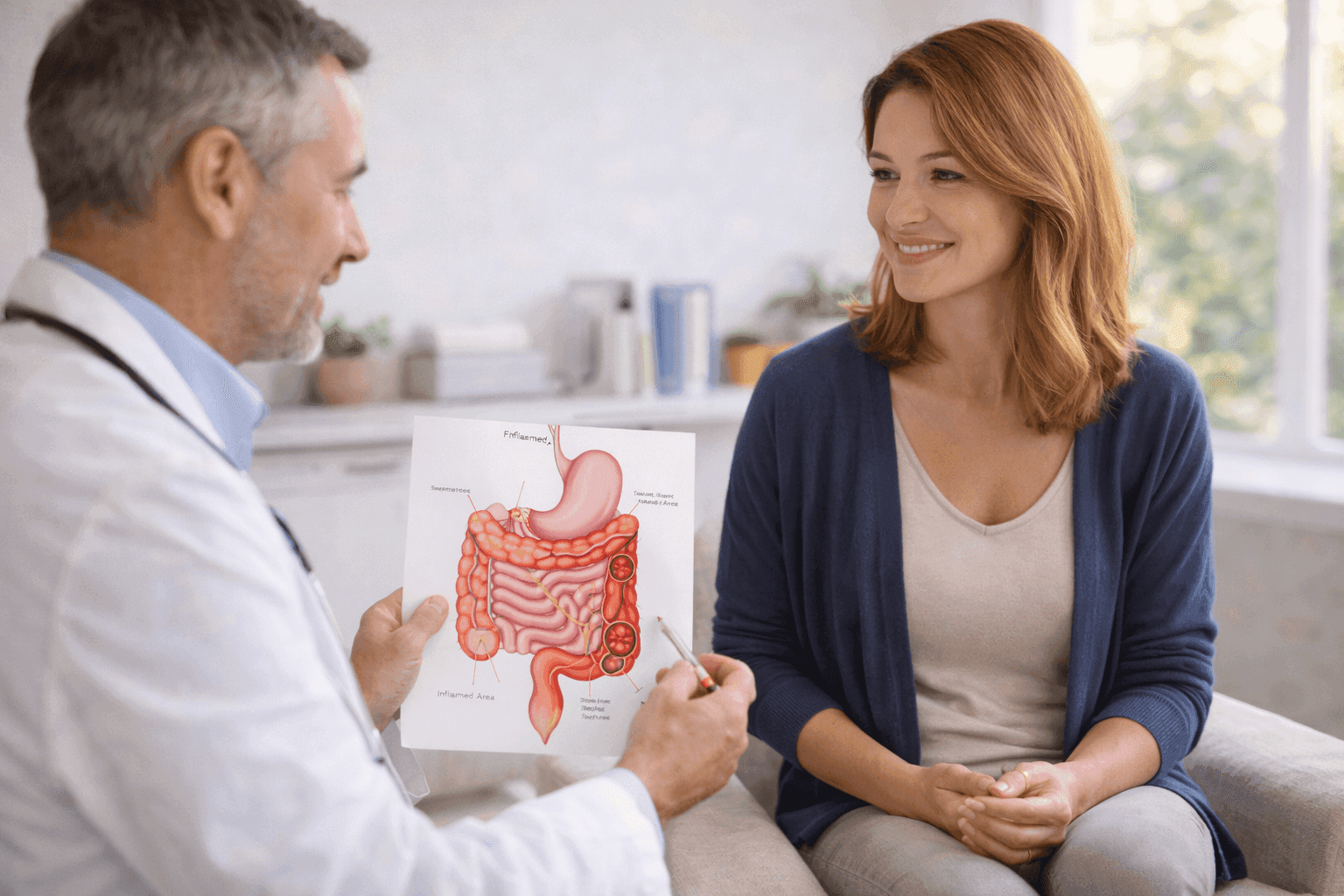
Ulcerative colitis and Crohn's disease are the two most common forms of inflammatory bowel disease. They share enough symptoms to be frequently confused, and that confusion can delay the right diagnosis, the right treatment, and the right adjustments to daily life. Knowing how the two conditions differ matters both clinically and practically, because the patterns of inflammation, the locations affected, and the long-term complications are not the same.
The comparison of ulcerative colitis vs Crohn's disease is also relevant for fertility. Chronic inflammation, whatever its source, can influence hormonal balance, ovulation, sperm quality, implantation, and nutrient absorption. For individuals or couples trying to conceive, understanding which condition is in play and how it behaves is a useful part of the wider picture, not a separate medical concern.
Quick answer: Ulcerative colitis affects only the colon and rectum with continuous inflammation, while Crohn's disease can affect any part of the digestive tract in patches and penetrate deeper into the bowel wall. Both conditions share symptoms such as persistent diarrhoea, abdominal pain, and fatigue, but ulcerative colitis is more often associated with rectal bleeding and tenesmus.

Lifestyle matters for fertility. A BMC Public Health study found that women with 4–5 healthy habits had a 59% lower risk of infertility.
Fill out the questionnaire, and get a personalised, holistic and evidence-based programme tailored to you.
 takes 3 minutes to complete
Ulcerative colitis is a chronic inflammatory bowel disease that affects the inner lining of the colon and rectum. Inflammation usually begins in the rectum and can spread upward through part or all of the colon. A defining feature is that the inflammation is continuous: there are no healthy sections of bowel between inflamed areas.
The colon plays a central role in absorbing water and forming stool. When its lining becomes inflamed, that process is disrupted, leading to many of the symptoms most associated with ulcerative colitis. The condition typically follows a pattern of flare-ups and remission, with periods of more active symptoms followed by phases when symptoms ease.
Crohn's disease is the other major form of inflammatory bowel disease, but it differs from ulcerative colitis in both location and pattern of inflammation. Crohn's can affect any part of the gastrointestinal tract, from the mouth to the anus, although it most commonly affects the end of the small intestine and the beginning of the colon.
Unlike ulcerative colitis, inflammation in Crohn's disease occurs in patches. Healthy sections of digestive tract may sit between inflamed sections. Inflammation in Crohn's can also penetrate deeper into the intestinal wall rather than being limited to the inner lining, which explains why the condition tends to produce different complications over time.
Because both conditions involve chronic intestinal inflammation, ulcerative colitis and Crohn's disease share several common symptoms. These typically include:
This content is for educational purposes only. It has been reviewed for scientific accuracy, but it does not constitute medical advice, diagnosis, or treatment. Always consult a qualified healthcare professional regarding medical questions or fertility treatment decisions.
Reviewed for scientific accuracy by: Dr. Mona Bungum
Last reviewed: May 2026
Lifestyle matters for fertility. A BMC Public Health study found that women with 4–5 healthy habits had a 59% lower risk of infertility.
Fill out the questionnaire, and get a personalised, holistic and evidence-based programme tailored to you.
takes 3 minutes to completeThese symptoms reflect ongoing irritation of the intestinal lining. During active inflammation, digestion becomes less efficient, nutrient absorption can drop, and bowel movements may become urgent and unpredictable. The overlap is part of why the two conditions are commonly confused in the early stages.
Ulcerative colitis symptoms vary in severity, but even milder symptoms can significantly affect daily life. Persistent diarrhoea often leads people to plan their day around access to bathrooms, which can limit work schedules, social activities, and travel. Abdominal pain and cramping can occur unpredictably, creating discomfort and stress throughout the day.
Blood or mucus in the stool can be distressing and may cause anxiety around bowel habits. Fatigue is often disproportionate to activity levels, reflecting the energy demands of chronic inflammation rather than how much someone has done that day. Over time, these symptoms can affect confidence, mood, and overall quality of life, which is why symptom awareness and management matter as much as the medical treatment itself.
Some symptoms appear more often in ulcerative colitis than in Crohn's and help distinguish the two conditions. The most clinically useful are:
Both symptoms are closely linked to inflammation in the rectum and lower colon. Tenesmus can be particularly uncomfortable because it creates a constant urge to use the bathroom even when there is little or no stool present. These features reflect the continuous, lining-only pattern of inflammation that characterises ulcerative colitis.
Although Crohn's disease shares many symptoms with ulcerative colitis, it also presents some distinct features. Symptoms more commonly associated with Crohn's include:
These occur because Crohn's can affect deeper layers of the intestinal wall and areas of the digestive tract beyond the colon. Perianal complications in particular are characteristic of Crohn's and rarely seen in ulcerative colitis, which makes them a useful distinguishing feature in clinical assessment.
Ulcerative colitis symptoms do not remain constant. The disease typically alternates between flare-ups and remission, and the experience can feel very different in each phase. During flare-ups, inflammation is more active, leading to frequent bowel movements, increased urgency, abdominal pain, and greater fatigue.
During remission, inflammation reduces and symptoms ease. Many people experience fewer bowel movements, less pain, and improved energy. Remission does not always mean symptoms disappear completely. Mild digestive sensitivity or low-grade fatigue often persists, which is part of why ongoing awareness and management remain important even when the condition feels settled.
Inflammation is the underlying driver of symptoms in both ulcerative colitis and Crohn's disease. Chronic intestinal inflammation disrupts normal digestion, increases nutrient demand, and places sustained stress on the immune system and the body as a whole. Over time, this systemic effect can influence energy levels, hormone balance, and reproductive function.
Managing the inflammatory environment is therefore central to managing symptoms. Targeted anti-inflammatory strategies across diet, lifestyle, and stress management often produce changes that medication alone cannot, particularly between flares when the body has more capacity to adapt.
Inflammatory bowel diseases can affect fertility in several interconnected ways. Chronic inflammation may disrupt hormonal balance, ovulation, and the quality of eggs and sperm. It can also influence implantation of a fertilised embryo and the development of the placenta in early pregnancy.
The pattern is similar to other chronic inflammatory conditions. The relationship between endometriosis and infertility, for example, follows comparable mechanisms: persistent inflammation, altered hormonal signalling, and an unfavourable pelvic environment. Recognising this overlap helps frame what to expect with IBD and where to focus support.
Inflammation in the gut can also interfere with the absorption of nutrients essential to reproductive health. During prolonged flare-ups, reduced absorption, decreased appetite, and dietary restrictions may compound the effect on fertility.
Psychological load matters too. Managing a chronic condition and coping with ongoing symptoms can sustain elevated stress and fertility interactions, which influence reproductive function through the same hormonal pathways that the inflammation itself affects. Certain medications and surgical treatments, particularly those involving the pelvic area, can also affect fertility and should always be discussed with a healthcare professional during planning.
Wider context on the lifestyle factors affecting fertility can be helpful when building a plan that supports both the IBD and the path toward conception, since the inputs that calm chronic inflammation often align with the inputs that support reproductive health.
Inflammation in the colon and small intestine can interfere with the body's ability to absorb nutrients effectively. When absorption is compromised, energy levels often decline and the body struggles to support essential processes, including reproductive health.
During flare-ups, frequent bowel movements and digestive discomfort further reduce nutrient availability. Over time, this can contribute to fatigue, weakness, and longer recovery periods between episodes. The connection is part of why dietary adjustments are central to managing ulcerative colitis and Crohn's symptoms, alongside any medical treatment.
Key nutrients for both IBD recovery and fertility overlap considerably. Iron, B12, folate, zinc, and a steady supply of antioxidants all matter. The role of antioxidants and pregnancy preparation is one example: the same compounds that support egg and sperm health also help moderate oxidative stress in chronically inflamed tissue.
Diet plays a significant role in symptom management, particularly during flare-ups. When inflammation is high, the digestive system benefits from foods that are easier to digest while still providing nourishment.
An anti-inflammatory approach is usually the most useful framework. The principles overlap considerably with an anti-inflammatory diet for other chronic inflammatory conditions. Suitable foods often include cooked vegetables, peeled fruits, berries, soaked nuts and seeds, olive oil, and fatty fish.
Cooking vegetables rather than eating them raw, peeling tougher fruits, and blending or pureeing food can reduce digestive strain without sacrificing nutrient density. Soups, smoothies, purees, and nut butters often work well during active flares because they require less mechanical and chemical breakdown in the gut.
During flare-ups, some people benefit from temporarily excluding certain foods that tend to aggravate the gut. Commonly limited or excluded categories include:
Fibre intake may also need to be reduced temporarily during a flare and reintroduced gradually during remission as tolerance returns. The aim is not long-term restriction but reducing irritation during the most reactive phase, then rebuilding diversity afterwards.
Trigger foods vary substantially between individuals with ulcerative colitis and Crohn's disease. Commonly reported triggers include high-fibre foods, grains, dairy, fructose, refined sugar, histamine-rich foods, legumes, certain spices, caffeine, alcohol, and nicotine.
Keeping meals simple during flare-ups helps identify personal triggers. Limiting the number of ingredients in a meal makes it easier to observe how specific foods affect symptoms while still allowing for nutritional variety across the week. A food and symptom diary kept over several weeks often reveals patterns that are hard to spot in real time.
Lifestyle factors play a meaningful role in managing ulcerative colitis and Crohn's symptoms. Stress in particular has a direct effect on digestion and symptom severity through the gut-brain axis, which is why managing stress is one of the most evidence-backed non-medical interventions for both conditions.
Practical techniques such as breathing exercises, gentle movement, and structured relaxation can lower the body's baseline stress activation. The effects accumulate with regular practice rather than appearing in a single session, which is part of why consistency matters more than intensity.
Physical activity supports digestion and overall wellbeing, although intensity should be adjusted around flare-ups. Low-intensity activities such as walking, gentle cycling, or stretching are often better tolerated when symptoms are active. The aim is to keep moving without adding stress to a system that is already inflamed.
Sleep is essential for tissue healing, immune regulation, and emotional resilience. Poor sleep tends to worsen fatigue and can intensify the perception of pain and discomfort, which makes flare-ups feel more difficult than they otherwise would.
Aiming for eight to ten hours of quality sleep supports recovery, reduces stress on the body, and helps regulate inflammation. The role of sleep and fertility is another reminder that the same inputs supporting digestive recovery often support reproductive health, particularly when both systems are under sustained chronic load.
For individuals or couples with ulcerative colitis or Crohn's disease who are trying to conceive, the most useful approach is to align IBD management with preconception care. The same patterns that support remission, including nutrition, stress reduction, and sleep, also support fertility, and clear guidance on preparing your body for pregnancy can help structure that work.
Where possible, planning conception during periods of stable remission is associated with better outcomes for both the parent and the pregnancy. Some medications are compatible with conception and pregnancy and some are not, which is why early review with a gastroenterologist and a fertility-aware clinician is sensible rather than optional.
Because ulcerative colitis and Crohn's disease share many early symptoms, the first weeks or months of investigation can feel uncertain. Diarrhoea, abdominal pain, and fatigue occur in both conditions, and clear distinctions often emerge only as inflammation patterns, the location of disease, and disease behaviour are identified through imaging, endoscopy, and biopsy.
This overlap highlights why careful diagnosis and ongoing monitoring matter. Treatment approaches and long-term complications differ enough between the two conditions that even small symptom shifts can be clinically useful information, which is one reason most gastroenterologists encourage patients to track changes between visits.
These are some of the most common questions people search for about ulcerative colitis vs Crohn's disease. The answers reflect current medical understanding of inflammatory bowel disease.
Ulcerative colitis affects only the colon and rectum with continuous inflammation along the inner lining. Crohn's disease can affect any part of the digestive tract from mouth to anus, occurs in patches with healthy sections between inflamed areas, and can penetrate deeper into the bowel wall.
Early ulcerative colitis symptoms typically include persistent diarrhoea, abdominal pain, urgency to use the bathroom, blood or mucus in the stool, and fatigue. Rectal bleeding and tenesmus are particularly suggestive of UC rather than other digestive conditions.
Crohn's disease often begins with persistent diarrhoea, abdominal cramping, fatigue, and unintentional weight loss. Mouth sores and perianal complications such as fistulas or abscesses are more characteristic of Crohn's than ulcerative colitis.
It is uncommon. A small number of people receive a diagnosis of indeterminate colitis, which is used when the inflammation pattern does not clearly fit either condition. In most cases, further investigation eventually clarifies which diagnosis is more accurate.
Common triggers include stress, certain foods, infections, missed medication doses, and some over-the-counter painkillers such as NSAIDs. Triggers vary between individuals, which is why a personal symptom diary is often more useful than a generic trigger list.
Yes, but not in every case. Active inflammation, certain medications, surgical treatments involving the pelvis, and chronic stress related to managing the condition can all influence fertility. Conception during stable remission is usually associated with better outcomes for parent and pregnancy.
Crohn's disease can affect pregnancy outcomes, particularly if conception happens during active inflammation or if medication regimens are not reviewed before trying. Stable remission, balanced nutrition, and early collaboration with a gastroenterologist and obstetric team improve the picture meaningfully.
Common foods to limit during flares include high-fibre foods, grains, dairy if intolerant, added sugar, nightshade vegetables, legumes with lectins, alcohol, caffeine, and very spicy foods. Triggers are individual and often change between flare and remission.
Ulcerative colitis is not currently considered curable, but it is highly manageable. Many people achieve long periods of remission with appropriate medication, nutrition, stress management, and lifestyle support. Surgery to remove the colon is occasionally used in severe or unresponsive cases.
Diagnosis typically involves stool tests to rule out infection, blood tests for inflammation markers, and a colonoscopy with biopsy to assess the pattern of inflammation directly. Imaging may also be used to evaluate the extent and location of disease.
Yes. Anti-inflammatory nutrition, stress management, prioritising sleep, gentle physical activity, and reducing individual trigger foods all support symptom control. Lifestyle changes do not replace medical treatment but consistently improve outcomes when used alongside it.
Ulcerative colitis and Crohn's disease share enough symptoms to be confused, but they differ in ways that matter clinically and practically. Ulcerative colitis affects the colon and rectum with continuous inflammation along the inner lining, while Crohn's can affect any part of the digestive tract, occurs in patches, and penetrates deeper into the bowel wall. Recognising the distinguishing features, particularly rectal bleeding and tenesmus in ulcerative colitis and perianal disease in Crohn's, supports faster diagnosis and clearer management.
Beyond diagnosis, the wider picture is similar in both conditions. Managing inflammation through nutrition, stress, sleep, and informed lifestyle adjustments improves symptom control and supports overall wellbeing. For people considering pregnancy, planning around stable remission and reviewing medications early adds another layer of resilience to a journey that already asks a lot of the body.
00:00:01 Hi and welcome to the fifth and final video in our series on gut health and fertility. My name is Katrin and I'm an expert in gut and digestive disorders. In this video, we will be discussing two inflammatory bowel diseases colitis Ulcerosa and Morbus Crohn, also known as Crohn's disease. These two inflammatory conditions not also known as Crohn's disease. These two inflammatory conditions not only impact the digestive system, but they can also have an effect on overall health, including fertility. So by understanding these diseases,
00:00:43 their symptoms and how they can be managed, um, this is crucial for anyone affected by them. So today we will cover the definitions and differences between these two inflammatory Diseases. A the common symptoms, their connection to fertility issues, and dietary and lifestyle adjustments to manage these conditions. So let's begin. I think we should start by defining the two conditions, because understanding the difference is crucial for proper diagnosis and treatment.
00:01:25 So a colitis ulcerosa is a chronic inflammatory bowel disease that So a colitis ulcerosa is a chronic inflammatory bowel disease that affects the inner lining of the colon and the rectum. The inflammation typically starts in the rectum and can extend to the entire colon. And then it is characterized by continuous areas of inflammation. Crohn's disease can affect any part of the gastrointestinal tract from the mouth to the anus, but it most commonly affects the end of the small intestine and
00:01:59 but it most commonly affects the end of the small intestine and the beginning of the colon. Inflammation can occur in patches and can penetrate deep into the intestinal wall. So unlike colitis ulcerosa, which is limited to the colon, then Crohn's disease can affect multiple segments of the GI tract with healthy areas in between. Both colitis ulcerosa and Crohn's with healthy areas in between. Both colitis ulcerosa and Crohn's disease share some common symptoms, but there are also differences.
00:02:38 So the typical common symptoms are a persistent diarrhea, abdominal pain and cramping, blood or mucus in the stool, frequent and loose stool, and weight loss and fatigue. Then there are some symptoms that are more specific for a colitis Then there are some symptoms that are more specific for a colitis ulcerosa and that is rectal bleeding tenesmus, which is the sensation of needing to pass stool even when the bowels are empty. And then there are some symptoms that are more specific for Crohn's
00:03:17 disease. And that is mouth sores. Perianal disease, including fistulas and abscesses. Inflammatory bowel diseases like including fistulas and abscesses. Inflammatory bowel diseases like colitis, ulcerosa, and Crohn's disease can impact fertility in several ways, and that is why we talk about them here. First of all, there is inflammation. And from several of the previous videos and from my webinar as well, we know that inflammation is not good for your health, your reproductive System or your fertility.
00:03:56 But let's just mention this again. So inflammation associated with But let's just mention this again. So inflammation associated with IBD can disrupt hormonal balance. Ovulation the quality of eggs and sperm, impair the implantation of the egg into the uterine lining and also affect the development of the placenta. And these are all things that can affect your fertility. Then IBD can interfere with the absorption of essential nutrients, which are needed for reproductive health and conception.
00:04:29 which are needed for reproductive health and conception. There can also be a psychological impact, the stress and anxiety associated with managing a chronic illness, and with the symptoms and discomfort you may experience, it can also impact fertility. And finally medication and surgery. Some medications that are used to treat IBD, such as certain immunosuppressants, to treat IBD, such as certain immunosuppressants, can affect fertility. But this is, of course, something you
00:05:05 need to talk to your doctor about. You should not just stop taking any medicine without talking to an expert about it. And then surgical treatments for IBD, particularly those involving the pelvic area. They can also impact fertility. So what can you do if you have an inflammatory bowel disease? So managing IBD effectively involves making dietary and lifestyle So managing IBD effectively involves making dietary and lifestyle adjustments to reduce symptoms and support your overall health,
00:05:41 including also your fertility of course. So let's look at some strategy. First of all, it is important to say that chronic intestinal inflammation varies in disease activity. Sometimes it is in flare up and other times in remission. When the disease is in flare up, you have increased levels of When the disease is in flare up, you have increased levels of inflammation and often your symptoms will be worse. And this is where you often need to be extra cautious and follow
00:06:12 these advices. So there are some dietary adjustments. The first one is to go after anti-inflammatory foods. So during a flare up there will be, like I said, a high level of inflammation in the gut and the immune system will be very active. So it's important to give the immune system will be very active. So it's important to give the body something easy to digest, but still rich in nutrients. And we don't want to stimulate further inflammation.
00:06:44 So generally eat a clean and anti-inflammatory diet with foods that are easy to digest. Anti-inflammatory foods are things like vegetables, berries, fruits, nuts and seeds, olive oil, and fatty fish. But to make it easier to digest, olive oil, and fatty fish. But to make it easier to digest, there are some things you can do. Eat cooked, roasted, steamed, baked vegetables rather than raw. Also, you can remove the hard skin from fruits like for instance, apples and pears.
00:07:22 Soak your nuts and seeds to soften them. Blend food to break down the fibers. You can make soups, smoothies, Blend food to break down the fibers. You can make soups, smoothies, mash purees, nut butter, and so on. During a flare up, I would try to exclude grains, both those with gluten, but also without the nightshade vegetables like tomatoes, bell pepper, potatoes and aubergine. Also exclude legumes as they contain lectins. Exclude sugar and some people
00:07:57 contain lectins. Exclude sugar and some people also benefit from excluding dairy if they react to it. Many also need to cut down on fibre during a flare up, but remember to get them when the disease is in remission. But in general, it also varies individually how much or little people can eat. During a flare up. Also avoid trigger foods and they can people can eat. During a flare up. Also avoid trigger foods and they can of course vary from person to person, so try to identify and avoid foods
00:08:36 that exacerbate your symptoms. Some common gut triggers are high fibre foods. Also grains, especially with gluten, but also without gluten dairy products where it can be either lactose or the whey protein, fructans, fructose, sugar, histamine, lectins, legumes, spices, spices, caffeine, alcohol, and also nicotine. lectins, legumes, spices, spices, caffeine, alcohol, and also nicotine. And then I would also, during a flare, keep your food simple. So normally we need a big variation in our diet.
00:09:18 And this is also important for you when your disease is under remission. And if you can tolerate it with your symptoms and disease severity and so on. But during flare ups, severity and so on. But during flare ups, it might be necessary and very helpful to keep it simple. So here I talk about not eating too many ingredients at the same time. This also makes it easier for you to figure out if you react more to some specific foods. Of course, you also need to try
00:09:52 to eat some variation to get the nutrients that you need, and this you can also do throughout the week. So you make the variation in can also do throughout the week. So you make the variation in your diet from day to day. But you try to keep it simple within one meal and one day eat or drink turmeric. Or you can also supplement with curcumin. Um, this is very anti-inflammatory and studies have shown that it helps lowering inflammation in the gut, especially in colitis. Ulcerosa.
00:10:24 lowering inflammation in the gut, especially in colitis. Ulcerosa. You could also try different supplements to support your gut microbiota and gut lining, like probiotics, for instance, we will mix. And my experience is that this broad spectrum probiotic works very well in inflammatory bowel diseases. And it has also been shown in research to have an effect. Then there are also some things to support the gut lining, which can be inflamed. And it can be leaky, meaning that
00:10:59 which can be inflamed. And it can be leaky, meaning that there are big holes in the lining or at least bigger than they should be. So that is a synchronous sign and l-glutamine. I have added a link to where you can buy these three products under this video. Then there are some lifestyle adjustments. The first one is stress management which is really important. Stress can have a huge impact on which is really important. Stress can have a huge impact on
00:11:33 our digestive system, so it's very important to implement stress reducing techniques that could be meditation, yoga, qigong, or deep breathing exercises. It is also important with regular exercise because this also helps reducing stress, improving your digestion, and boost your overall well-being. But be aware not to overdo it, especially during flare ups, But be aware not to overdo it, especially during flare ups, to not put extra stress on your body. Some people can still do workouts,
00:12:09 but just go down an intensity and maybe also volume. But it depends on how well trained you are and how much you are used to train. But be aware not to overstress your body and if you feel like a break, that's fine. And then low level activity like walking and biking to work are very good for you as well. And then be aware of getting very good for you as well. And then be aware of getting adequate sleep. Aim for 8 to 10 hours of quality
00:12:39 sleep each night to support your body's healing and overall health. So if you make these dietary and lifestyle adjustments, you can better manage your IBD symptoms and improve your fertility. So I will highly recommend that. Finally, I would just like to say thank you very much for joining me in this video series. say thank you very much for joining me in this video series. I hope you found the information from all the videos helpful and informative. If you have any questions or if you
00:13:12 need any further guidance, please don't hesitate to reach out to me. If you would like to know more, you can also follow me on social media like Instagram where I share knowledge, advices and so on. And then I just want to wish you all the best of luck on your And then I just want to wish you all the best of luck on your journey to a better gut health and improved fertility.