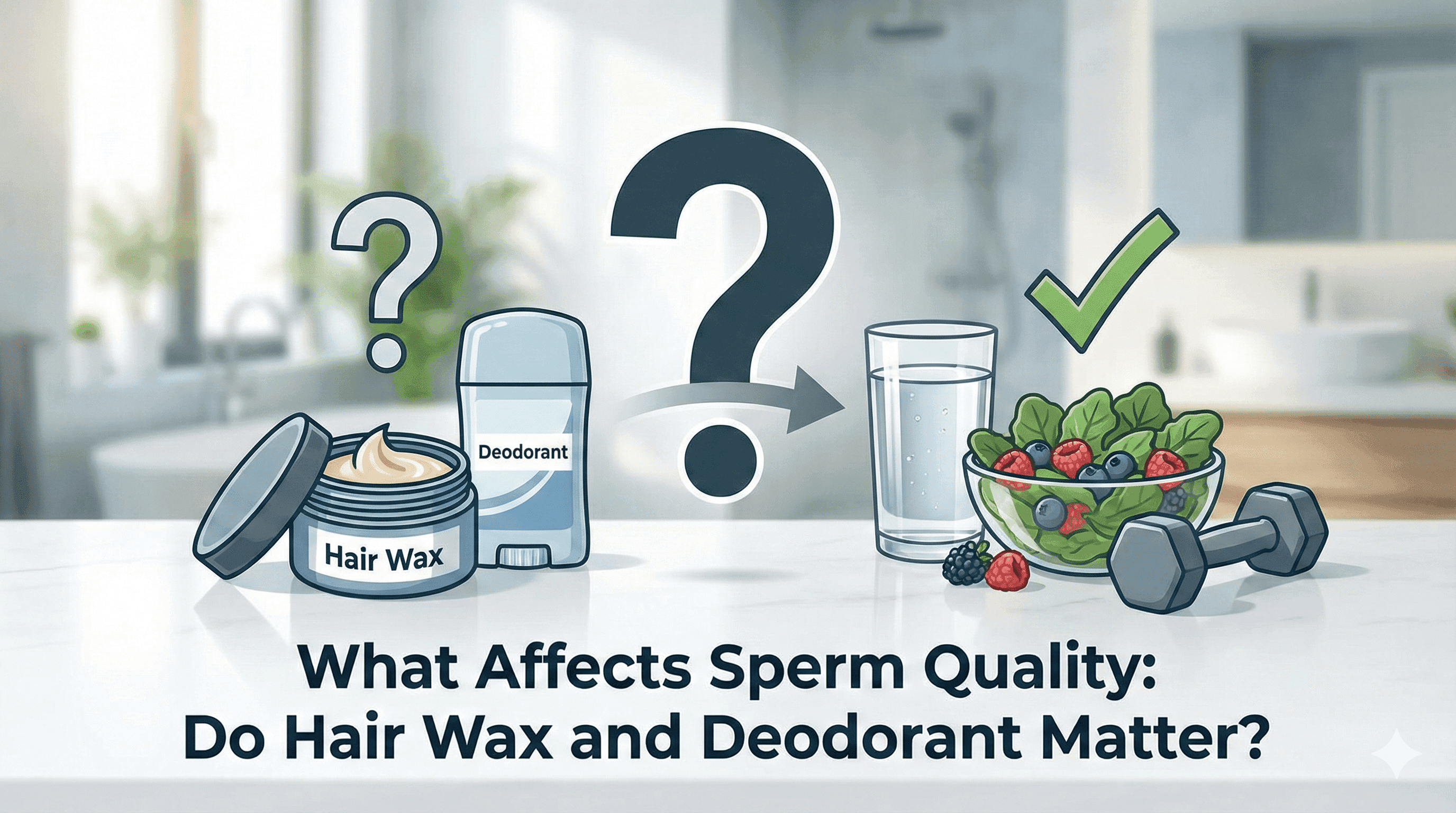
Cuando las parejas empiezan a buscar un embarazo, la atención suele centrarse en el momento oportuno, los resultados de las pruebas y los hábitos de vida, como la dieta o el alcohol. Los productos de higiene personal rara vez entran en la lista. Cera para el pelo, desodorante, champú, gel de baño. Parecen demasiado ordinarios para importar. Pero como se utilizan a diario y se aplican directamente sobre el cuerpo, es razonable preguntarse si desempeñan algún papel en la salud del esperma.
Seamos claros desde el principio. Tu cera para el pelo o tu desodorante no están destruyendo tu fertilidad. La fertilidad masculina está influida por un amplio conjunto de factores biológicos y de estilo de vida, muchos de los cuales tienen efectos mucho más fuertes que los productos de aseo. Aun así, la investigación sobre la exposición ambiental y química sigue girando en torno a la misma idea: algunos ingredientes utilizados habitualmente en los productos de cuidado personal pueden actuar como disruptores endocrinos, lo que significa que pueden interferir en la señalización hormonal implicada en la producción de esperma.
Respuesta rápida: En la calidad del esperma influyen principalmente las hormonas, la exposición al calor, el estrés oxidativo, la inflamación, la genética, la edad y el estado general de salud. La cera para el pelo y los desodorantes no son los principales causantes de los problemas espermáticos, pero algunos ingredientes utilizados en los productos de aseo, en particular los sistemas de fragancias, los ftalatos, los parabenos y ciertos antimicrobianos, se han asociado a alteraciones hormonales en investigaciones. Reducir la exposición diaria a estos ingredientes se considera una medida de precaución, no un remedio para la fertilidad.
Lo que más afecta a la calidad del esperma
La producción de esperma sigue aproximadamente un ciclo de dos a tres meses, por lo que los médicos suelen describir la salud del esperma como algo que refleja la historia reciente y no las elecciones de ayer. Las investigaciones apuntan sistemáticamente a un pequeño número de influencias principales.
Entre ellas están el equilibrio hormonal, el estrés oxidativo que daña los espermatozoides, la inflamación crónica y la exposición prolongada de los testículos al calor. En consecuencia, la evaluación clínica suele comenzar con pruebas de referencia, incluida una prueba de análisis de esperma, antes de preocuparse por los factores relacionados con el cuidado personal. Los factores relacionados con el estilo de vida, como fumar, consumir alcohol en exceso, la obesidad, dormir mal y las infecciones no tratadas suelen tener un impacto mucho mayor que los productos cosméticos. Además, muchos hombres subestiman la importancia de la fisiología del estrés para las hormonas, y los vínculos entre estrés, testosterona y salud reproductiva.
¿Afectan la cera y los productos de peluquería a la calidad del esperma?
Para la mayoría de los hombres, no.
La cera para el pelo, la gomina y la pomada no afectan directamente a los testículos ni a la producción de esperma. La preocupación, cuando existe, proviene de los sistemas de fragancias utilizados en muchos productos para peinar. Las mezclas de fragancias pueden contener ftalatos, un grupo de sustancias químicas estudiado repetidamente por sus propiedades de alteración endocrina y analizado en exposiciones medioambientales más amplias como microplásticos y fertilidad, donde el contacto diario acumulativo importa más que cualquier producto individual.
Los estudios de población han encontrado asociaciones entre una mayor exposición a los ftalatos y cambios en el recuento, la motilidad o la morfología de los espermatozoides. Estos hallazgos no prueban la causalidad, y los efectos observados son generalmente modestos. Aun así, como los productos de peluquería suelen aplicarse a diario y permanecer en el cuero cabelludo durante horas, pueden contribuir a la exposición acumulativa.
Cambios sencillos
- Si tu cera está muy perfumada, cámbiala por una sin perfume o ligeramente perfumada la próxima vez.
- Si la marca lo indica, elige productos sin ftalatos.
- Evita aplicar productos de peinado sobre la piel rota o inflamada del cuero cabelludo.
¿Afecta el desodorante a la calidad del esperma?
El desodorante llama la atención porque se usa diariamente, se aplica sobre la piel caliente y se encuentra en una zona de alto contacto. Algunos estudios que relacionan la exposición química medida con los parámetros del esperma destacan repetidamente las familias de ingredientes que aparecen en los productos de cuidado personal, como los parabenos, los ftalatos y los antimicrobianos más antiguos; sin embargo, el número de estudios sigue siendo escaso.
¿Qué pasa con el aluminio? A pesar del pánico en Internet, las pruebas en humanos no demuestran de forma convincente que el uso estándar de antitranspirantes de aluminio perjudique la fertilidad. Cuando los médicos sugieren cambios, suelen referirse a los sistemas de fragancias, las familias de conservantes y los antimicrobianos, no al aluminio.
Este tipo de preocupación a menudo se solapa con una desinformación más amplia, por lo que merece la pena mantener el encuadre, de forma similar a como Conceivio aborda los conceptos erróneos más comunes en mitos sobre la fertilidad masculina.
Cambios sencillos
- Elige productos sin perfume si puedes.
- Evita los productos con parabenos (todo lo que termine en "-paraben").
- Evita los desodorantes que contengan triclosán o triclocarbán.
- Si tu producto actual funciona y no te irrita, úsalo y cambia cuando se acabe.
Por qué la fragancia es la mayor categoría de exposición "silenciosa ".
Si tienes que elegir un solo cambio en tus productos de cuidado personal mientras buscas un embarazo, que sea reducir las fragancias.
Colonia, spray corporal, desodorante perfumado, aceite para barba, jabón corporal "fresco". Éstos se basan en mezclas de fragancias que pueden ocultar legalmente docenas de compuestos bajo "parfum". Por eso muchos clínicos recomiendan reducir la fragancia en los productos que utilizas a diario por todo el cuerpo, manteniendo un producto con fragancia que te guste de verdad.
También es uno de los cambios más fáciles que no compite con prioridades más importantes como mejorar el sueño, reducir el estrés sostenido y abordar la exposición al calor, que forma parte del panorama más amplio de cómo afrontan los hombres el estrés de la fertilidad.
Otros productos de aseo que pueden acumular exposición
Ninguno de ellos es un problema automático. Merece la pena mencionarlos porque las pequeñas exposiciones se acumulan cuando utilizas varios productos al día.
Lavado corporal y champú
El problema relevante cuando buscas un embarazo es la fragancia fuerte y las fórmulas "antibacterianas". Si quieres algo sencillo por defecto, elige opciones con poca fragancia y evita las afirmaciones antibacterianas a menos que sean médicamente necesarias.
Aceites, bálsamos y productos sin aclarado para la barba**
Viven en la piel todo el día, y muchos son esencialmente perfumes con beneficios. Las versiones sin fragancia o ligeramente perfumadas reducen la exposición sin cambiar la función.
Protectores solares e hidratantes diarios con SPF
Algunos filtros UV químicos muestran actividad endocrina en la investigación de laboratorio, y ha aumentado la atención reguladora. Las pruebas sobre la fertilidad humana son contradictorias, así que lo más práctico es elegir lo que puedas usar de forma constante, y si quieres la jugada más sencilla, un protector solar mineral es un cambio fácil.
Cosméticos de larga duración / resistentes al agua (PFAS)
Si utilizas corrector, gel para cejas, cubre tatuajes o productos para el escenario, algunas fórmulas de larga duración contienen PFAS. Múltiples estudios de grandes poblaciones relacionan una mayor carga corporal de PFAS con cambios en las hormonas reproductivas y los marcadores de fertilidad, por lo que elegir fórmulas diarias no resistentes al agua puede ser una precaución razonable.
Un apunte importante: Productos para la caída del cabello
Esto surge constantemente en los trabajos sobre fertilidad masculina.
La finasterida puede reducir el volumen del semen y, en una minoría de hombres, disminuir el recuento de espermatozoides, y cuando afecta a los parámetros espermáticos suele ser reversible tras dejar de tomarla. Si te está costando concebir o los parámetros del semen ya son bajos, es razonable comentar las opciones con un clínico, sobre todo si existen otros factores de riesgo.
Si quieres leer más sobre esta preocupación específica, Conceivio la trata directamente en productos contra la caída del cabello y fertilidad.
No te pierdas los pesos pesados
Si quieres influir significativamente en la calidad del esperma, la investigación sigue dando vueltas a las mismas grandes palancas:
- Exposición al calor (bañeras de hidromasaje/saunas diarias, ordenador portátil en el regazo, ropa interior sintética ajustada)
- Fumar y vaporizar
- Consumo elevado de alcohol
- Sueño deficiente y estrés crónico
- Obesidad y problemas metabólicos
- Infecciones no tratadas o varicocele
La edad también importa. Aunque la producción de esperma continúa a lo largo de la vida, los parámetros pueden cambiar con el tiempo, y eso se trata claramente en ¿afecta la edad a la fertilidad masculina.
Una lista de comprobación para un TTC amigable
Cuando vayas a comprar de nuevo, elige
- Desodorante sin perfume o ligeramente perfumado.
- Cera para peinar sin perfume o que indique claramente que no contiene ftalatos.
- Champú y gel de baño sencillos, sin propiedades antibacterianas.
- Productos para la barba y el afeitado sin perfume.
- Cosméticos de uso diario no resistentes al agua, si los utilizas.
Si también estás trabajando en mejorar tu salud en general, puede ser útil combinar estos cambios de bajo esfuerzo con un apoyo basado en pruebas, como revisar el mejor suplemento para la fertilidad masculina cuando proceda.
Preguntas frecuentes sobre la calidad del esperma y los productos de cuidado personal
¿Qué afecta más a la calidad del esperma?
La calidad del esperma se ve más afectada por el equilibrio hormonal, la exposición al calor, el estrés oxidativo, la inflamación, la edad, la genética y la salud en general. Los factores del estilo de vida, como el tabaquismo, el consumo de alcohol, dormir mal, la obesidad y el estrés crónico, tienen un impacto mucho mayor que los productos de aseo.
¿Afecta el desodorante a la calidad del esperma?
El desodorante no daña directamente el esperma. Sin embargo, algunos desodorantes contienen sistemas de fragancias, parabenos o antimicrobianos antiguos que han mostrado actividad endocrina en investigaciones. Reducir la exposición diaria a estos ingredientes se considera una precaución, no una necesidad.
¿La cera o la gomina afectan al esperma?
La cera y la gomina para el pelo no afectan directamente a la producción de esperma. Las preocupaciones se refieren únicamente a ciertos ingredientes, como los ftalatos relacionados con las fragancias, que pueden contribuir a la exposición química acumulativa cuando se utilizan diariamente durante largos periodos.
¿Qué sustancias químicas se sabe que afectan a la calidad del esperma?
Las sustancias químicas más frecuentemente relacionadas con cambios en la calidad del esperma incluyen los ftalatos, ciertos parabenos, los PFAS, algunos pesticidas y los metales pesados. Estas asociaciones se basan en estudios observacionales y no prueban una causalidad directa.
¿Afectan realmente los disruptores endocrinos a la fertilidad masculina?
Algunos alteradores endocrinos se han asociado a niveles hormonales y parámetros espermáticos alterados en estudios en humanos. Los efectos suelen ser modestos, y el riesgo depende de la dosis, la duración y el momento de la exposición, más que de productos concretos.
¿Es mala la fragancia para la fertilidad masculina?
La fragancia en sí no es intrínsecamente nociva, pero las mezclas de fragancias pueden contener sustancias químicas endocrino-activas no reveladas, como los ftalatos. Como la fragancia aparece en muchos productos de aseo diario, es una fuente común de exposición acumulativa.
¿El aluminio antitranspirante afecta al esperma?
No existen pruebas convincentes en humanos de que los antitranspirantes de aluminio perjudiquen la calidad del esperma o la fertilidad masculina. Cuando se revisan los productos de aseo en el cuidado de la fertilidad, el aluminio no suele ser la principal preocupación.
¿Pueden los productos para el aseo reducir los niveles de testosterona?
Algunas sustancias químicas utilizadas en productos para el cuidado personal han mostrado efectos de alteración hormonal en estudios de laboratorio. En la exposición humana en el mundo real, cualquier impacto sobre la testosterona es probablemente pequeño y está más influido por el estilo de vida general y los factores de salud.
¿Deben los hombres cambiar de productos de cuidado personal cuando intentan concebir?
Los hombres no necesitan revisar sus rutinas de aseo cuando intentan concebir. Los cambios sencillos, como elegir productos sin perfume y evitar las fórmulas antibacterianas o de larga duración innecesarias, se consideran optimizaciones poco estresantes.
¿Cuánto tarda en mejorar la calidad del esperma tras los cambios?
Los espermatozoides tardan entre dos y tres meses en desarrollarse. Las mejoras derivadas de los cambios en el estilo de vida o la exposición suelen reflejarse después de este periodo, por lo que la orientación sobre fertilidad suele centrarse en hábitos constantes a lo largo del tiempo, en lugar de en soluciones rápidas.
En resumen
La cera para el pelo y el desodorante no son villanos de la fertilidad. Pero una creciente pila de investigaciones sigue señalando a las mismas familias endocrino-activas, vinculadas sobre todo a sistemas de fragancias, ciertos conservantes y aditivos de larga duración, como potenciales estresores de bajo nivel.
Dado que los cambios son baratos y fáciles, el movimiento TTC es sencillo: reduce la exposición a fragancias fuertes, evita los parabenos evidentes y los antimicrobianos más antiguos siempre que puedas, elige fórmulas diarias más sencillas y dedica la mayor parte de tu energía a los principales impulsores de la salud del esperma.
En Conceivio, ofrecemos una atención a la fertilidad inclusiva, basada en la ciencia y la compasión. Si estás intentando concebir y quieres una orientación práctica y basada en pruebas sobre la fertilidad masculina y la salud del esperma, los recursos de Conceivio están pensados para ayudarte a tomar decisiones con confianza y sin pánico.