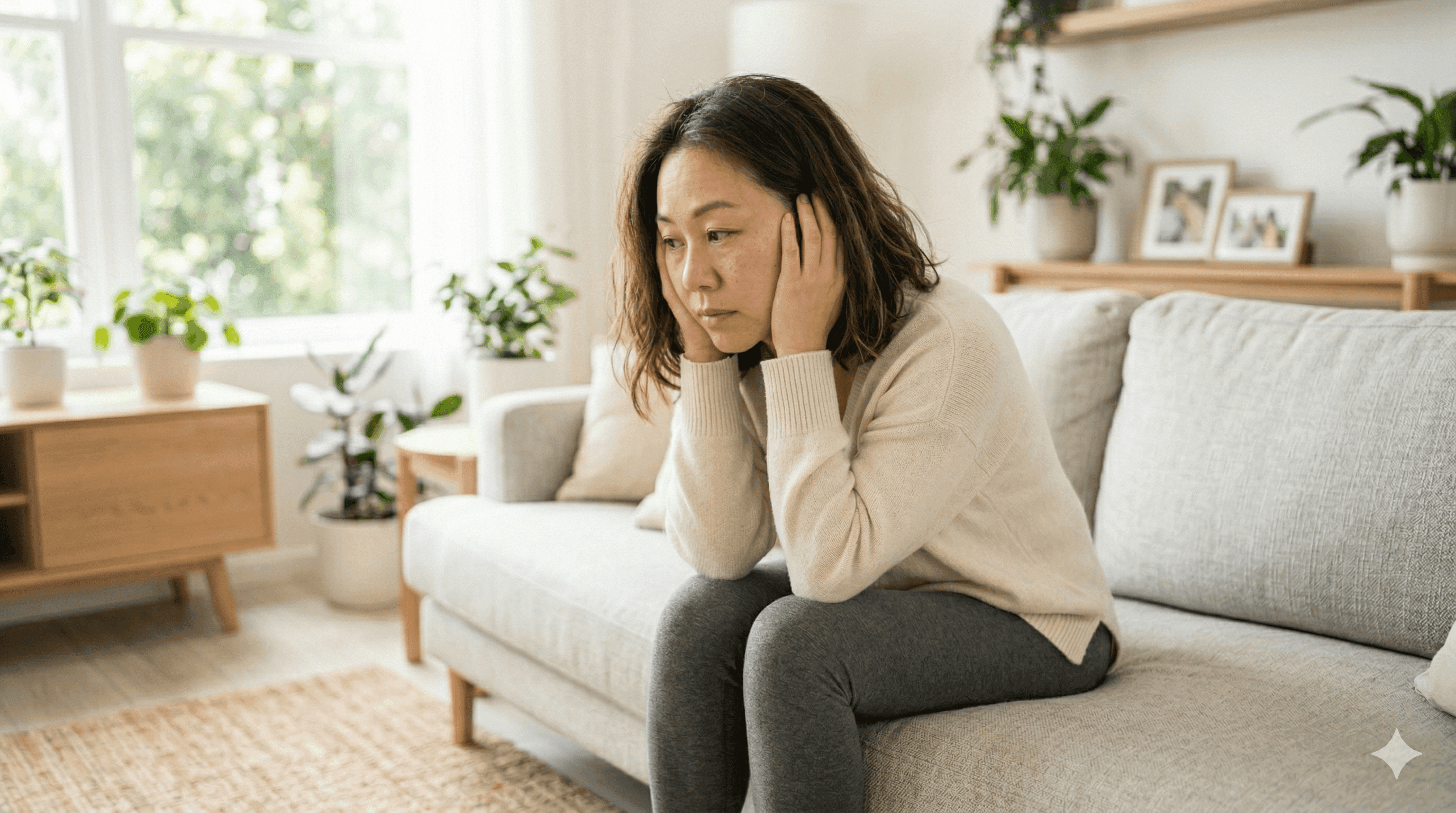
When a fertility treatment cycle ends, the shift can feel abrupt. Appointments stop, medications end, and the structure that carried you through treatment disappears almost overnight. For many people, this is when emotions finally surface. Not because something went wrong, but because the intensity has lifted and there is space to feel again. Feeling flat, unsettled, tearful, irritable, or unexpectedly low after a cycle is common, even when outcomes are still unclear or mixed.
During treatment, many people cope by staying focused and functional. The body and mind remain in a state of heightened alert, managing hormones, appointments, expectations, and uncertainty. When the cycle ends, hormone levels shift and adrenaline drops. The nervous system finally slows down. Emotional processing that was postponed during treatment often arrives afterward, once the body no longer needs to stay in survival mode.
Quick Answer: Post cycle depression and mood changes describes the emotional low that can occur after a fertility treatment cycle ends. It may include sadness, numbness, exhaustion, irritability, or a sense of emptiness. It is not a formal diagnosis and does not mean something is wrong with you. For most people, it reflects recovery from prolonged stress and emotional strain, and it often eases with time, rest, and support.

Lifestyle matters for fertility. A BMC Public Health study found that women with 4–5 healthy habits had a 59% lower risk of infertility.
Fill out the questionnaire, and get a personalised, holistic and evidence-based programme tailored to you.
 takes 3 minutes to complete
This checklist is not about analysing outcomes or forcing positivity.
It is about stabilising after intensity and allowing recovery before decisions.
☐ I recognise that a treatment cycle has ended
☐ I accept that emotional reactions may lag behind events
☐ I allow myself to feel unsettled, flat, relieved, or disappointed
The end of a cycle is a real transition, even if no clear result has been reached yet. Your body and mind have been oriented around treatment for weeks or months. Noticing that something has ended helps the nervous system begin to recalibrate.
There is no correct emotional response. Relief and sadness can coexist. Feeling “nothing” at first is also common.
☐ I remind myself that I don’t need to decide anything immediately
☐ I give myself time before planning next steps
☐ I recognise that exhaustion can affect decision-making
After a cycle ends, many people feel pressure to act quickly. To analyse, research, book appointments, or make long-term decisions. This urgency often comes from fatigue, not clarity.
Pausing does not delay progress. It protects your capacity to make decisions from a steadier place.
☐ I remind myself that outcomes are rarely caused by one factor
☐ I notice “what if” thinking without engaging with it
☐ I separate effort from outcome
Post-cycle thinking often becomes self-focused: what you ate, what you felt, what you did or did not do. This is a human attempt to regain control, not a reflection of reality.
Fertility outcomes are shaped by biology, chance, and timing. Effort does not equal outcome.
☐ I return to basic routines
☐ I prioritise sleep and regular meals
☐ I include some form of physical movement
☐ I limit constant searching, analysing, or comparing
The nervous system recovers through predictability. Regular meals, consistent sleep, gentle movement, and reduced mental stimulation all signal safety.
This phase is not about optimisation. It is about re-establishing rhythm.
Some people feel emotionally stable during treatment and struggle afterward. Others feel low immediately and improve gradually. Emotional timing varies widely.
Common experiences include:
This content is for educational purposes only. It has been reviewed for scientific accuracy, but it does not constitute medical advice, diagnosis, or treatment. Always consult a qualified healthcare professional regarding medical questions or fertility treatment decisions.
Reviewed for scientific accuracy by: Dr. Mona Bungum
Last reviewed: February 2026
Lifestyle matters for fertility. A BMC Public Health study found that women with 4–5 healthy habits had a 59% lower risk of infertility.
Fill out the questionnaire, and get a personalised, holistic and evidence-based programme tailored to you.
takes 3 minutes to completeThese reactions do not mean something is “wrong.” They reflect decompression after sustained strain.
After a cycle ends, sensitivity to fertility-related content often increases. Pregnancy announcements, success stories, and even well-intentioned advice can feel overwhelming.
It is reasonable to:
Protecting your emotional space is part of recovery, not avoidance.
Post cycle depression often improves with time and support. However, reaching out for professional help is important if you notice:
Support is a resource, not a last resort.
Fertility treatment often focuses on what comes next. But moving forward without recovery can increase emotional exhaustion and reduce resilience over time.
Allowing space after a cycle helps:
Recovery is not separate from treatment. It is part of sustainable care.
At Conceivio, we recognise that fertility treatment affects the whole system, not only the reproductive organs. Emotional recovery after a cycle is treated as a valid and necessary phase, not a delay.
We support individuals by:
The goal is not to push forward. It is to stabilise, then decide.
You are not failing to cope.
You are responding to something that mattered.
Post cycle mood Changes refers to the emotional low that can occur after a fertility treatment cycle ends. It may include sadness, numbness, irritability, or exhaustion. It is not a formal medical diagnosis but a commonly reported response to hormonal shifts, stress, and emotional investment.
Yes. Many people experience low mood after a cycle, even if the outcome is unclear or positive. Emotions often surface once treatment intensity stops and the body exits a state of constant alert. This reaction is common and does not mean something is wrong.
Emotional numbness can occur when the nervous system is recovering from prolonged stress. During treatment, feelings are often suppressed to stay functional. Once the cycle ends, the body may temporarily shut down emotionally as part of recovery.
For many people, emotional recovery takes days to a few weeks. The timeline varies depending on stress levels, hormone changes, and support. If low mood persists for several weeks or worsens, additional emotional or professional support can be helpful.
No. Emotional reactions are not reliable indicators of treatment outcomes. Post cycle depression can occur after unsuccessful, inconclusive, or even successful cycles. Feelings reflect the process you went through, not the result.
It is usually better to pause before making major decisions. Emotional exhaustion can affect clarity and perspective. Allowing some recovery time often leads to more grounded and sustainable choices.
Yes. Hormonal fluctuations at the end of a cycle can contribute to mood changes, fatigue, and emotional sensitivity. These biological shifts often overlap with psychological factors, making the emotional response feel more intense.
Stability helps. Regular meals, sleep, gentle movement, and reduced mental stimulation support nervous system recovery. Limiting constant analysis or comparison and allowing emotions without judgement can also ease the process.
Support is important if low mood lasts several weeks, interferes with daily life, or includes feelings of hopelessness or detachment. Seeking help is not a sign of failure. It is part of responsible self-care during a demanding journey.
Yes. Mixed emotions are very common. Relief that the cycle is over can coexist with disappointment, grief, or uncertainty. Emotional responses after fertility treatment are rarely simple or linear.
The end of a fertility treatment cycle is not just a medical pause. It is an emotional one. When the structure, hormones, and constant focus fall away, the body and mind often need time to recalibrate. Feeling low, unsettled, or disconnected after a cycle does not mean something went wrong. It means something demanding has ended.
Post cycle depression is not a personal failure or a sign of weakness. It is a response to sustained uncertainty, effort, and hope. Giving yourself space to recover is not delaying progress. It is protecting your ability to continue without burning out.
At Conceivio, we believe emotional recovery deserves the same respect as medical care. Stabilising first, then deciding what comes next, leads to better outcomes and better wellbeing. You are allowed to pause. You are allowed to feel what you feel. And you are allowed to move forward only when you are ready.