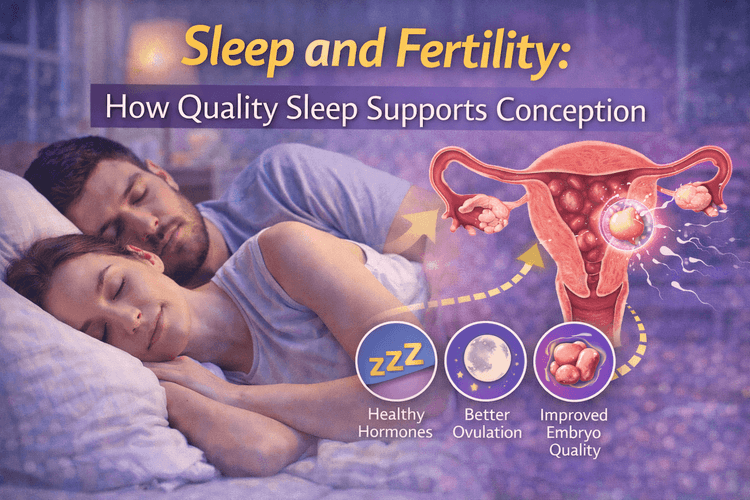
El sueño es una de las herramientas de fertilidad más poderosas que las mujeres pasan por alto. Hablamos de nutrición, suplementos, seguimiento de la ovulación y control del estrés, pero el sueño regula silenciosamente casi todas las señales hormonales que contribuyen a la concepción.
Si te has estado preguntando ¿afecta el sueño a la fertilidad?, la respuesta corta es sí, rotundamente. Las investigaciones siguen demostrando que el sueño y el equilibrio hormonal están relacionados en toda la función reproductora, desde la ovulación y la producción de progesterona hasta la implantación y el bienestar emocional.
Respuesta rápida: Sí, el sueño afecta a la fertilidad. Un sueño deficiente o irregular altera el ritmo hormonal que controla la ovulación, la progesterona, la función tiroidea, la regulación de la insulina y el equilibrio del cortisol. Estos cambios pueden hacer que los ciclos sean irregulares, reducir la calidad de los óvulos, aumentar la inflamación y dificultar la implantación. Mejorar el sueño favorece las hormonas reproductivas, la salud emocional y el entorno interno necesario para la concepción.
Esta guía explica cómo el sueño determina la fertilidad, qué ocurre cuando el descanso vacila y cómo reconstruir el sueño reparador de forma práctica y favorable a las hormonas.
Lo que ocurre mientras duermes
Una noche completa de descanso es un proceso biológico activo, no un tiempo de inactividad pasivo. Mientras te dejas llevar por el sueño, se activan docenas de mecanismos reparadores.
El sueño profundo repara el cuerpo
Durante el sueño de ondas lentas, los tejidos se reconstruyen, el sistema inmunitario se recarga y la inflamación se calma. El sueño interrumpido cortocircuita este proceso, dejándote más propenso al estrés y a una recuperación más lenta.
Tu cerebro se limpia y reorganiza.
Mientras duermes, el sistema glinfático del cerebro elimina las toxinas hasta diez veces más rápido que cuando estás despierto. Dormir mal ralentiza esta vía de desintoxicación, afectando la concentración y el estado de ánimo.
Las hormonas reajustan su ritmo.
El sueño ajusta las hormonas cortisol, estrógeno, progesterona, insulina y tiroides. Cuando el sueño falla, los ciclos hormonales se alargan o acortan, la energía decae y aumentan los antojos.
Por qué dormir es un hábito esencial para la fertilidad
El sueño no es un descanso pasivo. Es un proceso activo de reparación biológica que regula las hormonas, la recuperación celular, la resistencia al estrés y el equilibrio metabólico. Cuando el sueño es saludable, las hormonas reproductivas siguen su ritmo natural. Cuando no duermes bien, todo, desde la ovulación hasta la implantación, puede verse afectado.
Muchas mujeres que experimentan problemas de fertilidad también reportan
- Sueño agitado o fragmentado
- Dificultad para relajarse
- Despertares a media noche
- Aumento de la ansiedad o de los síntomas hormonales
Estas pautas no son una coincidencia. Son la señal del cuerpo de que los sistemas reproductivo y del estrés están luchando por mantenerse alineados.
Cómo funciona el sueño dentro de tu cuerpo
Durante el sueño, tu cerebro y tu cuerpo realizan procesos que favorecen directamente la fertilidad.
El sueño profundo repara los tejidos y calma la inflamación
El sueño de ondas lentas es cuando el sistema inmunitario se repara, la inflamación disminuye y el cuerpo se recupera del estrés metabólico y emocional. Dormir mal eleva los marcadores inflamatorios, lo que puede afectar a la calidad de los óvulos y a la implantación.
El sistema glinfático del cerebro elimina las toxinas
Este sistema elimina los subproductos de desecho hasta diez veces más rápido mientras duermes. Cuando se interrumpe el sueño, aumenta la carga cognitiva, disminuye la resistencia emocional y las respuestas al estrés se intensifican al día siguiente.
Las hormonas reajustan su ritmo durante la noche
El sueño regula:
- Cortisol
- Estrógeno
- Progesterona
- Hormonas tiroideas
- Insulina
- Hormona del crecimiento
- Melatonina
Estas hormonas trabajan juntas para favorecer la ovulación, el desarrollo del endometrio y el mantenimiento del embarazo temprano.
Cuando no se duerme, toda la orquesta hormonal pierde coordinación.
Los Efectos Ocultos del Sueño Insuficiente sobre la Fertilidad
La mayoría de las mujeres reconocen la fatiga, la irritabilidad o los dolores de cabeza, pero las consecuencias más profundas se producen en tus sistemas hormonal y metabólico.
El cortisol aumenta y altera las hormonas reproductivas
Un cortisol elevado puede suprimir la ovulación, reducir la progesterona y alterar la duración del ciclo.
La sensibilidad a la insulina disminuye
El azúcar en sangre se vuelve más difícil de regular, lo que puede empeorar el desequilibrio hormonal, especialmente relevante para las mujeres que exploran si pueden tener SOP.
La función tiroidea se ralentiza
La falta de sueño afecta a la conversión de T4 en T3, una razón frecuente por la que las mujeres experimentan baja energía, ciclos inestables o dificultad para concebir. (Explora más: Cómo afecta el hipotiroidismo a las hormonas femeninas.)
Aumenta la inflamación
Esto afecta a la calidad de los óvulos, al moco cervical y a la receptividad endometrial.
Gotas de melatonina
La melatonina es un antioxidante dentro del líquido folicular que protege a los óvulos del estrés oxidativo. Dormir mal reduce la melatonina durante la noche.
El estado de ánimo se vuelve inestable
Dormir poco reduce el equilibrio de serotonina y dopamina, lo que puede aumentar la reactividad emocional durante el viaje de la fertilidad.
El efecto dominó del sueño escaso sobre las hormonas reproductivas es importante, pero reversible.
Cómo contribuye el sueño al equilibrio hormonal y la fertilidad
El sueño reparador actúa como estabilizador hormonal.
La melatonina protege la calidad de los óvulos
La melatonina en el interior de los ovarios protege a los óvulos en desarrollo del estrés oxidativo, favoreciendo una maduración ovocitaria más saludable.
La progesterona aumenta al dormir mejor
El descanso nocturno favorece la fase lútea, ayudando a mantener los niveles de progesterona esenciales para la implantación y el inicio del embarazo.
La Estabilidad de los Estrógenos Mejora
El sueño ayuda a mantener el ritmo de señalización del cerebro (GnRH, LH, FSH) que desencadena la ovulación.
La Inflamación Se Reduce
Una menor inflamación favorece la implantación y reduce los riesgos relacionados con las primeras dificultades para la FIV o la infertilidad inexplicada.
Cómo mejorar el sueño para la fertilidad
Tu mejor sueño comienza mucho antes de acostarte.
Apoya el equilibrio del azúcar en sangre
Las subidas y bajadas de azúcar en sangre desencadenan la liberación de adrenalina, que interrumpe el sueño.
Toma comidas que contengan:
- Proteínas
- Fibra
- Grasas saludables
Esto estabiliza la insulina y protege las hormonas reproductivas.
Consigue luz solar matutina
La luz matutina ancla tu ritmo circadiano, ayudando a que suba la melatonina por la noche.
Elige el momento adecuado para el movimiento
El ejercicio favorece el sueño, pero los entrenamientos nocturnos intensos elevan el cortisol. Intenta hacer actividad por la mañana o a primera hora de la tarde.
Limita la luz de las pantallas por la noche
La luz azul envía señales diurnas a tu cerebro. Atenúa las pantallas 60 minutos antes de acostarte.
Construye un ritual para relajarte
Considera:
- Una ducha caliente
- Estiramientos suaves
- Té de hierbas
- Lectura ligera
- Respiración lenta
La constancia indica a tu cuerpo que es seguro descansar.
Crea un entorno de sueño favorable a la fertilidad
Mantén tu dormitorio
- Fresco (alrededor de 20°C)
- Oscuro
- Silenciosa
- Sin pantalla
Esta configuración permite ciclos de sueño más profundos.
Nutrientes que favorecen un mejor sueño (y la fertilidad)
Lo que comes influye en la arquitectura del sueño y en la señalización hormonal.
Magnesio
Favorece la relajación del sistema nervioso.
Alimentos: semillas de calabaza, almendras, espinacas.
Grasas omega-3
Reducen la inflamación y mejoran la estabilidad del estado de ánimo.
Alimentos: salmón, sardinas, linaza.
Triptófano
Produce serotonina y melatonina.
Alimentos: lácteos, huevos, avena, pavo.
Vitamina C
Favorece la reparación suprarrenal y la resistencia al estrés.
Probióticos
Refuerzan el eje intestino-cerebro, influyendo en el sueño y el equilibrio hormonal.
Hierro y folato
Favorecen el suministro de oxígeno y la producción de neurotransmisores.
Unas reservas bajas pueden perjudicar la calidad del sueño y la regularidad del ciclo.
Si los síntomas sugieren afecciones subyacentes como desequilibrio tiroideo, SOP o problemas lúteos, es importante el apoyo clínico.
Cuándo buscar ayuda profesional
Algunos trastornos del sueño están ligados a una fisiología más profunda:
- Baja progesterona
- Trastornos tiroideos
- Patrones de estrés crónico
- SOP
- Perimenopausia
- Efectos secundarios de la medicación
Si los problemas de sueño persisten más de cuatro o seis semanas a pesar de los cambios en el estilo de vida, puede ser el momento de una evaluación. El sueño que afecta a los ciclos, la libido, el estado de ánimo o la energía merece atención clínica.
Las mujeres que padecen enfermedades complejas, como fibromas o desregulación hormonal, pueden descubrir que el tratamiento de estos problemas subyacentes mejora la calidad del sueño.
Para algunas, vías como la donación de óvulos ofrecen caminos alternativos para formar una familia, especialmente cuando los problemas de sueño y estrés se cruzan con una reserva ovárica disminuida.
Recordatorios suaves para el viaje de la fertilidad
- No estás fracasando. Tu cuerpo responde al estrés, no te rechaza.
- Dormir es un tratamiento, no un capricho.
- Las mejoras lentas se convierten en cambios hormonales significativos.
- El apoyo emocional es tan importante como el físico.
- El descanso crea el entorno interno en el que la concepción se hace posible.
Preguntas sobre el sueño y la fertilidad
¿La falta de sueño puede afectar a la fertilidad?
Sí. El sueño crónico o irregular altera el ritmo hormonal que favorece la ovulación, la producción de progesterona, la función tiroidea y el equilibrio de la insulina. Dormir mal eleva el cortisol, aumenta la inflamación y puede hacer que los ciclos sean menos predecibles. Todos estos factores pueden reducir la probabilidad de concepción.
¿Cuántas horas debo dormir para la fertilidad?
La mayoría de los adultos necesitan de siete a nueve horas cada noche, pero para la fertilidad, la constancia importa tanto como la duración. Acostarse y levantarse a horas estables ayuda a regular la melatonina, el cortisol y las hormonas reproductivas. Menos de seis horas de forma regular está relacionado con el desequilibrio hormonal y la reducción del potencial de fertilidad.
¿Mejora el sueño la calidad de los óvulos?
Dormir bien favorece indirectamente la calidad de los óvulos. La melatonina, que aumenta por la noche, es un potente antioxidante dentro de los ovarios que ayuda a proteger los óvulos en desarrollo del estrés oxidativo. El sueño reparador también reduce la inflamación y estabiliza la señalización hormonal, lo que crea un entorno más propicio para el desarrollo de los folículos.
¿Cómo afecta el sueño a la fertilidad masculina?
El sueño es esencial para la producción sana de testosterona, el desarrollo del esperma y la integridad del ADN. Dormir mal puede reducir la testosterona, aumentar el estrés oxidativo, reducir el recuento de espermatozoides y perjudicar la motilidad. Dormir mejor favorece el equilibrio hormonal y mejora la calidad general del esperma, lo que es importante para la concepción natural y la FIV.
¿Dormir hasta tarde afecta a la fertilidad?
Dormir hasta tarde altera tu ritmo circadiano, lo que puede retrasar la liberación de melatonina y alterar el ritmo hormonal. Cuando el ciclo sueño-vigilia se vuelve irregular, las señales de ovulación pueden desviarse y la producción de progesterona puede debilitarse. Un sueño más temprano y constante favorece unas hormonas reproductivas más sanas.
¿Puede el sueño deficiente causar menstruaciones irregulares?
Sí. La falta de sueño afecta al eje hipotalámico-hipofisario-ovárico, el sistema que coordina tu ciclo. Un sueño interrumpido puede provocar un retraso de la ovulación, ciclos más cortos o más largos, y síntomas más pronunciados del SPM.
¿Es buena la melatonina para la fertilidad?
La melatonina se produce de forma natural durante el sueño y actúa como antioxidante en los ovarios. Ayuda a proteger los óvulos del estrés oxidativo y favorece el desarrollo ovocitario. Aunque a veces se utilizan suplementos de melatonina en la FIV, sólo deben tomarse bajo control médico.
¿El insomnio por estrés afecta a la fertilidad?
El insomnio relacionado con el estrés eleva el cortisol y la adrenalina, que pueden interferir en la ovulación, reducir la progesterona y aumentar la inflamación. Esta combinación dificulta la concepción. Mejorar el sueño y la gestión del estrés ayuda a restablecer el equilibrio hormonal.
¿Pueden las siestas ayudar a la fertilidad?
Las siestas cortas (20-30 minutos) pueden reducir el cortisol y favorecer la energía, pero no pueden sustituir al sueño nocturno constante. El descanso nocturno profundo y regular es lo que favorece la alineación hormonal, el desarrollo del óvulo y el equilibrio metabólico.
¿El sueño interrumpido reduce las posibilidades de embarazo?
Una mala continuidad del sueño puede elevar los marcadores inflamatorios y desestabilizar los ciclos hormonales. Cuando el sueño se fragmenta a lo largo del tiempo, puede afectar a la calidad de la ovulación, la implantación y la resistencia emocional durante el viaje de la fertilidad.
Conclusión
El sueño no es un lujo, es biología fundacional. Cuando proteges tu descanso, mejora el equilibrio hormonal, bajan los niveles de estrés, disminuye la inflamación, se fortalece la calidad de los óvulos y tu sistema nervioso se siente más seguro. Todos estos cambios favorecen la concepción, tanto si lo intentas de forma natural como si te preparas para un tratamiento.
En Conceivio, ayudamos a las mujeres a reconstruir los ritmos hormonales que favorecen la fertilidad mediante una orientación personalizada en optimización del sueño, nutrición, regulación del estrés y salud reproductiva.