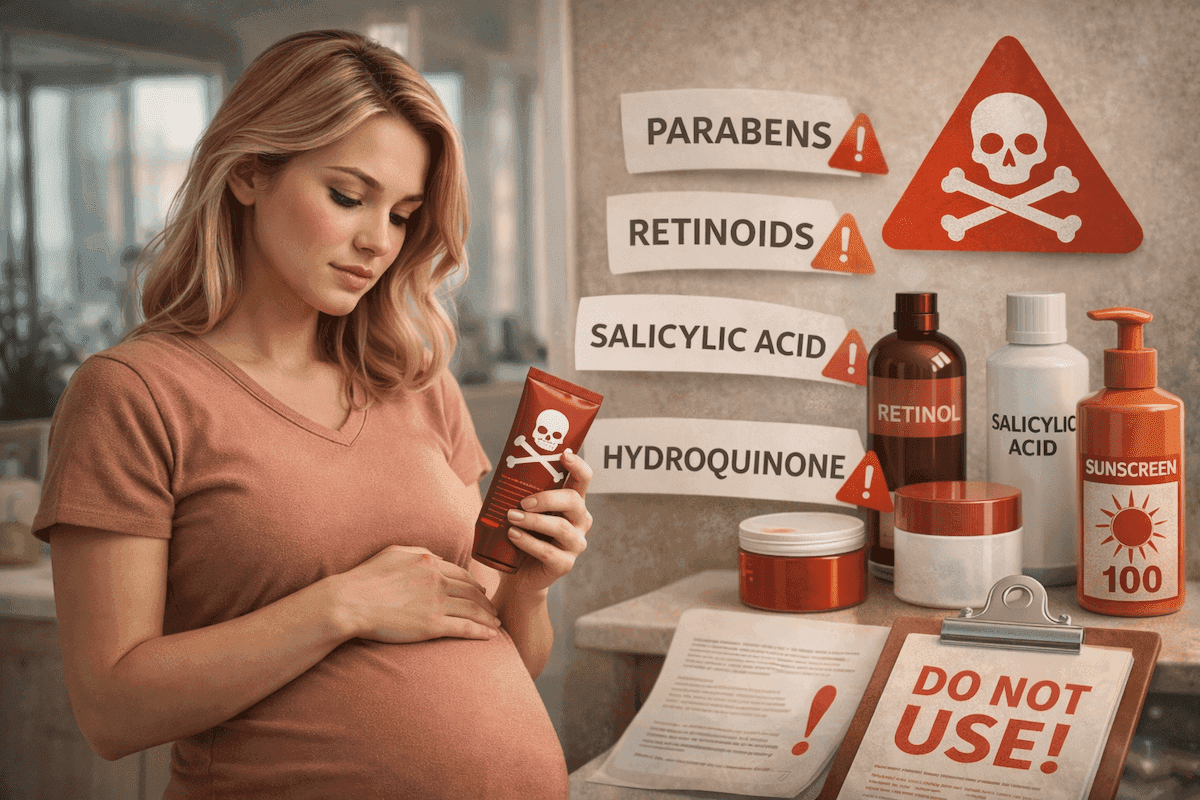
Cuando estás intentando quedarte embarazada, gran parte de la atención se centra naturalmente en el calendario, las hormonas y las citas médicas. Las rutinas diarias de cuidado de la piel rara vez forman parte de la conversación sobre fertilidad, sin embargo, son una de las formas más constantes y directas de exposición química en nuestra vida diaria. Los productos se aplican directamente sobre la piel, a menudo se dejan actuar durante horas y se utilizan repetidamente durante meses o años.
No hay pruebas de que los productos para el cuidado de la piel causen infertilidad o complicaciones en el embarazo. La investigación sobre la fertilidad humana es compleja, y la mayoría de los datos sobre ingredientes cosméticos son observacionales y no causales. Aun así, la investigación en salud reproductiva y endocrina ha demostrado que algunos grupos de ingredientes pueden interferir en la señalización hormonal o carecen de datos sólidos de seguridad en el embarazo. Por ello, muchos médicos recomiendan un enfoque de precaución y bajo estrés que se centre en reducir la exposición repetida y evitable cuando sea fácil hacerlo.
Respuesta rápida: Los ingredientes para el cuidado de la piel que suelen evitarse durante el embarazo son los retinoides, la hidroquinona, las dosis altas de ácido salicílico sin enjuague, los conservantes que liberan formaldehído y algunos filtros UV químicos como la oxibenzona. Estas recomendaciones son cautelares y se basan en el potencial de absorción y en datos de seguridad limitados, más que en pruebas de que los productos de cuidado de la piel causen daños por sí mismos.
Por qué se presta especial atención al cuidado de la piel durante el embarazo
Los productos para el cuidado de la piel difieren de muchas otras exposiciones porque son predecibles y acumulativos. La misma crema hidratante, suero o protector solar puede aplicarse diariamente a la misma zona de la piel, creando una exposición a largo plazo de dosis bajas. Durante el embarazo, cuando la regulación hormonal desempeña un papel crítico en la implantación, el desarrollo de la placenta y el crecimiento del feto, esta exposición acumulativa es la razón por la que ciertos ingredientes atraen un escrutinio más atento.
Esta lógica de precaución es similar a la orientación que se discute a menudo cuando se explora la infertilidad inexplicada o se prepara la concepción asistida, donde el objetivo no es eliminar todos los riesgos, sino optimizar el entorno biológico siempre que sea práctico.
¿Es seguro el retinol durante el embarazo?
No. El retinol y otros derivados de la vitamina A se evitan sistemáticamente durante el embarazo.
La vitamina A en dosis altas es un teratógeno conocido cuando se toma por vía oral. Aunque los retinoides tópicos se absorben a niveles mucho más bajos, los datos de seguridad en torno al embarazo son limitados. Dado que los retinoides no son esenciales para la salud de la piel y que existen muchas alternativas, la mayoría de los médicos recomiendan dejar de usarlos cuando se confirma el embarazo o cuando estás intentando quedarte embarazada.
Los retinoides suelen encontrarse en cremas antienvejecimiento, tratamientos del acné y sueros "renovadores de la piel", y pueden aparecer en las etiquetas como retinol, retinal, palmitato de retinilo, tretinoína, adapaleno o tazaroteno. Esta orientación suele revisarse junto con conversaciones más amplias sobre la planificación de la fertilidad, incluido el modo en que el equilibrio hormonal influye en los resultados del tratamiento durante el proceso de FIV.
¿Puedo usar ácido salicílico durante el embarazo?
Depende de la formulación y la dosis.
Los productos de ácido salicílico de baja concentración que se aclaran, como los limpiadores, suelen considerarse poco preocupantes. La precaución se refiere a los productos de alta concentración que no se aclaran, como los tónicos con un 2% de BHA, los tratamientos localizados y los kits de exfoliación química caseros, que tienen un mayor potencial de absorción y datos limitados sobre el embarazo.
Debido a esta incertidumbre, muchas directrices dermatológicas y sobre el embarazo sugieren limitar o evitar el uso regular de ácido salicílico fuerte sin enjuague durante el embarazo, especialmente cuando se combina con otros ingredientes activos.
Productos para aclarar la piel que contienen hidroquinona
La hidroquinona es eficaz para tratar la hiperpigmentación y el melasma, pero los estudios muestran que tiene una absorción cutánea relativamente alta en comparación con muchos activos cosméticos. Debido a la escasez de datos sobre la seguridad durante el embarazo, en general se desaconseja la hidroquinona durante el embarazo.
Esto es especialmente relevante porque los cambios de pigmentación son frecuentes durante el embarazo. Los médicos suelen sugerir enfoques alternativos como la vitamina C, la niacinamida, el ácido azelaico y una protección solar diligente, en lugar de tratamientos aclarantes agresivos.
Productos químicos que deben evitarse durante el embarazo en el cuidado de la piel
Cuando la gente busca productos químicos que deben evitarse durante el embarazo, suele referirse a un pequeño grupo de sustancias con actividad endocrina o datos limitados sobre seguridad reproductiva. En el cuidado de la piel, esto suele incluir:
- Retinoides
- Hidroquinona
- Formaldehído y conservantes liberadores de formaldehído
- Ciertos filtros UV químicos
- En algunos casos, productos muy perfumados que pueden contener ftalatos
Reducir la exposición a estas sustancias químicas se considera una opción de precaución, no un requisito médico. Esto refleja una orientación reproductiva más amplia que reconoce la exposición de ambos miembros de la pareja, incluyendo cómo los factores de fertilidad masculina y la calidad del esperma contribuyen a los resultados del embarazo.
Conservantes que liberan formaldehído
Algunos conservantes liberan lentamente pequeñas cantidades de formaldehído para impedir el crecimiento microbiano. El formaldehído es un tóxico reconocido para la reproducción a niveles de exposición más elevados, por lo que este grupo de ingredientes se suele señalar en las directrices sobre el embarazo.
Estos conservantes todavía se encuentran en algunos productos para el cuidado de la piel y el cabello, y pueden aparecer en las etiquetas como DMDM hidantoína, imidazolidinil urea, diazolidinil urea, cuaternio-15 o bronopol. Como son detectables en la etiqueta y evitables, muchos médicos los consideran un objetivo de reducción sensato durante el embarazo.
Protectores solares químicos con filtros de mayor preocupación
La protección solar sigue siendo esencial durante el embarazo, sobre todo porque los cambios hormonales pueden aumentar el riesgo de pigmentación. Sin embargo, algunos filtros UV químicos más antiguos han demostrado actividad endocrina en entornos de investigación, lo que ha dado lugar a restricciones normativas en determinadas regiones.
Ingredientes como la oxibenzona suelen estar señalados, y muchas directrices sobre el embarazo sugieren cambiar a protectores solares minerales que contengan óxido de zinc o dióxido de titanio como precaución. Esto permite una protección UV continuada sin aumentar la preocupación y se alinea con los debates sobre el cuidado de la fertilidad en torno a las vías de exposición sensibles a las hormonas, incluidas las exploradas en la investigación sobre testosterona, estrés y equilibrio hormonal.
Fragancias y productos de uso diario
La fragancia no es un ingrediente único, sino una mezcla que puede incluir sustancias químicas no reveladas, incluidos los ftalatos. Aunque la fragancia no es intrínsecamente insegura, su uso diario en productos sin aclarado, como la loción corporal, la crema hidratante facial y el desodorante, puede aumentar significativamente la exposición acumulada.
Muchas personas eligen versiones sin perfume o ligeramente perfumadas de sus productos básicos durante el embarazo, y mantienen el perfume en los productos de uso ocasional. Este enfoque reduce la exposición sin eliminar el disfrute de las rutinas de cuidado personal.
Cómo ajustar tu rutina de cuidado de la piel sin cambiarla por completo
Un enfoque respetuoso con el embarazo no requiere desechar todo el armario del baño. La mayoría de los médicos sugieren empezar por los productos que se usan más a menudo y que se dejan más tiempo en la piel, como hidratantes, sueros, protectores solares y tratamientos para el acné.
Sustituir los productos gradualmente a medida que se agotan ayuda a reducir el estrés y los gastos. Este enfoque mesurado es coherente con la forma en que se suelen tratar los cambios de estilo de vida en la atención a la fertilidad, incluso durante la preparación para el tratamiento de FIV o el seguimiento del embarazo temprano.
Qué es y qué no es esta orientación
Evitar determinados ingredientes para el cuidado de la piel durante el embarazo no es una garantía de resultados ni una obligación moral. Es una forma práctica, basada en pruebas, de reducir la exposición evitable durante un periodo hormonalmente sensible.
Esta orientación complementa la atención médica, no la sustituye. Las personas que se enfrentan a problemas de fertilidad también pueden beneficiarse de una educación más amplia sobre salud reproductiva, que incluya cómo la fertilidad masculina, la fragmentación del ADN espermático y las exposiciones ambientales compartidas influyen en la concepción y el embarazo precoz.
Preguntas frecuentes sobre el cuidado de la piel durante el embarazo
¿Qué ingredientes para el cuidado de la piel deben evitarse durante el embarazo?
Los ingredientes para el cuidado de la piel que suelen evitarse durante el embarazo son los retinoides, la hidroquinona, las dosis altas de ácido salicílico sin enjuague, los conservantes que liberan formaldehído y ciertos filtros UV químicos como la oxibenzona. Estos ingredientes se señalan debido a su potencial de absorción o a la escasez de datos sobre su seguridad durante el embarazo.
¿Es seguro el retinol durante el embarazo?
No. El retinol y otros derivados de la vitamina A no se consideran seguros durante el embarazo. Se sabe que las dosis altas de vitamina A causan daños en el desarrollo cuando se toman por vía oral, y debido a los limitados datos de seguridad sobre el uso tópico, la mayoría de los médicos recomiendan dejar de usar retinoides durante el embarazo.
¿Puedo usar ácido salicílico durante el embarazo?
Depende de la formulación. Los productos de ácido salicílico de baja concentración que se aclaran se consideran generalmente poco preocupantes, pero los productos de alta concentración que no se aclaran, como los tónicos con un 2% de BHA y los discos exfoliantes, suelen evitarse durante el embarazo como medida de precaución.
¿Qué sustancias químicas deben evitarse durante el embarazo en el cuidado de la piel?
En el cuidado de la piel, las sustancias químicas que suelen evitarse durante el embarazo son los retinoides, la hidroquinona, los conservantes que liberan formaldehído, ciertos filtros solares químicos y, en algunos casos, ingredientes de fragancias que pueden contener ftalatos. La atención se centra en reducir la exposición repetida y evitable, más que en eliminar todos los ingredientes sintéticos.
¿Es segura la vitamina C durante el embarazo?
Sí. En general, la vitamina C se considera segura durante el embarazo cuando se aplica tópicamente como parte de una rutina de cuidado de la piel. No interfiere en la señalización hormonal y a menudo se recomienda como alternativa a los retinoides para aclarar la piel.
¿Son seguros los protectores solares químicos durante el embarazo?
Algunos protectores solares químicos se consideran seguros, pero ciertos filtros como la oxibenzona han mostrado actividad endocrina en investigaciones. Muchas directrices sobre el embarazo sugieren utilizar protectores solares minerales con óxido de zinc o dióxido de titanio como precaución, manteniendo al mismo tiempo una protección solar adecuada.
¿Debo dejar de usar productos para el cuidado de la piel durante el embarazo?
No. El embarazo no exige dejar de usar productos para el cuidado de la piel. El objetivo es revisar las listas de ingredientes y reducir la exposición a un pequeño número de ingredientes señalados, sobre todo en los productos que se utilizan a diario y se dejan sobre la piel durante periodos prolongados.
¿Son inseguros los productos perfumados para el cuidado de la piel durante el embarazo?
Los productos perfumados no son automáticamente inseguros, pero las mezclas de fragancias pueden incluir sustancias químicas no reveladas, como los ftalatos. Muchas personas eligen opciones sin fragancia para los productos de uso diario sin enjuague durante el embarazo, a fin de reducir la exposición acumulativa.
¿Es seguro hacerse tratamientos faciales o peelings químicos durante el embarazo?
Los tratamientos faciales suaves suelen considerarse seguros, pero las exfoliaciones químicas fuertes y los tratamientos con altas concentraciones de principios activos suelen evitarse durante el embarazo debido a su mayor absorción y a la escasez de datos sobre su seguridad. Lo mejor es comprobar las listas de ingredientes y consultar a un profesional.
¿Afectan los productos para el cuidado de la piel a la fertilidad o a los resultados del embarazo?
No hay pruebas de que los productos para el cuidado de la piel causen por sí solos problemas de fertilidad o complicaciones en el embarazo. La investigación ha identificado asociaciones entre determinadas exposiciones químicas y cambios hormonales, razón por la cual la orientación preventiva se centra en reducir la exposición evitable en lugar de implicar un daño directo.
Conclusión
Comprender qué ** ingredientes del cuidado de la piel hay que evitar durante el embarazo** permite tomar decisiones informadas y proporcionadas, en lugar de normas rígidas. Si nos centramos en las exposiciones repetidas y evitables y seguimos las directrices de precaución basadas en la ciencia de la reproducción, es posible mantener la salud durante el embarazo sin convertir el cuidado de la piel en otra fuente de estrés.
Si tienes dudas sobre el uso de algún producto en particular, pide orientación personalizada a tu médico.
En Conceivio, los cuidados de la fertilidad y el embarazo se basan en la ciencia, la compasión y la inclusión. Tanto si te estás preparando para el embarazo como si estás siguiendo un tratamiento de fertilidad o buscando una orientación clara y basada en pruebas, Conceivio te ofrece recursos de confianza para ayudarte a tomar decisiones informadas en cada etapa del viaje.