Los miomas uterinos son una de las afecciones reproductivas más frecuentes que afectan a las mujeres en edad reproductiva. Muchas mujeres desarrollarán miomas en algún momento de su vida, pero muchas ni siquiera se dan cuenta de que los tienen. Para otras, los síntomas pueden afectar significativamente a la vida diaria y suscitar preocupaciones sobre la fertilidad y el embarazo.
Si estás intentando concebir o planeando un embarazo, comprender qué son los miomas uterinos y reconocer los síntomas de los miomas uterinos a tiempo puede ayudarte a tomar decisiones informadas sobre tu salud reproductiva.
Respuesta rápida: Los miomas uterinos son crecimientos no cancerosos que se desarrollan en la pared muscular del útero. Aunque muchas mujeres no experimentan síntomas, otras pueden tener hemorragias abundantes, dolor pélvico o dificultades para quedarte embarazada, dependiendo del tamaño y la localización de los miomas.
¿Qué son los miomas uterinos?
Los miomas uterinos, también conocidos como leiomiomas, son crecimientos benignos que se forman dentro del tejido muscular del útero. No son cancerosos y, en la mayoría de los casos, no aumentan el riesgo de cáncer uterino.
Aunque no se conoce del todo la causa exacta de los miomas uterinos, están estrechamente relacionados con desequilibrios hormonales, sobre todo con el predominio de estrógenos. También pueden contribuir factores genéticos y ambientales.
Los miomas pueden variar mucho de tamaño. Algunos son muy pequeños e indetectables sin pruebas de imagen, mientras que otros pueden crecer lo suficiente como para distorsionar la forma del útero.
Es importante señalar que muchas mujeres con miomas conciben de forma natural y tienen embarazos sanos. Sin embargo, para algunas, los miomas pueden interferir en la fertilidad dependiendo de su tipo y localización.
Tipos de miomas uterinos
Existen cuatro tipos principales de miomas uterinos. Su localización desempeña un papel clave a la hora de determinar si causan síntomas o afectan a la fertilidad.
Miomas intramurales
Los miomas intramurales crecen dentro de la pared muscular del útero. Son el tipo más frecuente. En muchos casos, no sobresalen significativamente en la cavidad uterina, por lo que es posible que no interfieran directamente con la implantación.
Sin embargo, los miomas intramurales de mayor tamaño pueden alterar la estructura uterina y afectar potencialmente a la fertilidad.
Miomas subserosos
Los miomas subserosos se desarrollan en la superficie externa del útero. Suelen crecer hacia fuera y no hacia el interior de la cavidad uterina. Debido a su posición, es menos probable que interfieran directamente en la implantación, pero pueden causar presión o molestias pélvicas.
Miomas submucosos
Los miomas submucosos crecen en la cavidad interna del útero. Suelen ser los que más afectan a la fertilidad. Como sobresalen en el revestimiento uterino, pueden distorsionar la forma de la cavidad, interferir en la implantación y aumentar el riesgo de aborto.
Si te preocupa este tipo concreto, encontrarás más detalles sobre la importancia de su ubicación en los miomas uterinos pueden afectar a la fertilidad.
Miomas pediculados
Los miomas pediculados crecen en un tallo dentro o fuera del útero. Su impacto depende de dónde estén situados. Algunos pueden no causar ningún problema, mientras que otros pueden crear complicaciones dependiendo de su tamaño y colocación.
Síntomas de los miomas uterinos que debes vigilar
Uno de los problemas de los miomas es que muchas mujeres no experimentan síntomas. Sin embargo, cuando hay síntomas, pueden afectar significativamente a la calidad de vida.
Los síntomas más frecuentes de los miomas uterinos son:
- Hemorragias menstruales muy abundantes
- Períodos prolongados
- Coágulos de sangre grandes
- Dolor o presión pélvica
- Dolor durante el coito
- Sangrado irregular fuera de los días normales del ciclo
La hemorragia intensa suele ser el síntoma más notable. Las mujeres pueden necesitar cambiar de compresas o tampones con frecuencia, manchando la ropa o la ropa de cama, o experimentando episodios de sangrado que disminuyen y vuelven a aparecer dentro del mismo ciclo.
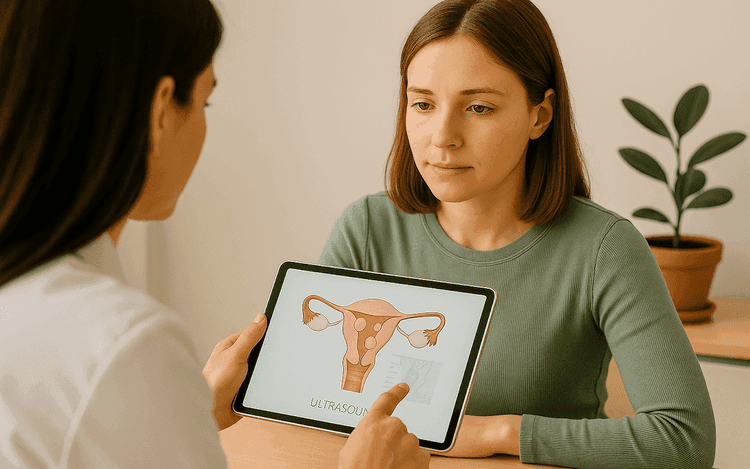
Si tienes hemorragias menstruales abundantes, es importante que te sometas a una evaluación. Una ecografía pélvica, abdominal o transvaginal, suele confirmar la presencia de miomas e identificar su tamaño y localización.
El diagnóstico precoz es especialmente importante si estás planeando concebir.
Cómo afectan los miomas uterinos a la fertilidad
Para comprender cómo afectan los miomas uterinos a la fertilidad es necesario examinar varios mecanismos.
Distorsión de la forma uterina
Los miomas grandes pueden alterar la estructura del útero. Cuando la cavidad uterina está distorsionada, la implantación puede resultar más difícil. Un óvulo fecundado necesita un revestimiento sano y receptivo para adherirse con éxito.
Trompas de Falopio obstruidas
En ciertos casos, los miomas situados cerca de las trompas de Falopio pueden impedir que los espermatozoides lleguen al óvulo o que el óvulo fecundado se desplace correctamente.
Flujo sanguíneo reducido
Los miomas necesitan su propio riego sanguíneo. Los tumores más grandes pueden desviar el flujo sanguíneo del revestimiento uterino, reduciendo potencialmente el potencial de implantación.
Desequilibrios hormonales
Muchas mujeres con miomas también experimentan una dominancia de estrógenos y una insuficiencia de progesterona. El equilibrio de estrógenos y progesterona es esencial para mantener un revestimiento uterino sano y favorecer el embarazo precoz.
El desequilibrio hormonal puede agravar los problemas de fertilidad, sobre todo si los miomas ya afectan a la estructura uterina.
Puedes encontrar orientaciones más detalladas sobre las consideraciones relativas a la fertilidad en los miomas uterinos pueden afectar a la fertilidad, donde se profundiza en los riesgos específicos de implantación y embarazo.
Miomas y complicaciones del embarazo
Aunque se produzca la concepción, los miomas pueden aumentar el riesgo de complicaciones durante el embarazo.
Éstas pueden incluir:
- Mayor riesgo de aborto espontáneo
- Posicionamiento anómalo de la placenta
- Dolor al expandirse el útero
- Mayor probabilidad de parto por cesárea
Algunas mujeres con miomas pueden no ser candidatas al parto vaginal en función del tamaño y la colocación de los miomas.
Sin embargo, es importante destacar que muchas mujeres con miomas tienen embarazos y partos completamente sanos.
Diagnóstico y detección precoz
Si sospechas la presencia de miomas basándote en síntomas de miomas uterinos como hemorragias abundantes o ciclos irregulares, se recomienda una evaluación precoz.
El diagnóstico suele incluir:
- Examen pélvico
- Ecografía
- Ecografía transvaginal
- Ocasionalmente resonancia magnética
La detección precoz permite evaluar:
- El número de miomas
- El tamaño
- Localización
- Impacto potencial en la fertilidad
Si estás planeando un embarazo, conocer esta información de antemano te ayudará a tomar decisiones con conocimiento de causa.
Opciones de tratamiento para los miomas uterinos
El tratamiento depende de los síntomas, los objetivos de fertilidad y el tamaño y la localización del mioma.
Tratamientos médicos
Los ginecólogos pueden recomendar:
- Terapias hormonales
- Dispositivos intrauterinos
- Extirpación quirúrgica
- Miomectomía
- Embolización de la arteria uterina
Las vías médica y quirúrgica deben discutirse siempre a fondo con un especialista.
Apoyo holístico y nutricional
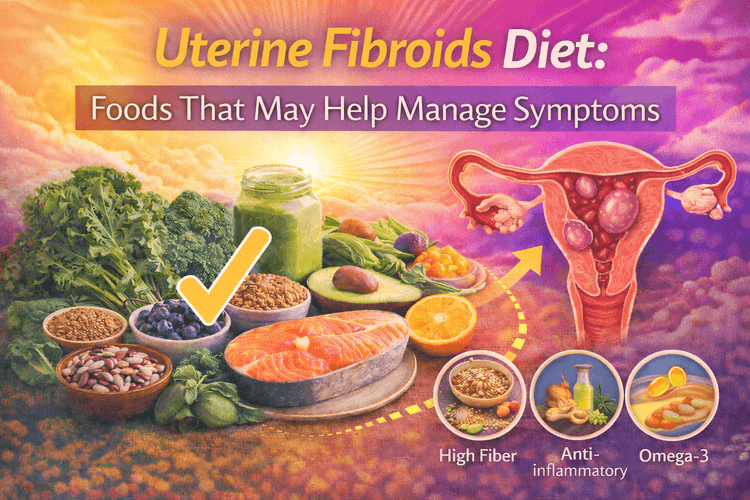
Algunas mujeres optan por explorar enfoques nutricionales y de estilo de vida para controlar los síntomas y favorecer el equilibrio hormonal.
La regulación hormonal mediante la dieta puede contribuir a reducir la dominancia de estrógenos. Puedes explorar estrategias dietéticas más detalladas en nutrición para el tratamiento de los miomas uterinos, donde se exponen consideraciones nutricionales para el equilibrio hormonal.
También se suelen explorar estrategias de suplementación. Ciertos suplementos pueden favorecer el equilibrio hormonal y la reducción de la inflamación. Puedes profundizar en este enfoque en suplementos para el tratamiento de los miomas uterinos, que explica las pautas de suplementación basadas en la evidencia.
Además, las nuevas investigaciones destacan la importancia de la salud del aparato reproductor. El microbioma uterino puede influir en los resultados de la implantación y la fertilidad. Puedes obtener más información sobre esta conexión en microbioma uterino y fertilidad, que explora cómo el equilibrio microbiano puede favorecer la salud reproductiva.
Remedios naturales frente a intervención médica
No existe una respuesta universal a si es mejor el tratamiento médico o el holístico. La situación de cada mujer es diferente.
Los factores a tener en cuenta son:
- Gravedad de los síntomas
- Calendario de fertilidad
- Tamaño y tipo de miomas
- Equilibrio hormonal general
- Preferencias personales
Algunas mujeres experimentan una mejoría de los síntomas con cambios en la dieta y suplementos específicos. Otras pueden necesitar una intervención quirúrgica para proteger la fertilidad.
La clave está en tomar decisiones con conocimiento de causa.
¿Puedes quedarte embarazada con miomas uterinos?
Sí, muchas mujeres con miomas conciben de forma natural.
Sin embargo, es importante que:
- Identifiques el tipo de mioma
- Comprendas la localización
- Evalúes el equilibrio hormonal
- Controles los patrones de sangrado
- Busques un diagnóstico precoz
Con el apoyo adecuado, los resultados de fertilidad pueden mejorar significativamente.
Reflexiones finales
¿Qué son los miomas uterinos? Son crecimientos comunes, no cancerosos, que pueden afectar o no a tu fertilidad en función de su tamaño y localización.
Reconocer los síntomas de los miomas uterinos, como las hemorragias abundantes y los ciclos irregulares, es esencial para intervenir precozmente. Aunque los miomas pueden afectar a la implantación, el flujo sanguíneo y los resultados del embarazo, muchas mujeres conciben con éxito y tienen embarazos sanos.
Conocer tu cuerpo te da poder. Un diagnóstico precoz, unas decisiones de tratamiento informadas y un apoyo hormonal equilibrado pueden mejorar significativamente tanto los resultados de la fertilidad como la salud reproductiva general.