
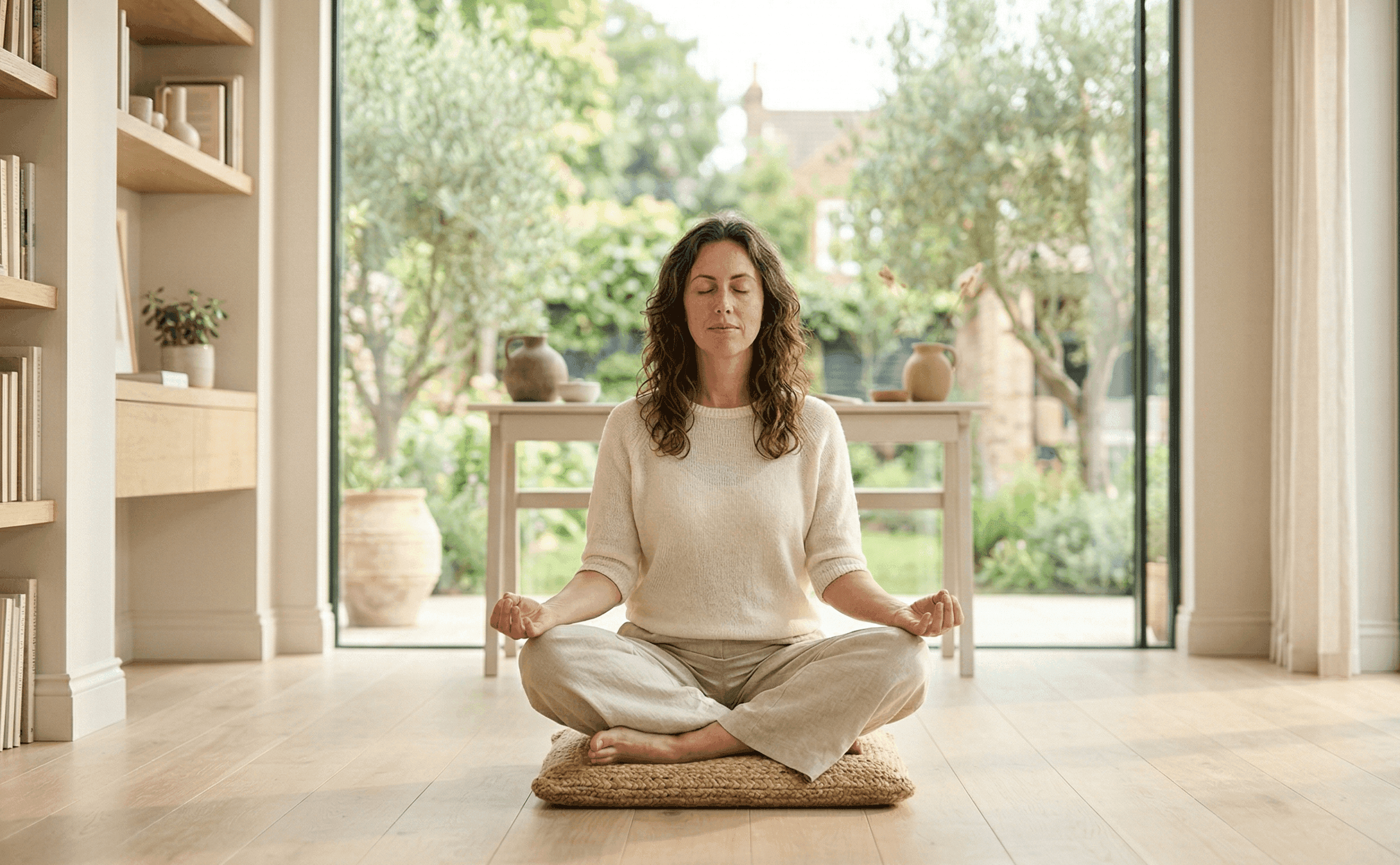
In many traditions, the womb is viewed as more than a physical organ. It is often described as a center of creativity, emotion, and deep inner awareness. Yet in modern life, many women feel disconnected from this part of their body. Daily stress, busy routines, and a lack of intentional self-reflection can make it difficult to pause and listen to the subtle signals the body sends.
Meditation offers a powerful way to reconnect. Through stillness, breath, and attention, it becomes possible to shift focus inward and cultivate awareness of sensations, emotions, and internal dialogue. A womb healing meditation creates space to slow down, release emotional tension, and nurture a deeper connection with the womb and pelvic area.
This practice is not about forcing change or searching for a specific outcome. Instead, it is about listening. By directing attention toward the womb space and allowing emotions, sensations, and thoughts to surface naturally, you can begin a process of healing the womb that encourages balance, softness, and inner harmony.

Lifestyle matters for fertility. A BMC Public Health study found that women with 4–5 healthy habits had a 59% lower risk of infertility.
Fill out the questionnaire, and get a personalised, holistic and evidence-based programme tailored to you.
 takes 3 minutes to complete
Quick Answer: A womb healing meditation is a guided mindfulness practice that helps you reconnect with your womb space by focusing on breath, body awareness, and visualization. The practice encourages grounding through the pelvis, listening to sensations and emotions stored in the womb area, and imagining healing light spreading through the pelvic space to support emotional release, relaxation, and deeper self-connection.
A womb healing meditation invites you to slow down and connect inwardly with your body. The intention is not to diagnose or treat a medical condition but to cultivate awareness and emotional presence within the pelvic area.
Many people move through life without consciously paying attention to the internal signals of their bodies. Meditation helps create a quiet space where these signals can be noticed and understood.
During meditation, it becomes easier to recognize the difference between your thoughts and your deeper awareness. The internal voice that narrates your daily experiences is often loud and constant. Meditation allows you to step back from this voice and observe it rather than identify with it.
In the same way that thoughts carry stories, the body also holds stories. The womb, heart, and other organs can carry emotional memories or sensations connected to past experiences. Through meditation, you can begin to listen to those stories with curiosity and compassion.
Healing the womb in this context does not mean eliminating emotions or discomfort. Instead, it means creating space to acknowledge and honor what arises. By turning attention inward and observing sensations without judgment, the body is given an opportunity to release tension and restore balance.
This content is for educational purposes only. It has been reviewed for scientific accuracy, but it does not constitute medical advice, diagnosis, or treatment. Always consult a qualified healthcare professional regarding medical questions or fertility treatment decisions.
Reviewed for scientific accuracy by: Dr. Mona Bungum
Last reviewed: March 2026
Lifestyle matters for fertility. A BMC Public Health study found that women with 4–5 healthy habits had a 59% lower risk of infertility.
Fill out the questionnaire, and get a personalised, holistic and evidence-based programme tailored to you.
takes 3 minutes to completeBefore beginning a meditation practice, it helps to create a supportive environment. A calm, quiet space allows you to focus inward without distraction.
You do not need special equipment or a complicated routine. The most important elements are comfort, patience, and openness to the experience.
A key part of this meditation involves grounding the body through the pelvis. Sitting comfortably, you bring awareness to the parts of your body touching the ground or chair.
From here, you can imagine roots extending downward into the earth, similar to the roots of a tree. These roots represent stability, strength, and connection with the natural world. This grounding visualization helps anchor the body and mind before moving deeper into the meditation.
As the body becomes grounded, attention shifts to relaxation. The spine can lengthen gently while the rest of the body softens.
The idea is to sit tall while remaining relaxed. There is both structure and softness at the same time, allowing the body to feel supported between the earth below and the sky above.
Once the body feels settled and grounded, the meditation moves toward the womb space.
Placing your hands gently on the lower belly helps direct attention to this area. The physical touch reinforces awareness and creates a sense of warmth and presence.
A helpful visualization in this practice is to imagine the womb as an old friend you have not spoken to in a long time. Just as you would greet an old friend with curiosity and openness, you approach your womb with the same mindset.
For some people, this idea may initially feel unusual or unfamiliar. Speaking internally to the body or an organ can feel strange at first. However, approaching the exercise with playfulness and curiosity can make the experience more comfortable.
After placing your hands on the womb area, you can begin a gentle inner dialogue. This might involve silently asking questions or simply noticing sensations.
There is no need to force answers. Thoughts, images, or emotions may arise naturally during moments of quiet. These responses are part of the body’s communication and should be observed with patience.
The next stage of womb healing meditation involves tuning into physical sensations.
Instead of analyzing or judging what you feel, you simply notice. Sensations could include warmth, heaviness, lightness, tingling, or even no sensation at all.
Every experience during meditation is valid. Some people feel immediate sensations in the womb area, while others feel nothing in particular. Both experiences are completely normal.
The goal is not to create sensations but to allow whatever is present to exist without resistance.
Beyond physical sensations, the womb healing meditation also invites emotional awareness.
In some traditions, the womb is described as a “second heart.” This concept suggests that emotional experiences can be held within the pelvic space.
Recognizing Emotional Energy
As you focus on the womb area, emotions may begin to surface. These emotions might be subtle or strong, familiar or unexpected.
The key is to acknowledge whatever arises without judgment. Instead of trying to change the emotion, simply observe it and allow it to be present.
Honoring What Arises
Giving attention to emotional signals can be a powerful part of healing the womb. By acknowledging emotions rather than suppressing them, the body is given an opportunity to release stored tension.
Meditation creates a safe space where emotions can be felt and honored.
Visualization is an important element of this meditation practice. After connecting with physical sensations and emotional awareness, attention shifts toward healing imagery.
The practice introduces the visualization of a warm, golden light beginning in the center of the womb. This light gradually expands outward, filling the entire pelvic space.
You can imagine the pelvis as a spacious bowl that holds this light. As the golden light spreads, it represents warmth, softness, and healing energy.
The golden light continues to grow brighter and more expansive, filling the pelvic bowl with warmth and comfort. This visualization symbolizes emotional release and nurturing support.
The light is something you can return to at any time during meditation. It represents an internal source of healing that is always available.
After spending time connecting with the womb and visualizing healing light, the meditation slowly guides attention back to the body.
Deeper breaths help transition from the internal experience to the present moment.
Gentle Movement
Small movements such as rolling the shoulders or moving the neck can help reawaken the body. These gentle motions ease the transition from stillness back to physical awareness.
Honoring the Practice
To close the meditation, you may bring your hands to your heart and bow your head slightly. This gesture symbolizes gratitude and respect for the practice and for yourself.
Recognizing the effort you have made to connect with your body reinforces the healing intention of the meditation.
Regular womb healing meditation can support emotional awareness, relaxation, and body literacy. The practice encourages individuals to listen to their bodies and recognize internal signals that might otherwise be overlooked.
Meditation can also strengthen the connection between mind and body, helping create a sense of calm and grounded presence.
Developing body awareness is also valuable when learning more about reproductive health and hormonal cycles. For example, understanding the body’s signals can support awareness of menstrual health and hormonal patterns, which are explored in greater detail in this resource on understanding menstrual cycles and reproductive health.
Like any mindfulness exercise, womb healing meditation becomes more effective with consistency.
You do not need to practice for long periods. Even a few minutes of focused breathing and awareness can help deepen the connection with your body.
Starting With Short Sessions
If you are new to meditation, begin with five to ten minutes. Over time, you may naturally feel comfortable extending the practice.
Practicing With Compassion
Some meditation sessions will feel peaceful and clear, while others may feel distracted or emotional. Both experiences are part of the process.
Approaching each practice with patience and compassion allows healing to unfold gradually.
A womb healing meditation is an invitation to slow down, listen, and reconnect with the body’s inner wisdom. By grounding through the pelvis, observing sensations, exploring emotions, and visualizing healing light, this practice supports a gentle process of healing the womb.
The journey inward is unique for each person. Some may experience emotional release, while others may simply feel a deeper sense of calm and connection. What matters most is creating the space to listen.
With patience and regular practice, womb healing meditation can become a meaningful way to nurture self-awareness, emotional balance, and inner harmony.
00:00:15 I strongly believe, because of my personal experience and the experience that I have guiding other women in this practice, that we all have an ability to connect with our womb in terms of storytelling, in terms of body sensation, body literacy. I strongly believe, because of my personal experience and the experience that I have guiding other women in this practice, that we all have an ability to connect with our womb in terms of storytelling, in terms of body sensation, body literacy. and really what I believe that you all have the capacity to do, that we all have the capacity to do is to really go inwards and to listen. So just like you have an internal voice that often will tell stories throughout the course of your day, this is your internal voice, this is your internal dialogue, this is the voice that we become familiar with, more familiar with through meditation. dialogue, this is the voice that we become familiar with, more familiar with through meditation. It is the internal voice that we begin to allow ourselves a little bit of distance from through meditation.
00:01:13 Meditation allows us to really recognize that we are not our voice, that this voice is not us. So just like we have this internal dialogue, this internal voice, our organs, our wombs, our hearts, So just like we have this internal dialogue, this internal voice, our organs, our wombs, our hearts, they also hold very important stories of our past. And this presents us with a beautiful opportunity to go inwards, to listen to the story, and then we can then come to a place of healing. A healing is something that you absolutely have the power to do on your own.
00:01:57 It's helpful, of course, to have a guide. and I am here to be your guide. and I am here to be your guide. So with that, let's find ourselves anchored and rooted and grounded through the pelvis. Take your gaze and shift your gaze somewhere in front of you that you can soften your eyes. Begin to direct your focus inwards. allow the eyes to retreat back into the eye socket allow the eyes to soften you can engage and use your peripheral vision the eyelids feel heavy enough that they want to close go ahead
00:02:51 and use your peripheral vision the eyelids feel heavy enough that they want to close go ahead and allow the eyelids to close and then bring your attention into your seat Notice what parts of your body are in contact with the ground and use the power of your imagination to visualize roots, like the roots of a tree that give the tree its strong, stable foundation. Notice what parts of your body are in contact with the ground and use the power of your imagination to visualize roots, like the roots of a tree that give the tree its strong, stable foundation. you're imagining that you have roots that are growing from beneath you that are anchoring you down connecting you with mother nature mother nature who's here to nourish you down connecting you with mother nature mother nature who's here to nourish you to support you to hold you on your journey on this path on this mission that you are on
00:04:20 and allow yourself to sit up a little bit taller with mother earth's holding with her grounding notice how that grounding can give you the strength to sit up tall with the length in the spine notice how that grounding can give you the strength to sit up tall with the length in the spine the crown of the head lifting and then a deep profound softness in all other areas of your body in between sky and earth so in between the crown of your head and the root of your pelvis in between sky and earth so in between the crown of your head and the root of your pelvis allow for there to be expansion allow for there to be softening and even think of a melting as you're softening you can sit up tall and be soft at the same time and i invite you now to take your
00:05:27 you're softening you can sit up tall and be soft at the same time and i invite you now to take your hands to the low belly to your womb and I invite you to hold your womb softly tenderly and just like you would when you meet a friend an old friend that you haven't seen or spoken to in a like you would when you meet a friend an old friend that you haven't seen or spoken to in a long time I want you to imagine that your womb was that old friend you're going to become reacquainted and you're going to start a dialogue. Just notice this is a new exercise, a new practice for you speaking to your body
00:06:27 a new practice for you speaking to your body or speaking to your organs, your womb space. It might feel silly. It might feel shy. And I invite you to be playful and just give it a try. What do you have to lose? It could also be a visual that you have
00:06:48 when you are introducing yourself or getting reacquainted with your womb. maybe imagine yourself with that old friend and feel that sensation in your body maybe imagine yourself with that old friend and feel that sensation in your body that is the embodiment of becoming reacquainted with the womb then i'm going to slow the pace down even more punctuated with a bit more silence can only listen to what the womb has to offer you in moments of silence. in moments of silence.
00:07:32 Noticing now any physical sensations that you feel in your womb. That's where we'll begin with the physical. Just notice, just open yourself up to any words that spontaneously pop into your head, to any words that spontaneously pop into your head, any visions, any visuals. And know that none of this is happening
00:08:10 by chance or by accident. any words any images that come to mind it's on purpose so next tapping into your emotional body any words any images that come to mind it's on purpose so next tapping into your emotional body your womb holds your second heart in chinese medicine the womb space is the second heart and therefore your womb holds emotions within it so noticing now going inwards going deep into your womb, into the space. into your womb, into the space. What emotions are your womb holding?
00:09:09 Maybe there's just one. What is the strong emotion that you feel when you connect with the energy of your womb? Allow for it to be there. Allow for yourself to truly notice, to truly feel and honor whatever is arising. to truly feel and honor whatever is arising. Maybe spontaneously a dialogue will begin.
00:09:44 Continue to talk to your womb again like it was that old friend. What words do you have to offer your womb? I invite you to step into the healing part of this practice, I invite you to step into the healing part of this practice, which is imagining, imagine now, beautiful golden light. That golden light, it starts within the center of your womb and it shines outwards and it shines more brightly. That golden light, it starts within the center of your womb and it shines outwards and it shines more brightly. That light really filling up your whole pelvic bowl.
00:10:52 And imagine your pelvis as this beautiful, open, spacious, warm bowl. And imagine your pelvis as this beautiful, open, spacious, warm bowl. And this light, golden thread of light filling up the space of the bowl, your pelvic bowl. And with its light energy, it brings healing. It brings warming. It brings softening. Imagining that light now. Knowing that this light, that you can feel this light.
00:12:00 You can connect with this light at any time. Breathe into the womb space now. letting the words letting the images letting any sensations emotions thoughts that arise letting them be there allowing for them to be there with non-judgment and softening letting them be there allowing for them to be there with non-judgment and softening softening i invite you to take your hands down to your knees and begin to take some deeper breaths softening i invite you to take your hands down to your knees and begin to take some deeper breaths longer breaths gently move your neck and roll the shoulders and then i invite you to bring
00:13:17 your hands to your heart now whether in prayer or just holding the heart holding yourself deeply bowing your chin down towards your chest an act of honoring yourself honoring this practice bowing your chin down towards your chest an act of honoring yourself honoring this practice The light in me bows to the light in you. Together, we are all one. Namaste.