00:00:00 Bienvenida a este vídeo sobre cómo descubrir la sensualidad. Vale, primero hablaré de una encuesta de Alemania que fue realmente importante a nosotros sobre lo que vamos a hablar. En esta encuesta participaron 1.900 parejas muy enamoradas y el En esta encuesta participaron 1.900 parejas muy enamoradas y el primer año vieron que ambos tenían exactamente el mismo deseo sexual.
00:00:40 Eran iguales. Pero el deseo disminuyó al cabo de un año en el caso de las mujeres. Así que lo que también sabemos es que lo que no discrepó fue que realmente quieren ser esencial con su pareja. Así que si faltaba sensualidad, no eran sexuales. Así que si faltaba sensualidad, no eran sexuales. Pero si tenían sensualidad con su pareja, se volvían más sexuales.
00:01:10 Así que esto significa que muchas mujeres necesitarán esto para tener relaciones sexuales con sus compañero. Necesitan ser sensuales. Necesitan tener el alma, el cuerpo y la paciencia para llegar ahí. Así que no es extraño, porque en todas las relaciones, cuando es una relación nueva, Así que no es extraño, porque en todas las relaciones, cuando es una relación nueva, tenemos un producto químico proceso en nuestro cerebro que nos proporciona placer.
00:01:40 Así que enamorarse es lo más parecido a la psicosis. Y también nos mareamos más cuando estamos enamorados. No necesitamos dormir tanto ni tampoco comer tanto. Pero eso es al principio de nuestra relación, ¿verdad? Tanta gente en el mundo espera que siempre estemos enamorados y que siempre tengamos Tanta gente en el mundo espera que siempre estemos enamorados y que siempre tengamos este deseo. Cada persona es diferente, ¿verdad?
00:02:14 Lo que tenemos que aprender sobre nosotros mismos es entender qué te excita y qué te apaga. Es muy importante que lo aprendas. Y también tienes que aprender cómo afecta el contexto que te rodea, el entorno. Y también tienes que aprender cómo afecta el contexto que te rodea, el entorno. su sexualidad porque de eso también estamos hablando cuando tenemos estos dos aspectos.
00:02:38 Es el contexto que te rodea el que afecta tu deseo. Por eso es muy importante que entiendas cómo te afecta esto. Y también tenemos que normalizarlo todo. Es muy común. Es muy poco común tener deseo todo el tiempo. Es normal. Está bien. Pero muchas personas que tienen una pareja que tiene mucho deseo, piensan que
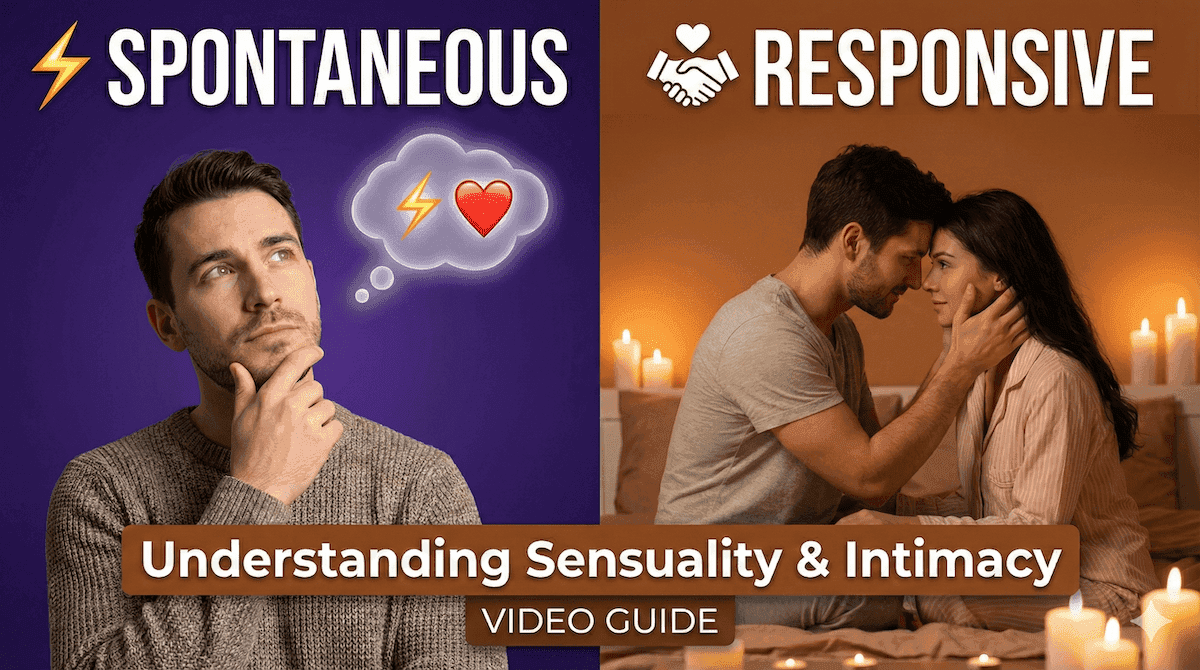
00:02:58 Pero muchas personas que tienen una pareja que tiene mucho deseo, piensan que hay les pasa algo. Pero no tienes lo mismo y está bien. Y tenemos que aprender acerca de lo que es deseo espontáneo para usted y lo que es deseo responsable para ti porque puedes tener cada uno de ellos. Puedes ser espontánea.
00:03:23 Eso significa que te excitas mucho, mucho cuando ves algo sexual. Eso significa que te excitas mucho, mucho cuando ves algo sexual. Es tu pareja. Quizá sea porno. Puede ser cualquier cosa. Pero si tienes deseo espontáneo, ves algo y entonces lo que piensas sobre el sexo, sobre el sexo es lo que despierta tu deseo y luego te excitas.
00:03:48 Así que si tienes deseo espontáneo, tus ojos son muy importantes, cómo decir esto en inglés. La vista juega un papel clave. La vista juega un papel clave. Así que significa que cualquier cosa en el mundo puede hacer que se encienda, si los ojos sintiendo esos al cerebro que esto es algo sexual. Así que si usted es sensible, eso significa que usted tiene que ser estimulado para obtener encendida.
00:04:21 No significa necesariamente estimulación genital. Puede ser estimulación mental, corporal o también genital. Puede ser estimulación mental, corporal o también genital. Depende de cómo te excites. Así que ambas cosas son realmente normales y puedes ser cada una de ellas o puedes estar en el centro. También puedes ser ambas cosas. Así que es muy importante entender quién soy yo en esto.
00:04:47 Y sobre la sexualidad femenina, es muy importante aprender estos cinco aspectos porque los hombres y las mujeres son realmente diferentes. Y no digo que sea más difícil ser mujer, pero las mujeres necesitan más Y no digo que sea más difícil ser mujer, pero las mujeres necesitan más tiempo muy a menudo. También es importante hablar de sexo.
00:05:17 Y lo que veo con muchas parejas que vienen aquí o hablan conmigo en línea es que la gente habla de sexo de forma negativa. Y eso afecta a la forma en que el cerebro piensa sobre el sexo. Y eso afecta a la forma en que el cerebro piensa sobre el sexo. Eso significa que no quieres tener sexo porque es algo negativo. Vamos a hablar de algo difícil. ¿Por qué vamos a hacerlo?
00:05:40 Y eso también afectará a tu deseo hacia tu pareja. Por eso es tan importante hablar de sexo con una actitud positiva y no de sexo negativo. Para tener más interés en el sexo. Y también tienes que hablar con tu pareja. Si tienes pareja, ¿qué es para ti el sexo? Si tienes pareja, ¿qué es para ti el sexo? ¿Qué quieres que sea el sexo para ti?
00:06:03 ¿Qué te excita? ¿Y qué es lo que no te excita? También puedes escribirlo y hablarlo con tu pareja. Es muy importante. Tienes que saber esto. Y lo que quiero decirte es que la piel y el cerebro trabajan juntos. Así que la piel es el órgano erógeno más grande que tenemos. Tenemos muchísimas terminaciones nerviosas.
00:06:28 Tenemos muchísimas terminaciones nerviosas. Y la forma en que toques el cuerpo afectará a tu deseo si quieres tenerlo o no. Así que un ejemplo sobre esto, es también tu sistema nervioso. Tienes el sistema nervioso que va desde la cabeza por todo el cuerpo. Y también percibe cómo te toca tu pareja. Así que si estás con tu pareja y realmente quieres ser sensual y tu pareja quiere
00:06:58 pareja quiere sexual contigo, quizás tu pareja te toca los genitales o simplemente te está tocando tu pene o tu pecho o lo que sea, entonces el cerebro codificará ese toque en el piel y enviará una señal al cerebro que le indica si esto está encendido o apagado. Así que ya ves que tenemos dos señales de apagado y una de encendido. Por eso es tan importante saber qué te excita y qué no.
00:07:29 Así que el cerebro es el órgano sexual más grande que tenemos. Así que el cerebro es el órgano sexual más grande que tenemos. Así, el cerebro y la piel se comunican entre sí. Y ahora voy a hablar de algo que es muy, muy emocionante. Tenemos cinco lenguajes eróticos. ¿Has oído hablar de los cinco lenguajes del amor? La forma en que te haces sentir. ¿Cómo te sientes amado?
00:07:54 ¿Verdad? Tenemos cinco lenguajes diferentes. También tenemos cinco formas diferentes de excitarnos. También tenemos cinco formas diferentes de excitarnos. Este concepto fue creado en Estados Unidos por terapeutas sexuales galardonados Jia lógico. Y estas son categorías sobre el lenguaje erótico que describe la naturaleza erótica de a ti.
00:08:22 ¿Verdad? Así que si usted aprende más acerca de la sexualidad, esta será la categoría de lados en cinco diferente diferente idioma. Así que es realmente importante saber dónde estás en esto porque puedes bailar con su pareja y experimentar una vida sexual totalmente nueva.
00:08:43 Estos son los cinco tipos. Voy a explicártelos. Quiero hablar un poco más sobre el lenguaje erótico. Puedes usarlo para despertar tu sexualidad y tu deseo. Puedes usarlo para despertar tu sexualidad y tu deseo. Eso es muy importante. Y tenemos... ves, la primera es la sexual. Y esa es también la que la sociedad nos enseña a ser.
00:09:14 Es importante. Tenemos derechos sexuales. Eso significa que te excitas cuando piensas en sexo, en correrte, en el orgasmo, penetración, retirada, desnudo, desnudo. Te gustaría tocar y mirar tal vez justo en los genitales y tal vez se Te gustaría tocar y mirar tal vez justo en los genitales y tal vez se ir más rápido que necesitar esa paciencia, no necesitas ese tiempo.
00:09:40 Eso es lo sexual. Este es sólo uno de estos cinco. Y luego tienes el sensual, del que he hablado un poco. Te excitas despertando todos tus sentidos. Tu olor, tu sabor, tu tacto, lo que sea. Explora todos tus sentidos. Explora todos tus sentidos. Y las personas sensuales se distraen fácilmente con la vida cotidiana y necesitan aprender a relajarse.
00:10:07 Así que conectar con tu cuerpo es la forma de sentir placer. Así que si estás estresado, si estás cansado, si estás pensando en algo, esto afectan a tu deseo muy fácilmente. El contexto que te rodea es clave. Y si tienes un buen día, esto es muy importante. Y este tipo también necesita paciencia. Y usted tiene la energética, la tercera, significa que usted necesita mucho tiempo para
00:10:29 Y usted tiene la energética, la tercera, significa que usted necesita mucho tiempo para volver a. Así que si tienes una pareja que se excita muy rápido, no tendrás esta anhelo. Así que eso hará que pierdas el interés. Tienes que ser tú quien sienta ese anhelo. Así que todo gira en torno a lo que ocurre antes del contacto físico, la energía del momento, cómo esto
00:10:59 la persona te hace sentir, el juego, todo. la persona te hace sentir, el juego, todo. Los preliminares pueden durar una semana, un día, muchas horas. Pero el contacto físico siempre llega al final. Eso es muy importante para las personas energéticas. Así que da un poco, no juegues demasiado, juega con la energía y el ambiente . Y si eres enérgico, el orgasmo puede llegar sin tocarte.
00:11:26 Y si eres enérgico, el orgasmo puede llegar sin tocarte. Puedes pensar en lo que te excita. Tal vez estás usando el móvil y tu pareja está en otro país. Pueden jugar sin tocarse y eso los excitará, ¿verdad? Tal vez. Así que el tipo atrevido, es activar tu tabú. Así que lo que es tabú para ti en tu imaginación se convierte en lo que te excita. Puede tratarse de juguetes, de clubes, de imaginación, de juegos de rol, de
00:11:54 Puede tratarse de juguetes, de clubes, de imaginación, de juegos de rol, de puede ser lo que sea. Así que si eres atrevido, tienes muchas cosas con las que jugar. Y si tienes una pareja que no es atrevida, tal vez eso sea difícil para a ti. Así que es muy importante hablar de ello. Así que cuando conoces el lenguaje del otro, es más fácil excitarse y bailar.
00:12:26 juntos. Y el quinto es el cambiaformas. Y el quinto es el cambiaformas. Eso significa que todo te excita. Puedes ser una pareja muy flexible y tal vez juguetes, tal vez energía, tal vez sensual , tal vez sexual. Puedes encajar en todo. Así que lo que veo es que muchas mujeres son enérgicas y sensuales.
00:12:56 Pero la forma de entrar en los preliminares tiene que ser sensual. Pero la forma de entrar en los preliminares tiene que ser sensual. Y cómo se sienten por dentro también se ve afectado por eso. Pero no es así para todos, recuérdalo. Una mujer también puede ser sexual y atrevida. Es normal tener un poco de ambas. Lo más importante es saber qué te excita desde el principio. Entonces, ¿con qué vas a jugar en el cuarto juego?
00:13:27 ¿Vas a empezar sensual o atrevida? ¿Vas a empezar sensual o atrevida? ¿Verdad? Es muy importante saberlo. Así que aquí puedes tomar una foto de esto. Tengo algunas herramientas para ti porque de lo que estoy hablando aquí es que el contexto, es importante para el deseo si no eres una persona muy sexual.
00:13:53 Y cuando estás intentando tener hijos, el sexo puede ser algo que también se agotador o aburrido. agotador o aburrido. Así que esta es la forma de organizar tu vida en casa para estar más de humor. La comida que comes también importa. El desorden en tu casa, la luz en el dormitorio, ¿está limpio o no? El estrés en casa. ¿Cómo es el dormitorio?
00:14:16 ¿Tienes móviles en tu habitación? ¿Qué comes antes de acostarte? Estas cosas son muy importantes para tu deseo sexual. Así que tómale una foto y llévatela contigo. Hay algunas herramientas gratuitas de mi parte. Hay algunas herramientas gratuitas de mi parte. Así que aquí tienes también cuatro herramientas mías. Aquí tienes ejercicios.
00:14:46 Así que también puedes hacer una foto de este ejercicio y practicarlo en casa. Así que el primer ejercicio, ya ves, es sobre tu autoestima. Tienes que darte cuenta de cómo te sientes con tu cuerpo porque ¿cómo puedes Tienes que darte cuenta de cómo te sientes con tu cuerpo porque ¿cómo puedes placer otros si no te das placer a ti mismo y no te amas a ti mismo. Así que echa un vistazo a este ejercicio y espero que lo hagas porque el cerebro es mágico.
00:15:18 Si estás haciendo ejercicios, el entrenamiento, el cerebro, cómo te ves en el espejo, eso es tan importante. Y te prometo que funcionará si lo haces lo suficiente. Y el ejercicio número dos es hablar de sexo. Y el ejercicio número dos es hablar de sexo. Crea un espacio en tu casa para hablar 45 minutos cada semana. Y es tan importante que hables de forma positiva porque ¿cómo puedes
00:15:47 desea tener esta conversación si sabes que tal vez será negativa. Eso también es importante. Necesitas tener experiencias positivas al hablar de sexo. Entonces será divertido. Entonces será divertido. Y el ejercicio número tres, juega con tu piel y tus sentidos. Explora lo que te gusta y lo que no de una forma no sexual.
00:16:10 Siéntete libre de tumbarte y aprender sobre el contacto esencial y descubre que placer y sentimientos y lo que ocurre entre tu nueva pareja no es todo sexo . Y número cuatro, explora qué lenguaje tienes y utilízalo como guía en tu Y número cuatro, explora qué lenguaje tienes y utilízalo como guía en tu vida sexual. Así que esta puede ser la manera de tener mejor sexo y tener una mejor relación
00:16:45 con su compañero. Pueden acercarse más. Así que si quieres saber más sobre eso, puedes ponerte en contacto conmigo porque puedo ayudarte con eso. Y también te puedo ayudar mucho con todo lo que he hablado aquí hoy. Y también te puedo ayudar mucho con todo lo que he hablado aquí hoy.
00:17:05 Aquí puedes contactarme. Mi sitio web es shallastroperten.com. Puedes hablar conmigo cuando quieras. Y también puedes reservarme dentro de la aplicación. Prefiero eso. Y puedes encontrarme en mis redes sociales, shallastroperten.no. Y puedes encontrarme en mis redes sociales, shallastroperten.no. Así que muchas gracias por estar hoy aquí conmigo.
00:17:34 Me alegro mucho de que hayas visto mis vídeos y estoy deseando verte si estamos vamos a hablar un poco más. Buena suerte con tu futuro, tus metas y tus sueños. Adiós. [BLANK_AUDIO]