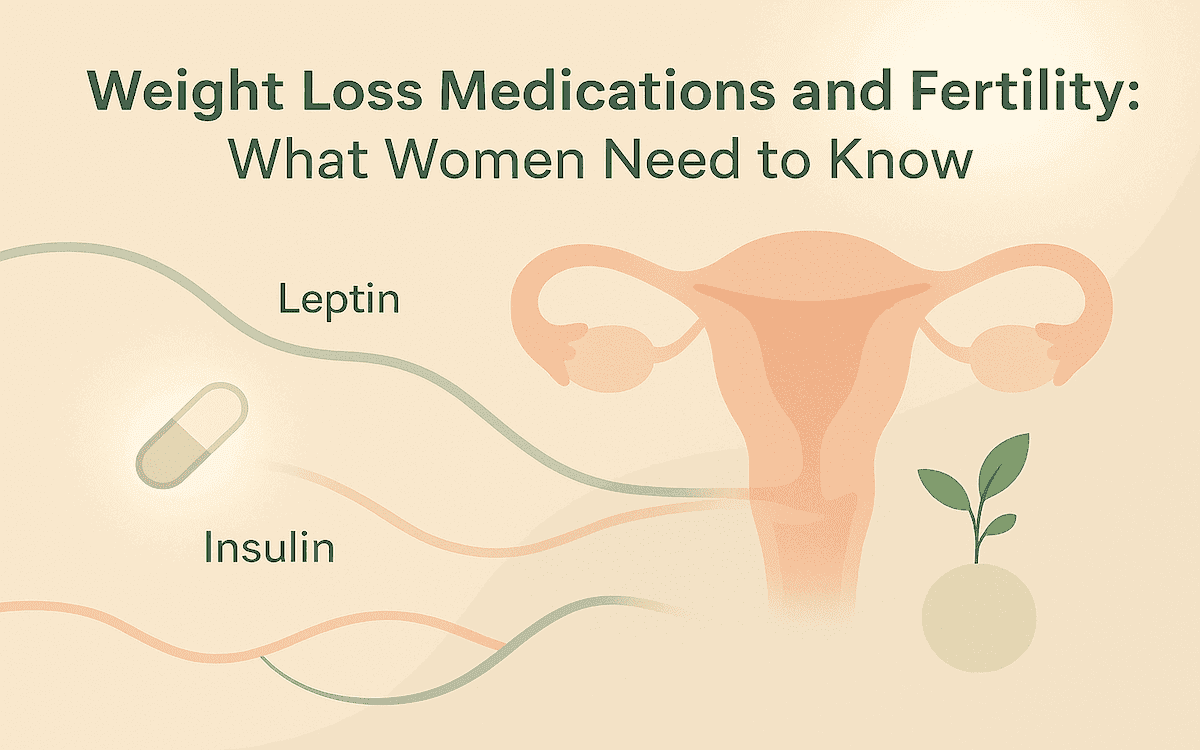
Cuando Anna empezó a tomar un medicamento para adelgazar que contenía semaglutida, solo esperaba perder unos kilos rebeldes. Tras años de fatiga, antojos y ciclos irregulares causados por el síndrome de ovario poliquístico (SOP), casi había renunciado al equilibrio hormonal.
Seis meses después, pesaba 15 kilos menos y, por primera vez en años, había recuperado los ciclos menstruales.
"Me habían dicho que adelgazara para controlar mis hormonas", dice. "Pero nunca nadie me explicó hasta qué punto ambas cosas estaban relacionadas".
En todo el mundo, las mujeres comparten experiencias similares. Medicamentos como Ozempic, Wegovy y Mounjaro, todos ellos parte de una clase denominada agonistas de los receptores de GLP-1, están transformando no sólo los cuerpos, sino la salud metabólica y reproductiva.
Y a medida que los ciclos se normalizan y las hormonas se reequilibran, sigue surgiendo una pregunta:
¿Cómo afectan estos medicamentos a la fertilidad y qué ocurre cuando llega el momento de planificar un embarazo?
Respuesta rápida: ¿Los medicamentos para adelgazar pueden afectar a la fertilidad?
Sí. Los medicamentos para adelgazar pueden influir en la fertilidad, a menudo de forma beneficiosa. Al mejorar la resistencia a la insulina, reducir la inflamación y reequilibrar los niveles hormonales, pueden ayudar a restablecer la ovulación, sobre todo en mujeres con síndrome de ovario poliquístico o síndrome metabólico.
Sin embargo, ninguno de estos medicamentos está aprobado para su uso durante el embarazo. Los expertos recomiendan suspenderlos al menos 8 semanas antes de intentar concebir para evitar posibles riesgos para el desarrollo fetal.
Con la orientación adecuada, la fertilidad puede seguir mejorando incluso después de suspenderlos.
Cómo actúan los medicamentos GLP-1
Los agonistas de los receptores de GLP-1 imitan una hormona intestinal natural, el péptido similar al glucagón-1 (GLP-1).
Esta hormona:
- Ralentiza el vaciado del estómago
- Reduce el apetito
- Mejora la sensibilidad a la insulina
- Regula los niveles de azúcar en sangre
Desarrollados originalmente para tratar la diabetes de tipo 2, los medicamentos GLP-1 han mostrado resultados impresionantes en el control del peso y la reparación metabólica. Dado que el metabolismo y la reproducción están interconectados, un mejor control de la glucosa suele traducirse en patrones ovulatorios más saludables y una mejora de la fertilidad.
La conexión hormonal entre el peso y la fertilidad
La fertilidad depende de la comunicación hormonal entre el cerebro, los ovarios y el metabolismo. Las fluctuaciones de peso, especialmente las relacionadas con la resistencia a la insulina, pueden interrumpir esa conversación.
1. Resistencia a la insulina y ovulación
Los niveles elevados de insulina estimulan la producción ovárica de andrógenos, lo que puede suprimir la liberación de óvulos. Este mecanismo es central en el SOP, explicado con más detalle en cómo sé si tengo SOP.
2. Estrógeno procedente del tejido adiposo
El tejido adiposo produce estrona, un estrógeno más débil que interfiere con el bucle de retroalimentación hormonal del cerebro. Cuando aumentan los niveles de estrona, la ovulación puede volverse irregular o detenerse por completo.
3. La inflamación y la calidad de los óvulos
Las moléculas inflamatorias del tejido adiposo perturban el desarrollo del folículo y dañan el revestimiento endometrial. Reducir la inflamación mediante el control del peso ayuda a proteger la calidad del óvulo y favorece la implantación.
Estos mecanismos explican por qué restablecer el equilibrio metabólico, y no solo perder peso, puede reactivar la fertilidad.
Por qué estos medicamentos son transformadores para las mujeres con SOP
Para las mujeres con síndrome de ovario poliquístico, los tratamientos con GLP-1 pueden cambiarles la vida. El SOP es un trastorno tanto reproductivo como metabólico. Los agonistas del receptor GLP-1 se dirigen al lado metabólico, ayudando a restablecer el ritmo hormonal.
Los estudios demuestran que pueden:
- Reducir los niveles de insulina y andrógenos
- Normalizar los ciclos menstruales
- Mejorar las tasas de concepción natural
- Mejorar la respuesta a la FIV (Reprod Biol Endocrinol, 2022)
El resultado no es sólo una pérdida de peso, sino una recoordinación hormonal. Para mantenerlo de forma natural, obtén más información en cómo mejorar la fertilidad con SOP.
El dilema del momento oportuno: cuándo parar antes de intentar el embarazo
Ningún medicamento basado en GLP-1 está aprobado para el embarazo. Los datos obtenidos en animales sugieren posibles efectos sobre el desarrollo, y dado que estos fármacos pueden permanecer en el organismo durante semanas, las autoridades médicas recomiendan dejar de tomarlos al menos dos meses antes de la concepción (FDA, 2024).
Riesgos de continuar demasiado cerca de la concepción
- Exposición temprana del feto a los análogos del GLP-1
- Malabsorción de nutrientes (especialmente B12 y folato)
- Rebote hormonal que afecta al momento de la implantación
Dejar la medicación bajo supervisión médica ayuda a preservar el progreso y permite que las hormonas se estabilicen.
¿Qué ocurre después de dejarla?
Cuando finaliza la terapia, la mayoría de las mujeres mantienen sus mejoras en la fertilidad si continúan con una nutrición y unos patrones de movimiento saludables.
Algunas pueden notar que vuelve un poco el apetito o sentir fatiga, pero estos síntomas suelen desaparecer en unas semanas. Las estrategias clave durante esta fase incluyen
- Reconstruir las reservas de nutrientes (folato, hierro, zinc, vitamina D)
- Estabilizar el azúcar en sangre mediante comidas regulares
- Seguimiento de la ovulación para controlar el equilibrio hormonal en curso
La Ciencia del Reequilibrio Hormonal
Una vez que mejora el metabolismo, la señalización hormonal natural del cuerpo hace lo mismo.
| Sistema hormonal | Cambio con los GLP-1 | Impacto en la fertilidad |
|---|
| Insulina | Disminuye | Restaura la ovulación y la salud de los folículos |
| Andrógenos | Bajan | Reduce la infertilidad relacionada con el SOP |
| Relación FSH/LH | Se estabiliza | Favorece el desarrollo constante de los óvulos |
| Estrógeno/Progesterona | Se normaliza | Refuerza la fase lútea y la implantación |
| Cortisol | Disminuye | Mejora la alteración hormonal relacionada con el estrés |
Estos cambios explican por qué tantas mujeres afirman tener mejor humor, ciclos regulares y mayor energía después de estabilizar las hormonas metabólicas.
Cuando bajar de peso tiene efectos negativos
La fertilidad se nutre, no se priva.
La pérdida de peso extrema o rápida puede reducir la leptina, una hormona que indica al cerebro que hay energía suficiente para la reproducción. La leptina baja suprime la ovulación y puede causar irregularidades en el ciclo.
Otros riesgos potenciales son:
- Deficiencias de nutrientes (folato, hierro, B12)
- Pérdida de masa muscular que afecta al metabolismo
- Fatiga y picos de cortisol
El objetivo es un control de peso sostenible y equilibrado, no una restricción calórica agresiva.
La conexión con la fertilidad masculina
Aunque la mayoría de los debates se centran en las mujeres, las investigaciones también relacionan los medicamentos GLP-1 con mejoras de la fertilidad masculina.
La mejora de la sensibilidad a la insulina y la reducción de la inflamación benefician la motilidad espermática y la integridad del ADN. Se observaron resultados similares en hombres con hipotiroidismo y desequilibrio metabólico, como se analiza en edad y fertilidad masculina.
Cuando ambos miembros de la pareja abordan la salud metabólica, las tasas de concepción mejoran significativamente incluso antes de que comience el tratamiento de fertilidad.
Nutrición tras el tratamiento con GLP-1: Cómo construir estabilidad hormonal
La nutrición tiende un puente entre el tratamiento médico y la fertilidad duradera. Una vez fuera de la medicación, las comidas ricas en nutrientes ayudan a mantener el azúcar en sangre y el equilibrio hormonal.
Nutrientes clave
- Folato y B12: esenciales para la síntesis del ADN y la salud fetal temprana
- Zinc y selenio: protegen el ADN del óvulo y el espermatozoide
- Hierro: favorece la ovulación y la implantación
- Omega-3: reduce la inflamación y equilibra el estrógeno
Una dieta de estilo mediterráneo rica en plantas, pescado y cereales integrales proporciona estos nutrientes de forma natural.
Abordar los mitos comunes sobre los fármacos adelgazantes y la fertilidad
Mito 1: Puedes concebir con seguridad mientras tomas medicación GLP-1
Falso. No hay datos de seguridad que respalden su uso durante el embarazo. Siempre debes interrumpirlo bajo supervisión médica antes de la concepción.
Mito 2: La fertilidad vuelve al instante tras dejar de tomarla
Las hormonas pueden tardar varias semanas en estabilizarse. El seguimiento de la ovulación y la recuperación de nutrientes ayudan a confirmar la disposición.
Mito 3: Los hombres no necesitan preocuparse por la salud metabólica
Falso. Los problemas metabólicos afectan a la calidad del ADN de los espermatozoides tanto como a la salud de los óvulos, por lo que la fertilidad es un viaje compartido.
Preparar el cuerpo para el embarazo
Una vez que has dejado la medicación, reconstruir la preparación de tu cuerpo implica unos cuantos pasos estratégicos:
- Reequilibrar la nutrición con alimentos ricos en fibra y antioxidantes.
- Restaurar la ovulación mediante niveles estables de energía y azúcar en sangre.
- Mejorar el sueño para alinear el cortisol y las hormonas reproductivas.
- Mantente activa con ejercicio de bajo impacto que favorezca la circulación y el alivio del estrés.
La constancia aquí garantiza que los beneficios de la pérdida de peso se traduzcan en una salud fértil a largo plazo.
Recuperación mental y emocional
Muchas mujeres describen la parte más difícil de dejar la medicación como volver a confiar en su cuerpo.
"Me sentía segura pero asustada", dice Anna. "No quería volver a ser como antes".
Esta recalibración emocional es biológica. A medida que la dopamina y el cortisol se normalizan, pueden aparecer cambios de humor y fluctuaciones de energía. El apoyo emocional, el asesoramiento o las prácticas de atención plena ayudan a mantener la estabilidad durante este ajuste.
¿Cuánto tiempo debes esperar para concebir después de dejar de fumar?
Los médicos suelen recomendar esperar 2-3 meses tras la interrupción antes de intentar concebir. Esto permite la eliminación del fármaco y el restablecimiento de los nutrientes.
Algunas mujeres conciben de forma natural dentro de ese plazo, mientras que otras lo aprovechan para optimizar la nutrición y la forma física. Hay que centrarse en la preparación, no en la prisa.
Fertilidad a largo plazo y mantenimiento del peso
El objetivo final no es la pérdida de peso en sí, sino la armonía hormonal. Mantener un nivel estable de azúcar en sangre, una energía constante y unas hormonas equilibradas protege la fertilidad mucho después de terminar la medicación.
Adoptar hábitos como comidas equilibradas, alimentación consciente y ejercicio suave ayuda a mantener la salud ovulatoria.
Este enfoque a largo plazo reduce la posibilidad de recaída en el desequilibrio metabólico y refuerza los resultados reproductivos durante años.
Preguntas frecuentes: Los medicamentos para adelgazar y la fertilidad
¿Influye la medicación para adelgazar en la fertilidad?
Sí, puede influir. Los medicamentos para bajar de peso pueden influir positivamente en la fertilidad al mejorar la sensibilidad a la insulina, reducir la inflamación y favorecer una ovulación regular. Esto es especialmente beneficioso para las mujeres con SOP o desequilibrio metabólico. Sin embargo, estos medicamentos no deben tomarse mientras se intenta activamente concebir o durante el embarazo.
¿Afecta Ozempic a la fertilidad?
Sí. Ozempic, un agonista del receptor GLP-1, puede ayudar a restablecer la fertilidad indirectamente al mejorar el equilibrio metabólico y hormonal. Muchas mujeres informan de ciclos más regulares después del tratamiento. Aún así, Ozempic no está aprobado para su uso en el embarazo, y debe interrumpirse al menos 8 semanas antes de la concepción.
¿Puede bajar de peso ayudarte a concebir?
Sí. Incluso una reducción modesta del 5-10% del peso corporal puede mejorar la ovulación, la calidad de los óvulos y la regulación hormonal. La pérdida de peso reduce los niveles de insulina y andrógenos, aumentando la probabilidad de concebir, ya sea de forma natural o con tratamientos asistidos como la FIV.
¿Puedo quedarme embarazada con inyecciones para adelgazar?
Es posible ovular y concebir mientras se toman inyecciones para adelgazar, pero no se considera seguro. Los fármacos GLP-1 como Wegovy, Ozempic o Mounjaro deben suspenderse antes de intentar quedarse embarazada, ya que no se ha demostrado su seguridad durante el embarazo.
¿Cuánto tiempo debes dejar Ozempic antes de quedarte embarazada?
Los médicos recomiendan dejar de tomar Ozempic al menos dos meses (8 semanas) antes de intentar concebir. Esto permite que el fármaco se elimine completamente del organismo y asegura el equilibrio hormonal y nutricional antes del embarazo.
¿Wegovy te hace más fértil?
No directamente. Wegovy no aumenta la fertilidad de forma directa, pero ayuda al organismo a recuperar el equilibrio mejorando la regulación hormonal y de la insulina. Al normalizarse la ovulación, la fertilidad puede mejorar de forma natural. Una vez suspendido, los beneficios suelen continuar si el peso y la nutrición permanecen estables.
¿Mounjaro te hace más fértil?
Tampoco directamente. Mounjaro funciona de forma similar a Ozempic y Wegovy, regulando la insulina y favoreciendo la salud metabólica. Para las mujeres con SOP o ciclos irregulares, puede restaurar indirectamente la fertilidad. Sin embargo, debe suspenderse antes de la concepción.
¿Cuál es la causa nº 1 de infertilidad?
Globalmente, la principal causa de infertilidad en las mujeres es la disfunción ovulatoria, a menudo relacionada con desequilibrios hormonales como el SOP o trastornos tiroideos. En los hombres, el factor principal es la mala calidad del esperma o la fragmentación del ADN. Ambos pueden mejorarse mediante un apoyo metabólico y del estilo de vida.
¿Qué fármacos pueden aumentar la fertilidad?
Medicamentos como el Letrozol, el Citrato de clomifeno (Clomid) y las inyecciones de gonadotropina se prescriben habitualmente para estimular la ovulación. Por causas metabólicas, fármacos como la metformina o los tratamientos con GLP-1 pueden mejorar indirectamente la fertilidad al tratar la resistencia a la insulina.
¿Cómo mejorar la fertilidad femenina?
La fertilidad mejora con hábitos constantes y equilibrados: comidas densas en nutrientes, buen sueño, reducción del estrés y ejercicio moderado. Los nutrientes clave como el folato, el zinc y las grasas omega-3 desempeñan un papel importante en la calidad y la implantación del óvulo.
¿Cómo comprobar la calidad de los óvulos en las mujeres?
La calidad de los óvulos puede evaluarse mediante la prueba de la hormona antimülleriana (AMH) y el conteo folicular antral (AFC) mediante ecografía. Los factores del estilo de vida, los niveles de nutrientes y la inflamación también influyen en la salud de los óvulos a lo largo del tiempo.
¿Qué fármaco común puede prolongar la fertilidad de la mujer?
La investigación está explorando cómo la metformina y las terapias basadas en el GLP-1 pueden preservar la función ovárica reduciendo el estrés oxidativo y mejorando el metabolismo. Sin embargo, no son fármacos para la fertilidad y sólo deben utilizarse bajo supervisión médica.
Conclusión: De la pérdida de peso a la renovación de la fertilidad
Los medicamentos para perder peso y la fertilidad comparten un profundo vínculo biológico. Al mejorar el metabolismo, estos fármacos pueden reavivar la fertilidad natural, especialmente en mujeres con SOP o resistencia a la insulina.
Pero la verdadera transformación comienza tras dejar de tomarlos, cuando el cuerpo aprende a mantener ese equilibrio de forma natural.
En Conceivio, el cuidado de la fertilidad significa abordar todas las capas: metabolismo, hormonas, nutrición y mentalidad. Nuestros programas ayudan a las mujeres a pasar con seguridad de la terapia metabólica a la maternidad, integrando la atención médica, nutricional y emocional para conseguir una estabilidad hormonal duradera.
Cuando tu metabolismo y tus hormonas están sincronizados, la fertilidad no se fuerza, sino que fluye de forma natural.
Conclusiones clave
- Los medicamentos basados en GLP-1 mejoran la fertilidad mediante el equilibrio hormonal y de la insulina.
- Ninguno está aprobado durante el embarazo; suspenderlo al menos 8 semanas antes de intentar concebir.
- La nutrición posterior a la medicación y el equilibrio del estrés mantienen el ritmo hormonal.
- La salud metabólica de ambos miembros de la pareja influye en el éxito de la concepción.
- La atención holística de Conceivio combina la ciencia metabólica, la experiencia en fertilidad y la nutrición personalizada para restablecer el equilibrio desde dentro hacia fuera.
Referencias
- Jensterle M, et al. (2023). La semaglutida mejora los parámetros metabólicos y reproductivos en mujeres con SOP. J Clin Endocrinol Metab, 108(1):155-167.
- Elkind-Hirsch K, et al. (2022). Terapia con agonistas del receptorGLP-1 para restaurar la ovulación en mujeres obesas con SOP. Reprod Biol Endocrinol, 20(1):45.
- Palomba S, et al. (2022). Lifestyle and pharmacologic management of obesity to improve fertility in women. Fertil Steril, 118(4):678-692.
- Moreno-Navarrete JM, et al. (2023). Análogos delGLP-1, inflamación y función reproductora en mujeres con resistencia a la insulina. Front Endocrinol, 14:1165728.
- Homburg R, et al. (2024). Resultados reproductivos tras una pérdida rápida de peso: equilibrio entre beneficios y riesgos. Reprod Biomed Online, 58(2):139-151.
- FDA EE.UU. (2024). *Información de prescripción: Wegovy (semaglutida), Ozempic y Mounjaro.
- Comité de Práctica de la ASRM (2023). Obesidad y reproducción: una opinión del comité. Fertil Steril, 120(2):223-239.
- Organización Mundial de la Salud (2023). Obesidad y salud reproductiva femenina: resumen global de pruebas. Ginebra.