"Desintoxicación" es una de esas palabras que pueden evocar fácilmente imágenes de limpiezas drásticas y revisiones totales de la rutina. Una desintoxicación de belleza durante el embarazo es mucho más tranquila y realista. Se centra en reducir las exposiciones repetidas y evitables de los productos que ya utilizas con más frecuencia, sin convertir el embarazo en un examen de química ni tu rutina diaria en un nuevo proyecto.
Durante el embarazo, el cuerpo ya está gestionando complejos cambios hormonales y fisiológicos. Al mismo tiempo, los productos para el cuidado de la piel, los cosméticos y el cabello se encuentran entre las exposiciones químicas más constantes de la vida moderna. La crema hidratante que se aplica cada mañana, el desodorante que se usa a diario, el maquillaje que se lleva durante horas y los productos labiales que se ingieren inadvertidamente en cantidades minúsculas contribuyen a una exposición acumulativa a lo largo del tiempo.
No hay pruebas de que el uso de cosméticos por sí solo cause infertilidad o complicaciones en el embarazo. Sin embargo, la investigación en salud reproductiva y endocrina ha demostrado que ciertos grupos de ingredientes utilizados en los productos de belleza pueden interferir en la señalización hormonal o carecen de datos suficientes sobre su seguridad durante el embarazo. Por esta razón, los médicos suelen recomendar reducir las exposiciones repetidas y evitables siempre que sea posible, especialmente cuando hay alternativas fácilmente disponibles.
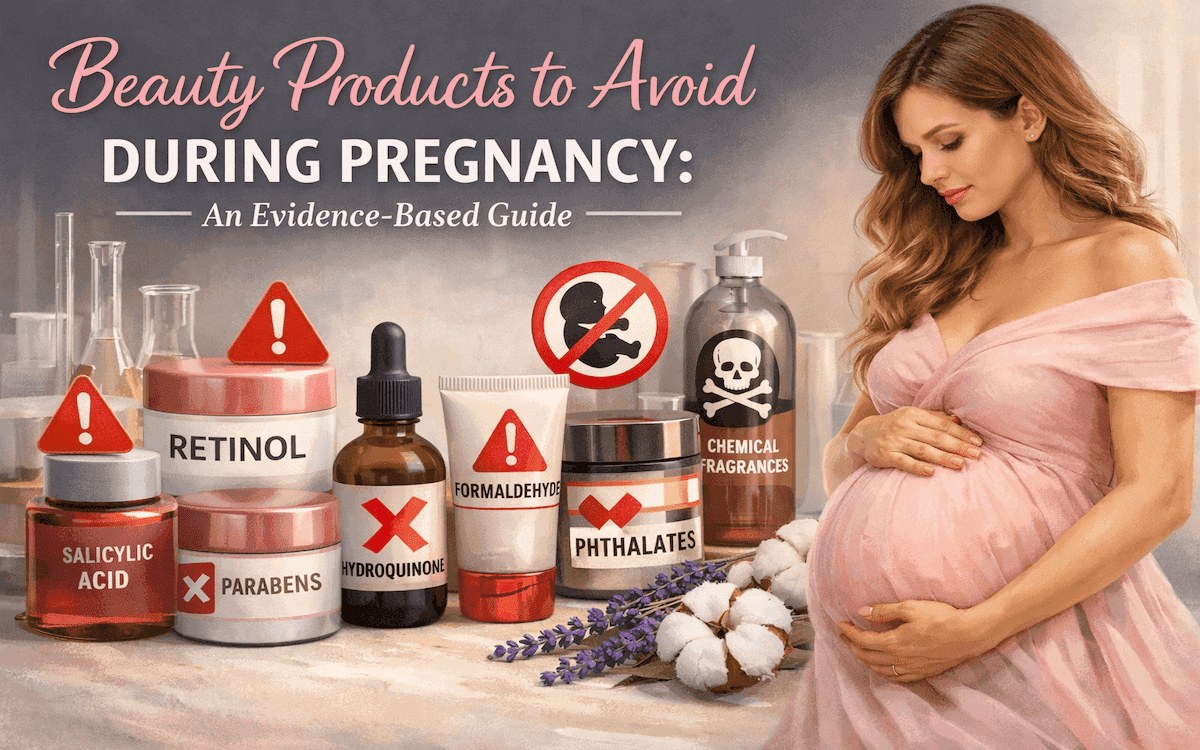
En resumen: Varios ingredientes de belleza suelen evitarse durante el embarazo debido a su potencial de absorción, su actividad endocrina o la escasez de datos sobre su seguridad. Entre ellos se encuentran los retinoides, la hidroquinona, los conservantes que liberan formaldehído, ciertos filtros UV químicos como la oxibenzona, el ácido salicílico sin enjuague en dosis elevadas, los productos muy perfumados que pueden contener ftalatos y los cosméticos resistentes al agua o de larga duración que pueden contener PFAS. Reducir la exposición diaria a estos ingredientes se considera una medida de precaución de bajo riesgo dentro de las orientaciones sobre salud reproductiva basadas en evidencia.
Por qué son importantes los productos de belleza durante el embarazo
El embarazo impone mayores exigencias a la regulación hormonal, la circulación y el desarrollo de los tejidos. Al mismo tiempo, los productos de cuidado personal representan una de las exposiciones ambientales más constantes a lo largo de la vida reproductiva. A diferencia de las exposiciones dietéticas o ambientales ocasionales, los productos de belleza se utilizan de forma predecible y repetida, a menudo en grandes zonas de la piel.
Aunque los ingredientes cosméticos individuales suelen estar presentes en concentraciones bajas, la preocupación que suscita la investigación está relacionada con la exposición acumulativa y las ventanas de desarrollo sensibles a los endocrinos. Los estudios que examinan los disruptores endocrinos han identificado asociaciones entre determinados grupos químicos y niveles hormonales alterados, marcadores reproductivos o resultados de reproducción asistida en poblaciones específicas. Estos hallazgos no sugieren que los cosméticos sean peligrosos, pero apoyan un enfoque prudente durante el embarazo.
Este mismo principio sustenta las recomendaciones sobre el estilo de vida que suelen debatirse junto a temas como la infertilidad inexplicada, las tasas de éxito de la FIV y la biología de la implantación precoz, donde el objetivo es optimizar el entorno interno en lugar de eliminar toda exposición potencial.
El Principio Rector: Reducir lo Repetido y Evitable
Una desintoxicación de belleza centrada en el embarazo no requiere sustituir todos los productos que poseas. Los cambios de mayor impacto suelen implicar productos que:
- Se usan a diario o casi a diario
- Se dejan sobre la piel durante mucho tiempo
- Se aplican en grandes superficies, como el cuerpo.
- Se aplican en zonas de alta absorción, como los labios, las axilas o el cuero cabelludo.
- Diseñados para ser de larga duración, resistentes al agua o muy perfumados
Cambiar incluso algunos de estos productos puede reducir significativamente la exposición acumulada sin alterar tu rutina ni aumentar el estrés.
Ingredientes de belleza que suelen evitarse durante el embarazo
Retinoides y derivados de la vitamina A
Los retinoides se utilizan mucho para el acné y el envejecimiento cutáneo, pero también son los ingredientes cosméticos que más se evitan durante el embarazo. La vitamina A en dosis elevadas es un teratógeno conocido cuando se toma por vía oral, y aunque la absorción sistémica de los productos tópicos es significativamente menor, los datos sobre la seguridad durante el embarazo de los retinoides tópicos siguen siendo limitados.
Por este motivo, la mayoría de los médicos recomiendan suspender los retinoides cuando se confirma el embarazo o cuando se está intentando concebir. Esta orientación se discute habitualmente tanto en dermatología como en fertilidad, especialmente para las pacientes que intentan concebir de forma natural o se preparan para un tratamiento de FIV.
Los términos comunes de la etiqueta de estos productos son retinol, retinal, palmitato de retinilo, tretinoína, adapaleno y tazaroteno.
Hidroquinona
La hidroquinona es un tratamiento eficaz para la hiperpigmentación, pero tiene una absorción cutánea relativamente alta en comparación con muchos ingredientes cosméticos. Debido a los limitados datos sobre su seguridad durante el embarazo, generalmente se desaconseja su uso durante este periodo.
Los cambios de pigmentación son frecuentes en el embarazo, y se pueden discutir estrategias alternativas de tratamiento con un clínico si es necesario, sobre todo para las que ya están siguiendo tratamientos de fertilidad o trastornos hormonales que afectan al tono de la piel.
Ácido salicílico en dosis altas y exfoliaciones químicas
El ácido salicílico se utiliza habitualmente en los tratamientos del acné. Las fórmulas lavables de baja potencia suelen considerarse poco preocupantes, pero los productos sin enjuague de dosis alta y los kits de exfoliación química caseros tienen un mayor potencial de absorción y menos datos específicos sobre el embarazo.
Como precaución, muchas directrices sobre embarazo y fertilidad sugieren evitar el uso regular de productos concentrados de ácido salicílico sin enjuague durante el embarazo, especialmente en combinación con otros tratamientos activos.
Conservantes que liberan formaldehído
Algunos conservantes utilizados en cosméticos liberan pequeñas cantidades de formaldehído con el tiempo para impedir el crecimiento microbiano. El formaldehído está reconocido como tóxico para la reproducción a niveles de exposición elevados, por lo que esta categoría constituye un objetivo de reducción sensato durante el embarazo.
Estos conservantes pueden aparecer en las listas de ingredientes como DMDM hidantoína, imidazolidinil urea, diazolidinil urea, cuaternio-15 o bronopol.
Ciertos filtros UV químicos
La protección solar sigue siendo esencial durante el embarazo, sobre todo porque los cambios hormonales pueden aumentar el riesgo de pigmentación. Sin embargo, algunos filtros UV químicos más antiguos han demostrado actividad endocrina en estudios de laboratorio y de población, lo que ha dado lugar a restricciones normativas en algunas regiones.
Ingredientes como la oxibenzona suelen estar señalados, y muchas guías para embarazadas sugieren cambiar a protectores solares minerales que contengan óxido de zinc o dióxido de titanio como precaución. Esto permite mantener la protección UV al tiempo que se reducen las posibles interacciones hormonales.
Ftalatos en productos perfumados
Los ftalatos se utilizan para estabilizar las fragancias y mejorar la textura de los productos. Se encuentran entre los disruptores endocrinos más estudiados y se han asociado a niveles alterados de hormonas reproductivas en estudios de población.
Los productos que contienen fragancias son una vía de exposición frecuente, sobre todo en los productos de uso diario que no se quitan, como las lociones corporales y los desodorantes. Elegir productos sin fragancia o con fragancia totalmente revelada puede reducir significativamente la exposición sin cambiar la función del producto.
PFAS en el maquillaje resistente al agua y de larga duración
Los compuestos PFAS se utilizan a veces para mejorar el deslizamiento, la durabilidad y la resistencia al agua en los cosméticos. Investigaciones más amplias sobre salud medioambiental han relacionado la exposición a los PFAS con alteraciones hormonales y problemas relacionados con la fertilidad, lo que ha provocado un mayor escrutinio de estos ingredientes.
Reducir la dependencia del maquillaje resistente al agua o de larga duración para el uso diario es una precaución habitual durante el embarazo, sobre todo en el caso de los productos que se aplican cerca de los ojos o los labios.
Tratamientos de alisado del cabello con altos humos
Algunos tratamientos de alisado del cabello y de queratina liberan formaldehído o compuestos relacionados cuando se aplica calor. Aunque la exposición ocupacional es la principal preocupación, la orientación sobre el embarazo suele sugerir evitar estos tratamientos debido a los riesgos de inhalación.
Cómo adaptar tu rutina de belleza durante el embarazo
Comienza con productos de uso diario sin aclarado
Los cambios más impactantes suelen implicar productos que permanecen en el cuerpo durante horas:
- Hidratantes y sueros faciales
- Loción corporal
- Desodorantes
- Protector solar
- Base de maquillaje o corrector
- Productos labiales
Estos cambios reducen la exposición repetida sin necesidad de una revisión completa de la rutina.
Sustituye los productos gradualmente
A excepción de los retinoides y la hidroquinona, la mayoría de los productos no necesitan desecharse inmediatamente. Terminar lo que ya tienes y cambiar cuando se te acaben los productos ayuda a minimizar el coste, el estrés y la fatiga de decisión.
Este enfoque gradual es coherente con la forma en que los médicos suelen hablar de los cambios de estilo de vida durante la atención a la fertilidad, tanto si alguien lo está intentando de forma natural, en la espera de dos semanas o preparándose para la reproducción asistida, como la FIV.
Elige los valores por defecto de menor preocupación
A muchas personas les resulta más fácil confiar en unos pocos valores predeterminados favorables al embarazo:
- Productos corporales y para el cuidado de la piel sin perfume
- Protectores solares minerales con óxido de zinc o dióxido de titanio
- Desodorantes sencillos
- Cuidado del cabello con fragancia mínima
- Maquillaje no resistente al agua para uso diario
Estas opciones reducen tranquilamente varias vías de exposición a la vez.
Qué es y qué no es una desintoxicación de belleza durante el embarazo
Es importante recordar que una desintoxicación de belleza durante el embarazo no es una garantía de resultados ni una obligación moral. Es una forma práctica y basada en evidencia de reducir las exposiciones evitables durante un periodo biológicamente sensible.
Preguntas sobre los productos de belleza durante el embarazo
¿Qué productos para el cuidado de la piel no son seguros durante el embarazo?
Los productos para el cuidado de la piel que contienen retinoides, hidroquinona, altas dosis de ácido salicílico sin enjuague, conservantes que liberan formaldehído y ciertos filtros UV químicos, como la oxibenzona, suelen evitarse durante el embarazo. Estos ingredientes se señalan debido a su potencial de absorción, actividad endocrina o datos limitados sobre su seguridad durante el embarazo, no porque se sepa que los cosméticos en sí mismos causan daños.
¿Puedo utilizar el suero de vitamina C durante el embarazo?
Sí, los sueros de vitamina C se consideran seguros durante el embarazo si se utilizan según las indicaciones. La vitamina C no interfiere en la señalización hormonal y no se ha asociado a resultados adversos del embarazo en el uso cosmético tópico. Muchos médicos la consideran una alternativa adecuada a los retinoides para la luminosidad de la piel y el apoyo antioxidante durante el embarazo.
¿Cuál es la regla de oro para toda mujer embarazada?
La regla de oro durante el embarazo es centrarse en la proporción y la precaución, no en la perfección. Esto significa reducir las exposiciones repetidas y evitables cuando sea fácil hacerlo, manteniendo al mismo tiempo rutinas que favorezcan la salud y el bienestar generales. Los cambios pequeños y basados en evidencia son más eficaces que las restricciones extremas o estresantes.
¿Qué está prohibido durante el embarazo?
Muy pocas cosas están absolutamente prohibidas durante el embarazo. Las orientaciones médicas se centran en evitar exposiciones conocidas de alto riesgo, como fumar, el alcohol y ciertos medicamentos, al tiempo que recomiendan precaución con ingredientes o comportamientos que carecen de datos de seguridad. En las rutinas de belleza y cuidado de la piel, esto se traduce normalmente en evitar ingredientes específicos, más que categorías enteras de productos.
¿Es seguro el retinol durante el embarazo?
No, el retinol y otros derivados de la vitamina A se evitan sistemáticamente durante el embarazo. La vitamina A en dosis altas es un teratógeno conocido cuando se toma por vía oral, y aunque la absorción tópica es menor, los datos sobre seguridad son limitados. La mayoría de los profesionales sanitarios recomiendan dejar de tomar retinoides cuando se confirma el embarazo o cuando se intenta concebir.
¿Es seguro utilizar ácido salicílico durante el embarazo?
Los productos de ácido salicílico de baja potencia que se eliminan con el lavado suelen considerarse poco preocupantes, pero las fórmulas de alta dosis que se dejan y los exfoliantes químicos suelen evitarse durante el embarazo. La recomendación es preventiva y se basa en el potencial de absorción más que en los daños demostrados por el uso cosmético.
¿Son seguros los productos de belleza perfumados durante el embarazo?
Los productos perfumados no son automáticamente inseguros, pero son una fuente habitual de exposición a los ftalatos. Durante el embarazo, muchas personas eligen productos sin fragancia o con fragancia totalmente revelada para los artículos de uso diario sin enjuague, a fin de reducir la exposición repetida sin cambiar el rendimiento del producto.
¿Debería cambiar a un protector solar mineral durante el embarazo?
Muchas directrices sobre el embarazo sugieren utilizar protectores solares minerales que contengan óxido de zinc o dióxido de titanio como precaución. Algunos filtros UV químicos han mostrado actividad endocrina en investigaciones, mientras que los filtros minerales se asientan en la superficie de la piel y es menos probable que se absorban. La protección solar sigue siendo esencial durante el embarazo.
¿Son seguros los tratamientos capilares durante el embarazo?
La coloración y el peinado básicos del cabello suelen considerarse de bajo riesgo, pero algunos tratamientos de alisado y queratina pueden liberar formaldehído cuando se calientan. Debido a los problemas de inhalación, estos tratamientos de alto contenido en vapores suelen evitarse durante el embarazo como medida de precaución.
¿Debo dejar de maquillarme durante el embarazo?
No, el embarazo no exige dejar de usar maquillaje. Lo importante es reducir la exposición a determinados ingredientes, sobre todo en los productos de uso diario, de larga duración o resistentes al agua. Elegir fórmulas más sencillas para el uso diario permite seguir disfrutando del maquillaje sin preocupaciones innecesarias.
Conclusión
Elegir qué productos de belleza evitar durante el embarazo no consiste tanto en eliminar totalmente el riesgo como en hacer cambios meditados y proporcionados. Si te centras en las exposiciones repetidas y evitables y sigues pautas de precaución basadas en la ciencia reproductiva, es posible mantener una rutina que resulte segura y realista. Si tienes dudas sobre el uso de algún producto en particular, pide orientación personalizada a tu médico.
En Conceivio, la atención a la fertilidad y el embarazo se basa en la ciencia, la inclusión y la compasión. Tanto si estás planeando un embarazo como si estás siguiendo un tratamiento de fertilidad o buscando orientación clara y basada en evidencia, Conceivio ofrece recursos diseñados para ayudarte a tomar decisiones informadas en cada etapa del proceso reproductivo.